Keep therapy active between sessions
Assign evidence-based resources, support between-session practice, and understand how clients engage with therapeutic work.
Bring therapy into everyday life
Therapeutic progress depends on more than what happens during appointments.
Clients are often asked to practise new skills, complete exercises, reflect on experiences, and apply therapeutic techniques throughout the week.
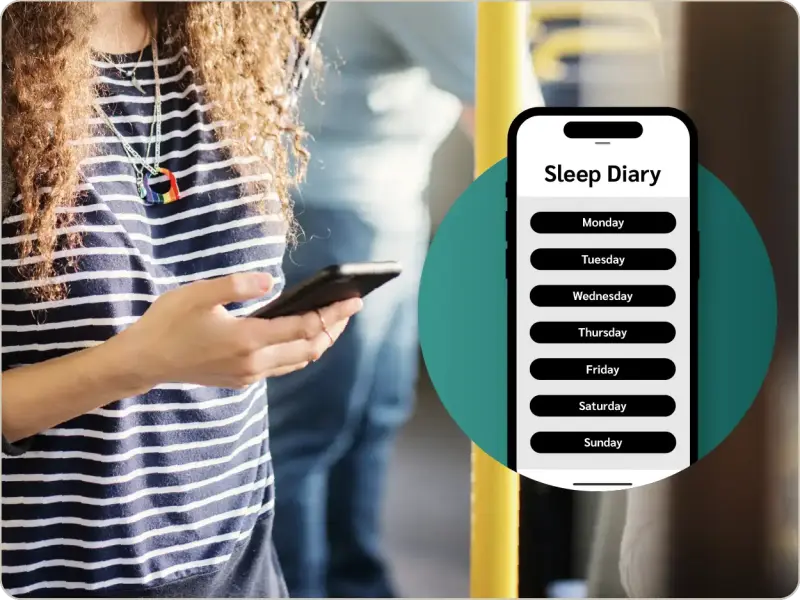
Digital therapy tools make therapeutic resources available whenever and wherever clients need them, helping clients stay engaged between sessions and continue building skills in their daily lives.
Whether clients are tracking experiences, learning new coping strategies, completing therapeutic exercises, listening to guided audio exercises, or reviewing psychoeducational material, everything is available in one secure and accessible place.
Assign resources directly to clients
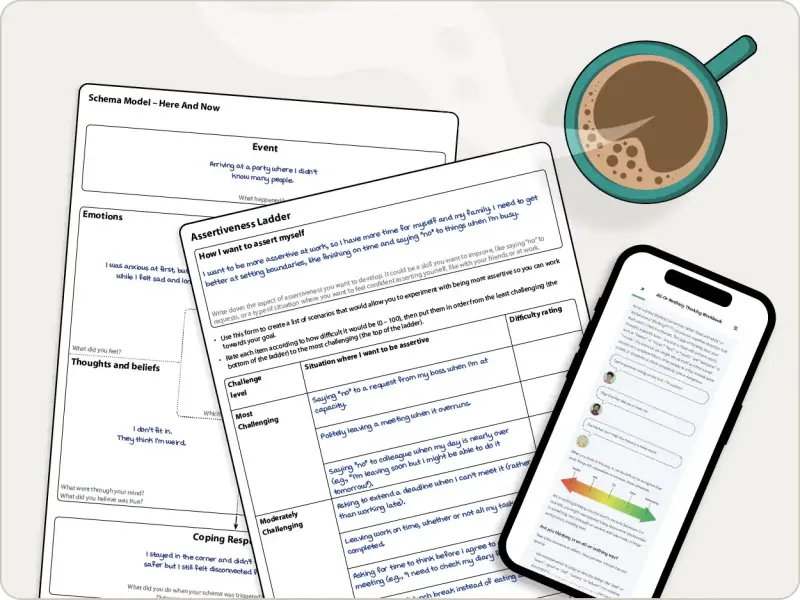
Most Psychology Tools resources are available not only as professionally designed PDFs, but also as mobile-optimized digital tools that clients can access through the platform.
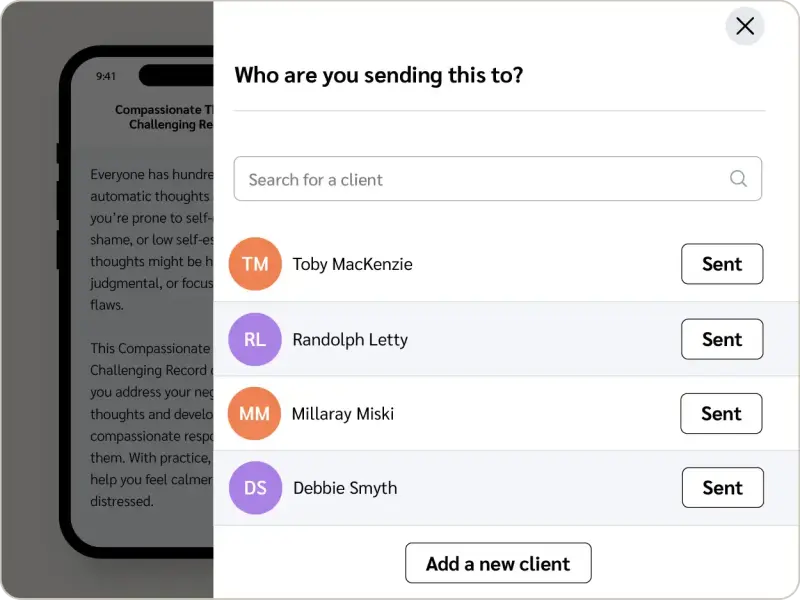
Simply assign digital tools directly to clients, who receive a secure invitation and can access them on their phone, tablet, or computer.
Whether they are completing an interactive worksheet, reading psychoeducation or practicing skills, the content is the same trusted Psychology Tools material clinicians already use in therapy, delivered in a format designed for modern clinical practice.
Designed for the way clients work
Clients engage with therapeutic materials in different ways.
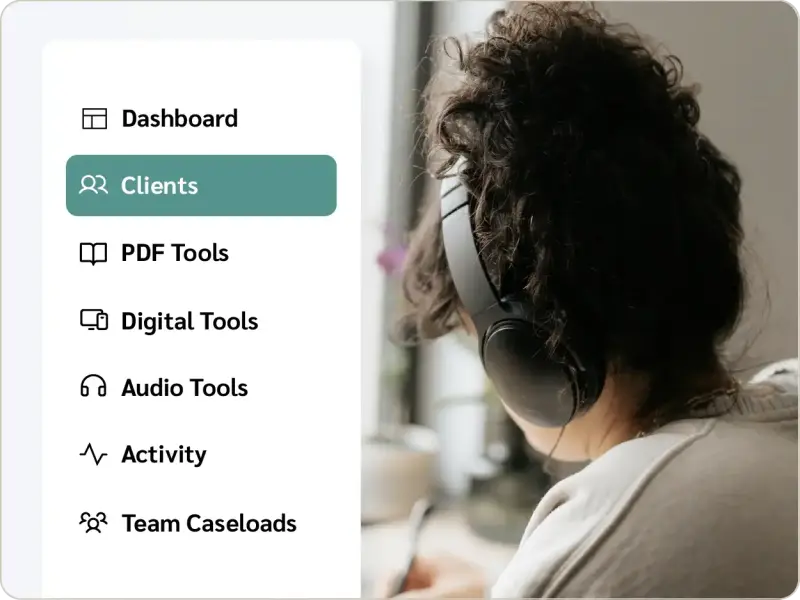
Some prefer interactive digital tools they can complete on their phone, others prefer printable worksheets, and some prefer to listen to audio exercises.
You can help your clients engage with resources in the format that works best for them.
Clients can:
Complete exercises throughout the week
Review psychoeducational content when it is most relevant
Practice therapeutic skills in real-world situations
By making therapeutic resources easier to access and use, digital therapy tools help reduce common barriers to homework completion and support ongoing engagement with therapy.
Grounded in evidence-based practice
Research consistently demonstrates the importance of between-session work.
Studies show that:
Homework completion predicts better treatment outcomes
Digital psychological interventions can achieve outcomes comparable to face-to-face treatment when clients engage with the material
Greater engagement with therapeutic resources is associated with greater clinical improvement
Digital therapy tools are designed to support these evidence-based processes by making therapeutic work easier to access, complete, and discuss.
Frequently asked questions
What can I assign to clients?
Depending on your subscription, clients can access psychoeducational resources, interactive worksheets and exercises, guided audio practices, and Treatments That Work ™ client workbooks available within the Psychology Tools platform.
Can clients use digital therapy tools on their phone?
Yes. Digital therapy tools are designed to work across phones, tablets, and desktop computers.
Are resources available as PDFs?
Many Psychology Tools resources are available as digital tools, electronically fillable PDFs, and printable worksheets, allowing therapists and clients to choose the format that works best for them.
Do clients need a Psychology Tools account?
Clients receive a secure invitation that allows them to access resources assigned to them through the platform.
Can I see how clients engage with assigned resources?
Yes. Therapists can review client activity within the platform to better understand engagement with between-session work.
Extend therapy beyond the session
Help clients stay engaged throughout the week with evidence-based resources, interactive exercises, and digital therapy tools designed for modern clinical practice.