Editable resources
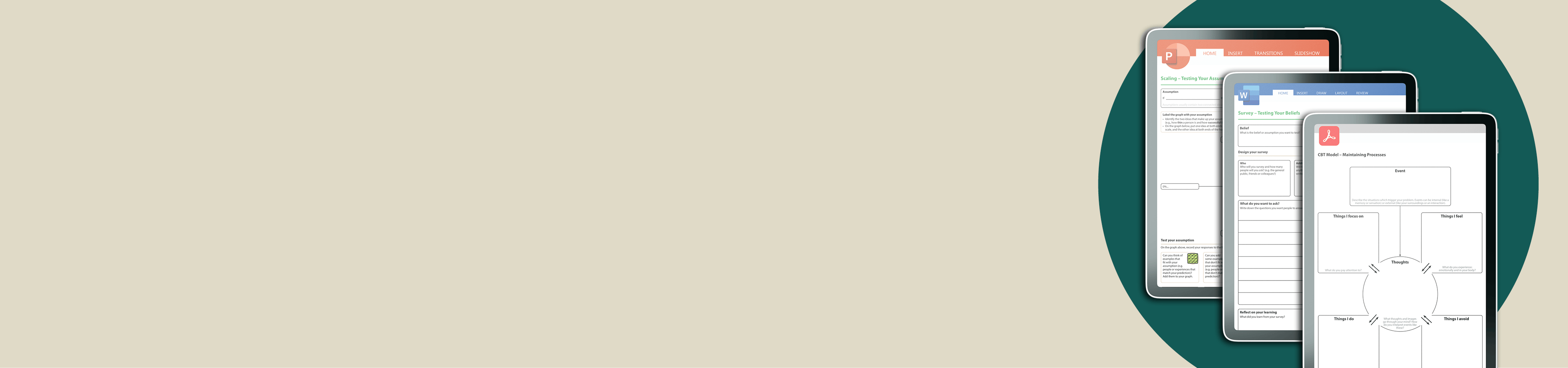
Editable therapy resources
Adaptable tools for personalised, client-centred therapy.
What are editable resources?
Psychology Tools offers a selection of resources in editable Word® and PowerPoint® formats, allowing clinicians to modify content while maintaining the evidence-informed structure of each tool.
Editable resources let you tailor:
Language and reading level.
Examples and case scenarios.
Layout and spacing.
Cultural or contextual references.
The pacing of exercises.
Only some resources are available in editable formats, but where offered, they provide flexibility for clinicians who want to personalise materials without compromising clinical fidelity.
Why editable resources matter
Personalisation enhances therapeutic impact
Therapeutic materials are most effective when they match a client’s developmental stage, window of tolerance, cultural background, literacy level, and presenting difficulty. Editable resources allow you to adapt the content while keeping the clinically validated structure intact.
Improve comprehension and engagement
When clients see examples relevant to their experiences, they are more likely to understand the concepts and engage in the work.
Support autonomy and clinical decision-making
Editable formats give clinicians the freedom to:
Simplify complex ideas,
Add supplementary prompts,
Break exercises into smaller steps,
Or combine elements across tools.
This flexibility helps clinicians respond more precisely to client needs.
How editable resources support better outcomes
Editable resources help clinicians:
Deliver personalised treatment.
Improve client comprehension.
Increase engagement in exercises and homework.
Support between-session practice.
Adapt tools for neurodivergent, multilingual, or diverse populations.
Maintain clinical structure while customising content.
Clients benefit from tools that feel tailored, relevant, and easier to work with – supporting stronger therapeutic collaboration.
Evidence supporting editable formats
Targeted, clear materials improve engagement
Engagement with therapy materials predicts clinical improvement across diagnoses (Gan et al., 2021).
Clarity and format matter
Better-designed and better-presented materials improve homework adherence and are associated with better symptom reduction (Sapkota et al., 2023).
Clinicians value practical, adaptable CBT tools
Cognitive behavioral therapy (CBT) materials are rated as clinically helpful across presentations (Tallon et al., 2018).
Who are editable worksheets for?
Clinicians tailoring therapy to individual clients
Therapists working with multilingual or culturally diverse populations
Neuro-affirming or trauma-informed practitioners
Services offering guided self-help
Educators, trainers, and supervisors teaching skills
Clinicians supporting clients with different literacy or learning needs
Explore editable resources
Adapt tools to your clients’ needs without compromising clinical quality.
Discover everything included with Psychology Tools
Access professional therapy resources, translated materials, fillable PDFs, therapy guides, audio resources, psychoeducation, and evidence-based tools designed to support every stage of therapy. Whether you’re working in private practice, healthcare, education, or community services, Psychology Tools helps you deliver effective, evidence-informed care with confidence.