Obsessive Compulsive Disorder (OCD) Formulation
Worksheets
Obsessive Compulsive Disorder (OCD) Formulation
application/pdf
•
131.53 KB
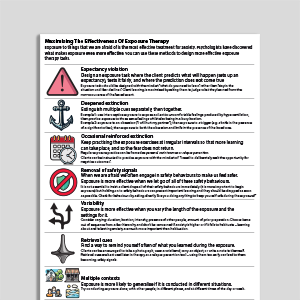
Maximizing The Effectiveness Of Exposure Therapy
Information Handouts
Maximizing The Effectiveness Of Exposure Therapy
application/pdf
•
193.7 KB
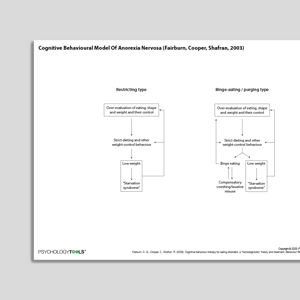
Cognitive Behavioral Model Of Anorexia Nervosa (Fairburn, Cooper, Shafran, 2003)
Information Handouts
Cognitive Behavioral Model Of Anorexia Nervosa (Fairburn, Cooper, Shafran, 2003)
application/pdf
•
465.54 KB
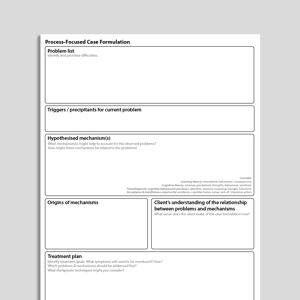
Process Focused Case Formulation
Worksheets
Process Focused Case Formulation
application/pdf
•
222.48 KB
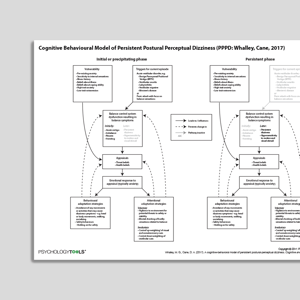
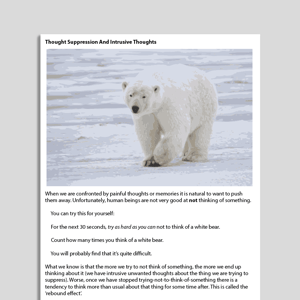
Thought Suppression And Intrusive Thoughts
Information Handouts
Thought Suppression And Intrusive Thoughts
application/pdf
•
561.54 KB
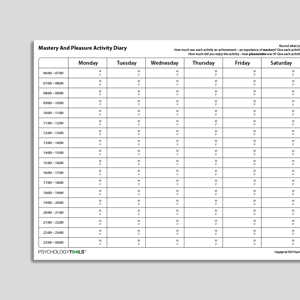
Mastery And Pleasure Activity Diary
Worksheets
Mastery And Pleasure Activity Diary
application/pdf
•
349.23 KB
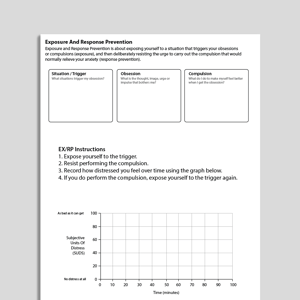
Exposure And Response Prevention
Exercises
Exposure And Response Prevention
application/pdf
•
265.48 KB
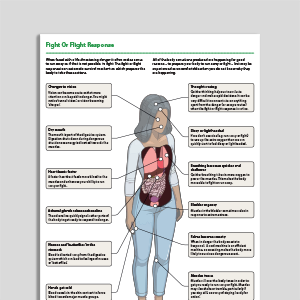
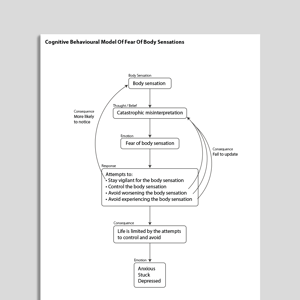
Cognitive Behavioral Model Of Fear Of Body Sensations
Information Handouts
Cognitive Behavioral Model Of Fear Of Body Sensations
application/pdf
•
30.23 KB
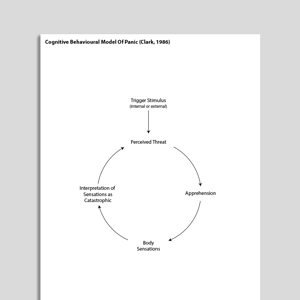
Cognitive Behavioral Model Of Panic (Clark, 1986)
Information Handouts
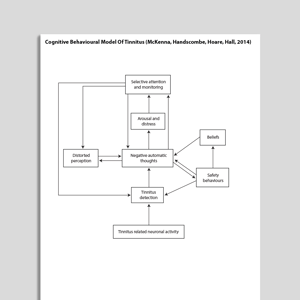
Cognitive Behavioral Model Of Tinnitus (McKenna, Handscombe, Hoare, Hall, 2014)
Information Handouts
Cognitive Behavioral Model Of Tinnitus (McKenna, Handscombe, Hoare, Hall, 2014)
application/pdf
•
73.18 KB
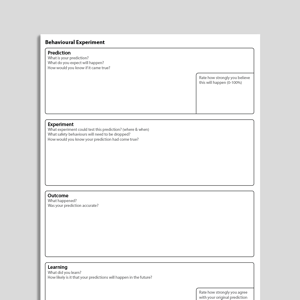
Behavioral Experiment (Portrait Format)
Worksheets
Behavioral Experiment (Portrait Format)
application/pdf
•
274.3 KB
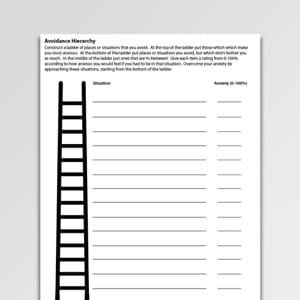
What Are Avoidance And Escape?
Disorders That May Be Maintained by Avoidance and Escape
Avoidance and escape are often maintenance factors in:panic disorder with or without agoraphobia
specific phobia
social phobia
post-traumatic stress disorder (PTSD) and acute stress disorder
generalized anxiety disorder (GAD)
pain disorder
health anxiety
body dysmorphic disorder
psychotic disorders
Helpful Questions for Assessing Avoidance and Escape
Some helpful questions for assessing avoidance and escape include:How do you respond when you feel threatened?
What activities/people/places/situations/objects do you avoid?
What does the avoidance get in the way of you doing?
What would happen if you stopped avoiding?
Treatment Approaches That Target Avoidance and Escape
Exposure is often considered the method of choice to reduce avoidance across the anxiety disorders. Varieties of exposure techniques include in-vivo exposure, graded exposure, and interoceptive exposure. Mowrer’s two-stage model of fear and avoidance is cited as the origin of the behavioral practice of reducing avoidance (Mowrer, 1939, 1960). According to this theory, avoidance behavior is reinforced when it is followed by a reduction in anxiety.Cognitive techniques have also been found to be highly effective treatments for anxiety, with successful treatment leading to reductions in avoidance (Kaczkurkin & Foa, 2015).References
Ferster, C. B. (1973). A functional analysis of depression. American Psychologist, 28(10), 857–870.
Harvey, A. G., Watkins, E., Mansell, W., & Shafran, R. (2004). Cognitive behaviouralprocesses across psychological disorders: A transdiagnostic approach to research and treatment. New York: Oxford University Press.
Kaczkurkin, A. N., & Foa, E. B. (2015). Cognitive-behavioral therapy for anxiety disorders: an update on the empirical evidence. Dialogues in Clinical Neuroscience, 17(3), 337–346.
Lewisohn, P. M. (1975). Engagement in pleasant activities and depression level. Journal of Abnormal Psychology, 84(6), 729–731.
Mowrer, O. H. (1939). Anxiety and learning. Psychological Bulletin, 36, 517–518.
Mowrer, O. H. (1960). Learning theory and behavior. New York: Wiley.
Salkovskis, P. M. (1991). The importance of behaviourin the maintenance of anxiety and panic: A cognitive account. Behavioural and Cognitive Psychotherapy, 19(1), 6–19.
Wilson, G. T. and O’Leary, D. (1980). Principles of behavior therapy. Englewood Cliffs, NJ: Prentice-Hall.
Links to external resources
Psychology Tools makes every effort to check external links and review their content. However, we are not responsible for the quality or content of external links and cannot guarantee that these links will work all of the time.
Please login to view our external resources.