All-Or-Nothing Thinking
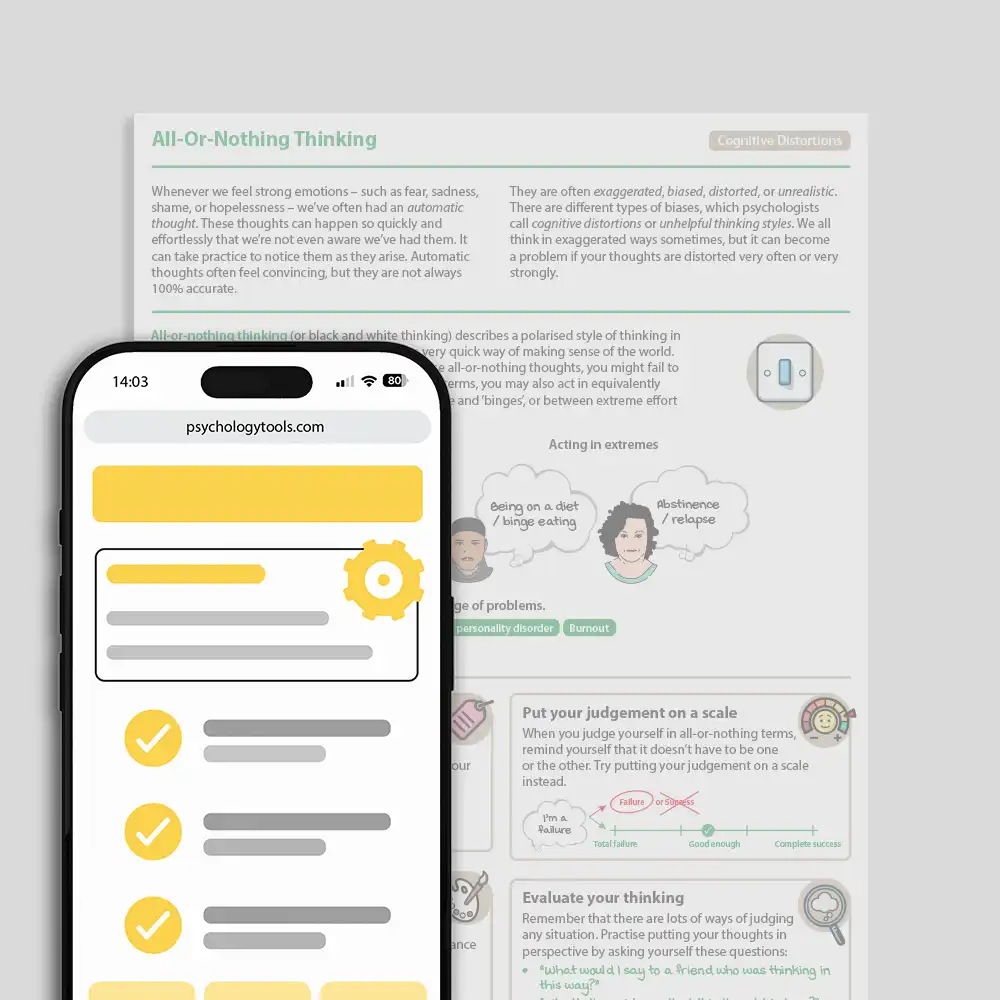
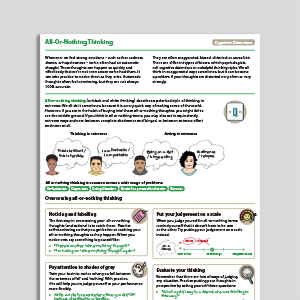
The All-Or-Nothing Thinking information handout forms part of the cognitive distortions series, designed to help clients and therapists to work more effectively with common thinking biases.
All-Or-Nothing Thinking
Cognitive behavior therapy (CBT) suggests that our thoughts influence how we feel and how we act. However, some of our thoughts can be biased. Recognizing these ‘cognitive distortions’ or ‘unhelpful thinking styles’ can help you judge how accurate and useful your automatic thoughts are. This tool will introduce you to a common distortion called all-or-nothing thinking.
Overview
All-or-nothing thinking (often also referred to as ‘black and white thinking’, ‘dichotomous thinking’, ‘absolutist thinking’, or ‘binary thinking’) is a common form of cognitive distortion or ‘unhelpful thinking style’. People who think in all-or-nothing terms may also act in equivalently extreme ways. They may veer, for example, between complete abstinence and ‘binges’, or between extreme effort and none. The All-Or-Nothing Thinking information handout forms part of the cognitive distortions series, designed to help clients and therapists to work more effectively with common thinking biases.
Also available as:
PDF ToolUse this tool with your clients
Support therapeutic work between sessions.
Assign
Send the tool securely to your client.
Client completes
Your client works through it on any device, at their own pace.
Review
Review their responses before the next session.

Part of a complete library of evidence-based tools
Worksheets, guides, audio resources and interactive digital tools for mental health professionals.