Am I Experiencing Obsessive Compulsive Disorder (OCD)?
A symptom checklist to help clients reflect on obsessions and compulsions and explore whether further psychological assessment may be beneficial.
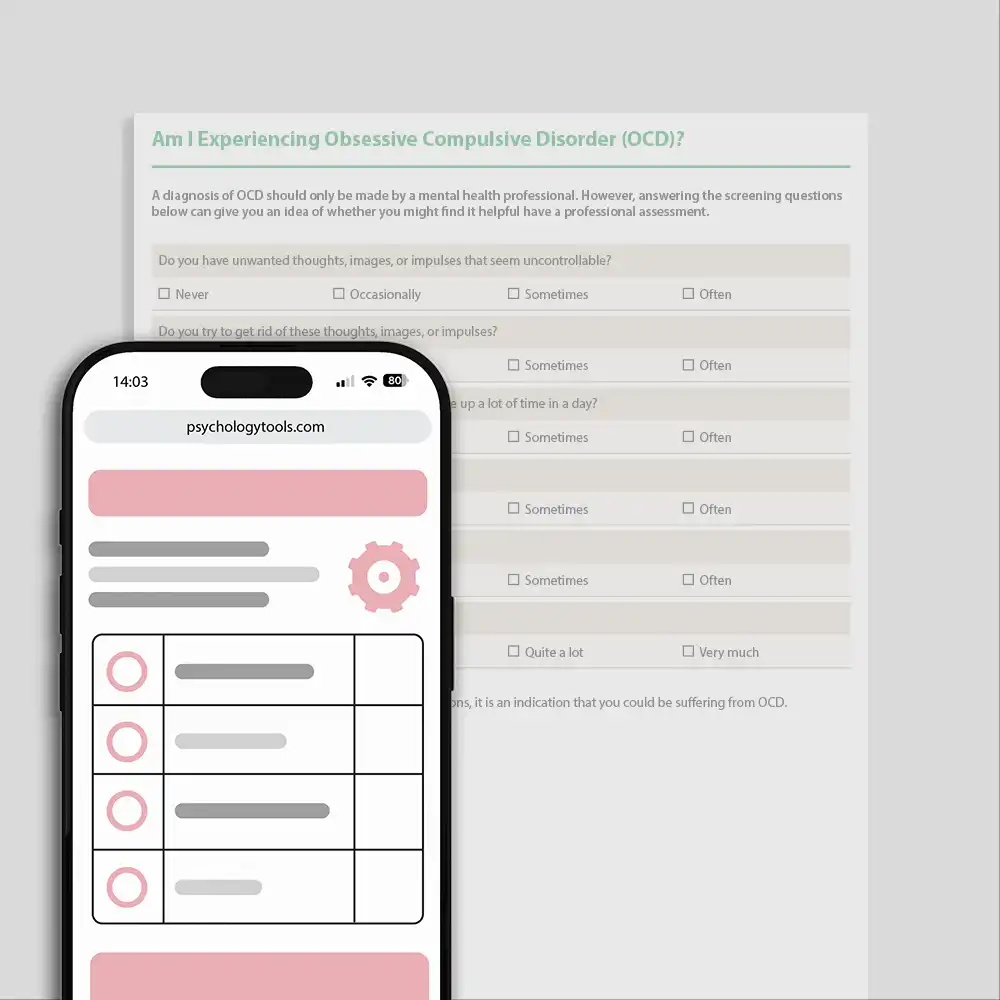
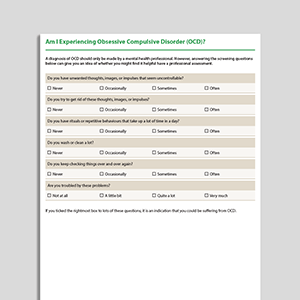
Am I Experiencing Obsessive Compulsive Disorder (OCD)?
Obsessions are unwanted thoughts or images that pop into your mind. These thoughts often feel unacceptable, upsetting, or hard to ignore. Compulsions are actions you take in response to your obsessions, often because you think they will prevent harm or help you feel better.
People who experience obsessions and compulsions so frequently that they significantly interfere with their lives are said to have obsessive compulsive disorder (OCD). A diagnosis of OCD should only be made by a mental health professional or a doctor.
The Am I Experiencing Obsessive Compulsive Disorder? tool explores possible signs of OCD. Answering the following questions can give you an idea of whether you might find it helpful to arrange professional assessment.
Overview
Obsessive compulsive disorder (OCD) is a mental health condition characterized by the presence of obsessions, compulsions, or both. Obsessions are persistent, unwanted thoughts, images, or urges that often cause distress. Compulsions are repetitive behaviors or mental acts performed in response to obsessions, typically to reduce anxiety or prevent feared outcomes. This symptom checklist is designed to help clients and clinicians explore whether their experiences may reflect features of OCD. It is not intended to provide a diagnosis or assess severity, but it can support early discussions about whether further evaluation is warranted.
Also available as:
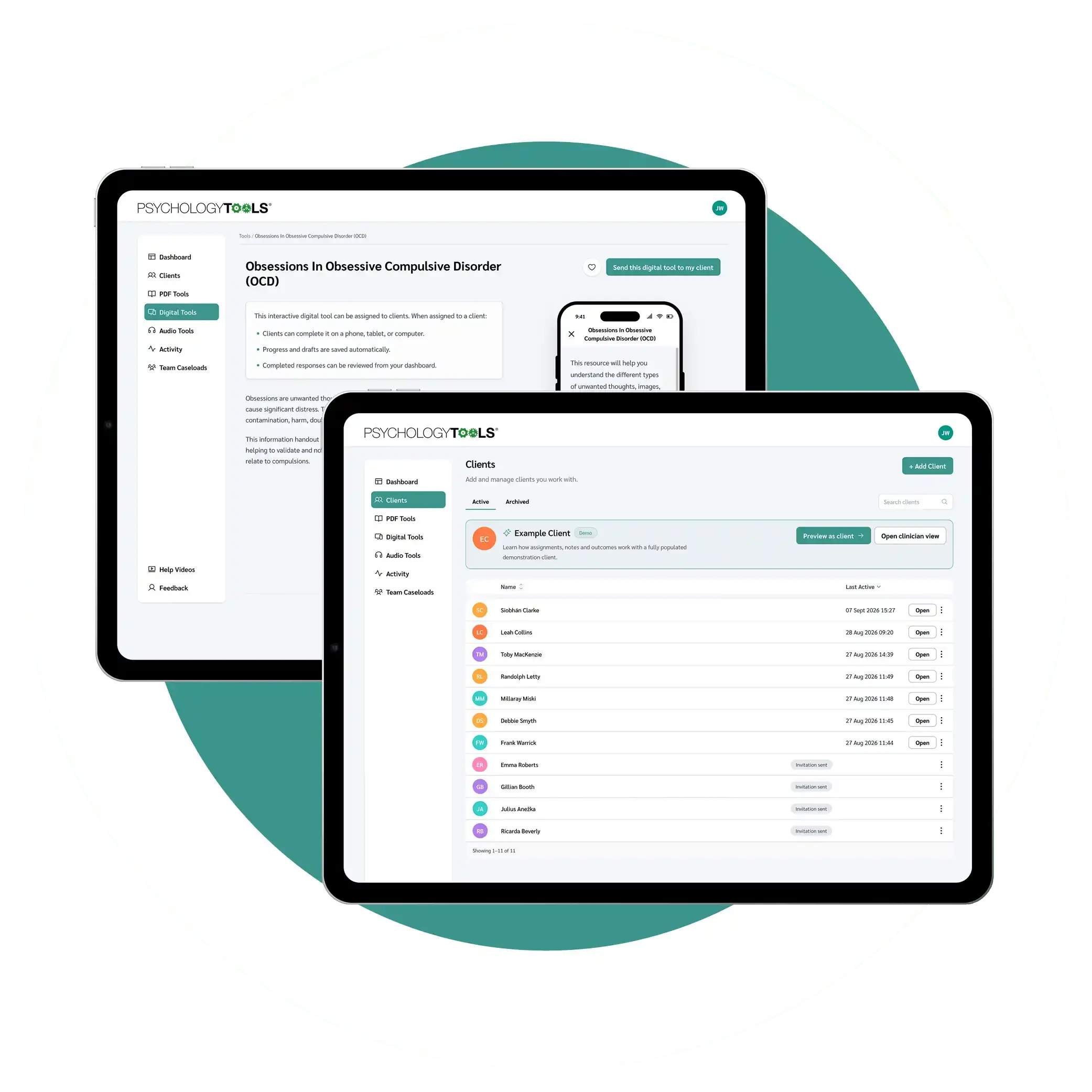
PDF ToolUse this tool with your clients
Support therapeutic work between sessions.
Assign
Send the tool securely to your client.
Client completes
Your client works through it on any device, at their own pace.
Review
Review their responses before the next session.
Part of a complete library of evidence-based tools
Worksheets, guides, audio resources and interactive digital tools for mental health professionals.