Am I Experiencing Post-Traumatic Stress Disorder (PTSD)?
A symptom checklist to help clients reflect on symptoms of post-traumatic stress disorder (PTSD) and consider whether further psychological assessment may be helpful.
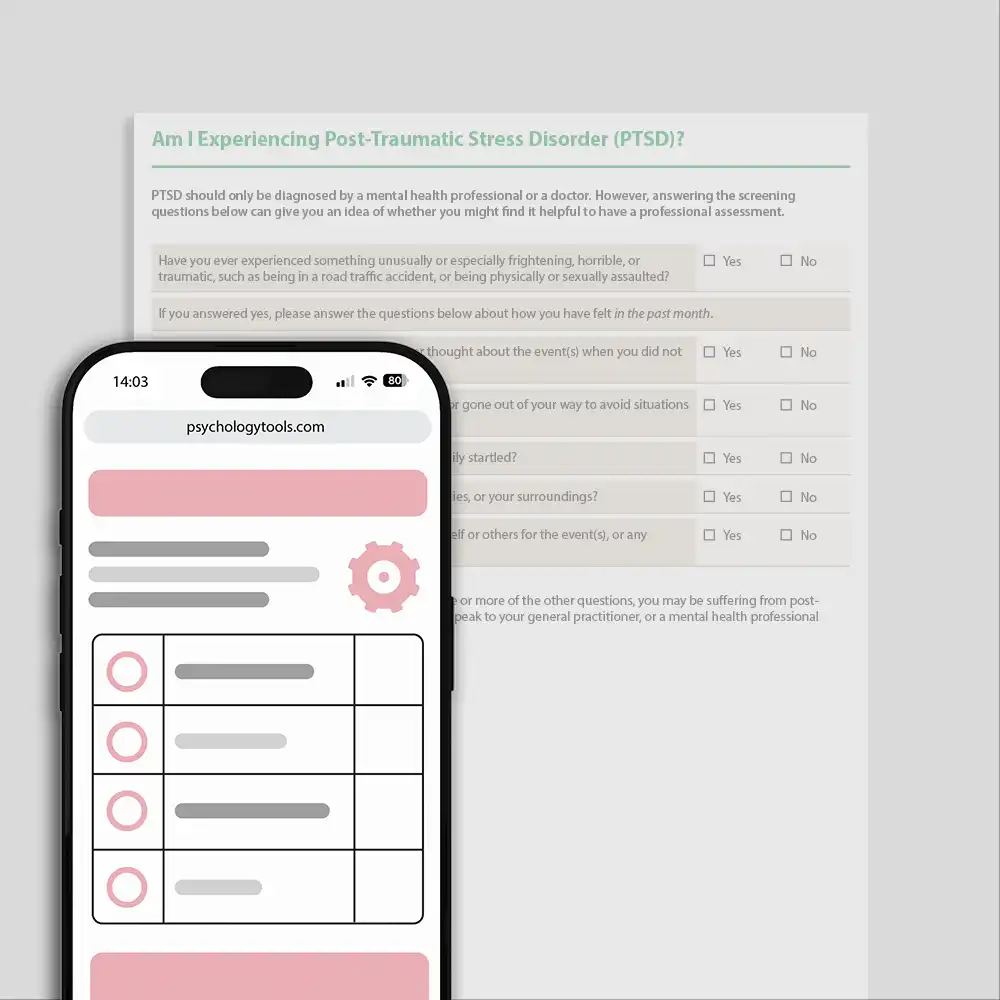
Am I Experiencing Post-Traumatic Stress Disorder (PTSD)?
Many people experience trauma at some point in their lives. With time, most people recover from these experiences. However, for a proportion of people, the effects of trauma last much longer, and they may develop a condition called post-traumatic stress disorder (PTSD).
PTSD should only be diagnosed by a mental health professional or a doctor. The Am I Experiencing Post-Traumatic Stress Disorder? tool explores signs of PTSD. The following questions can give you an idea of whether it might be helpful to arrange a professional assessment.
Overview
Post-traumatic stress disorder (PTSD) is a mental health condition that can develop after experiencing or witnessing a traumatic event. While it’s common to feel distressed after trauma, PTSD is marked by persistent symptoms such as unwanted memories, high arousal, avoidance, and emotional numbing. This symptom checklist is informed by DSM-5 and ICD-11 criteria and helps clients and clinicians explore whether a person’s symptoms may be consistent with PTSD. It is not intended to provide a diagnosis or assess severity, but it can support early discussions about whether further evaluation is warranted.
Also available as:
PDF ToolUse this tool with your clients
Support therapeutic work between sessions.
Assign
Send the tool securely to your client.
Client completes
Your client works through it on any device, at their own pace.
Review
Review their responses before the next session.
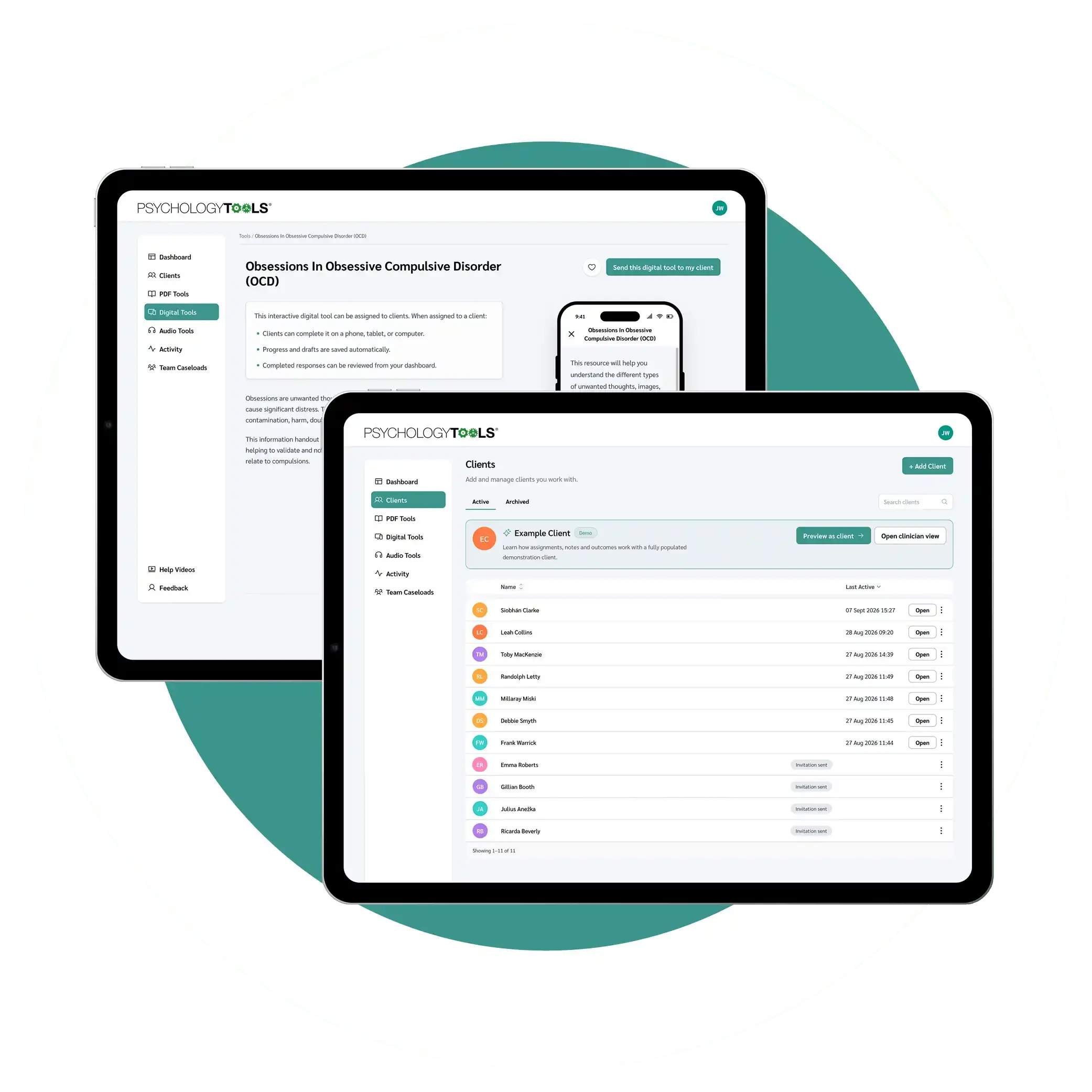
Part of a complete library of evidence-based tools
Worksheets, guides, audio resources and interactive digital tools for mental health professionals.