Assertive Body Language
A psychoeducational handout outlining the role of body language in assertive communication.
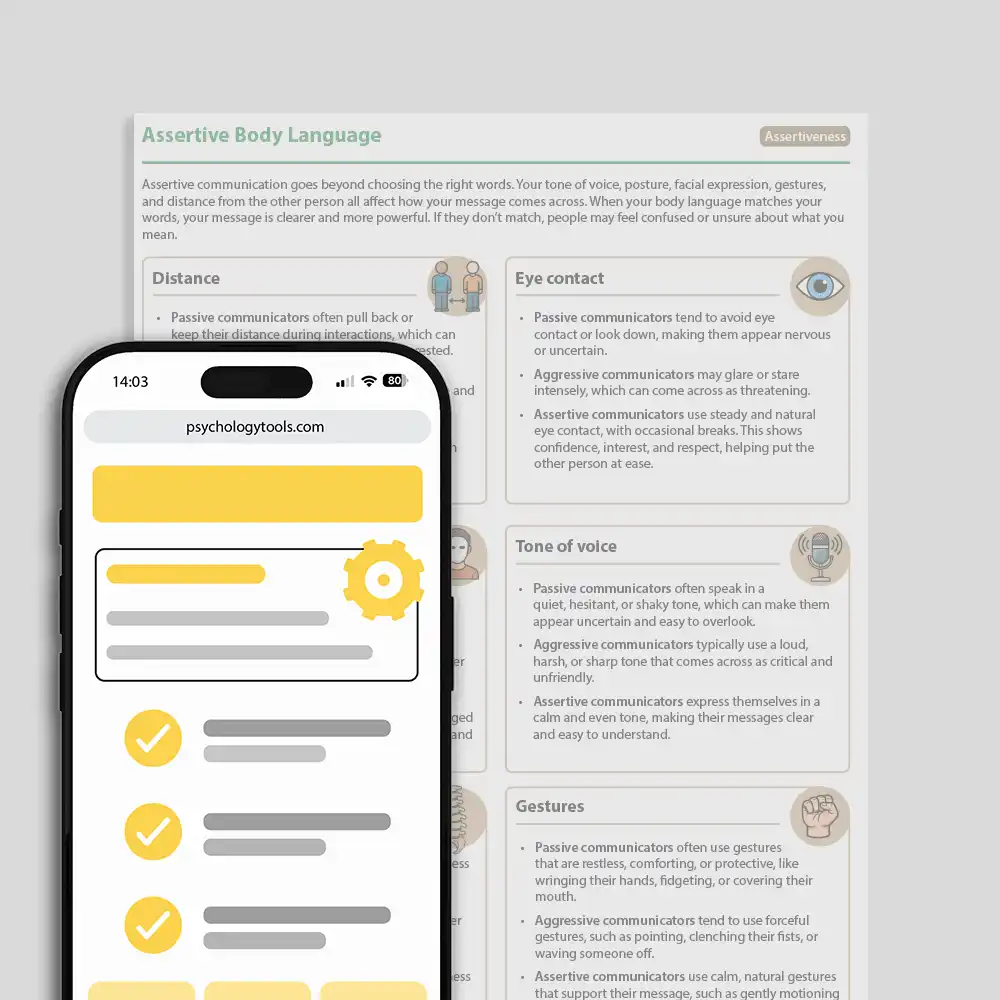
Assertive Body Language
This Assertive Body Language tool explains how non-verbal communication – such as your posture, tone of voice, and facial expressions – can help you express yourself confidently, respectfully, and effectively.
Overview
Communication difficulties have been associated with various mental health issues, as well as challenges in relationships and the workplace. Over the last several decades, many assertiveness training programs have been developed to improve communication and increase self-confidence. A key aspect of assertive communication is body language, also known as non-verbal behaviour. The Assertive Body Language information handout outlines the essential components of assertive non-verbal behavior (such as assertive eye contact, voice tone, facial expressions, and posture) and contrasts them with passive and aggressive behaviours.
Also available as:
PDF ToolUse this tool with your clients
Support therapeutic work between sessions.
Assign
Send the tool securely to your client.
Client completes
Your client works through it on any device, at their own pace.
Review
Review their responses before the next session.
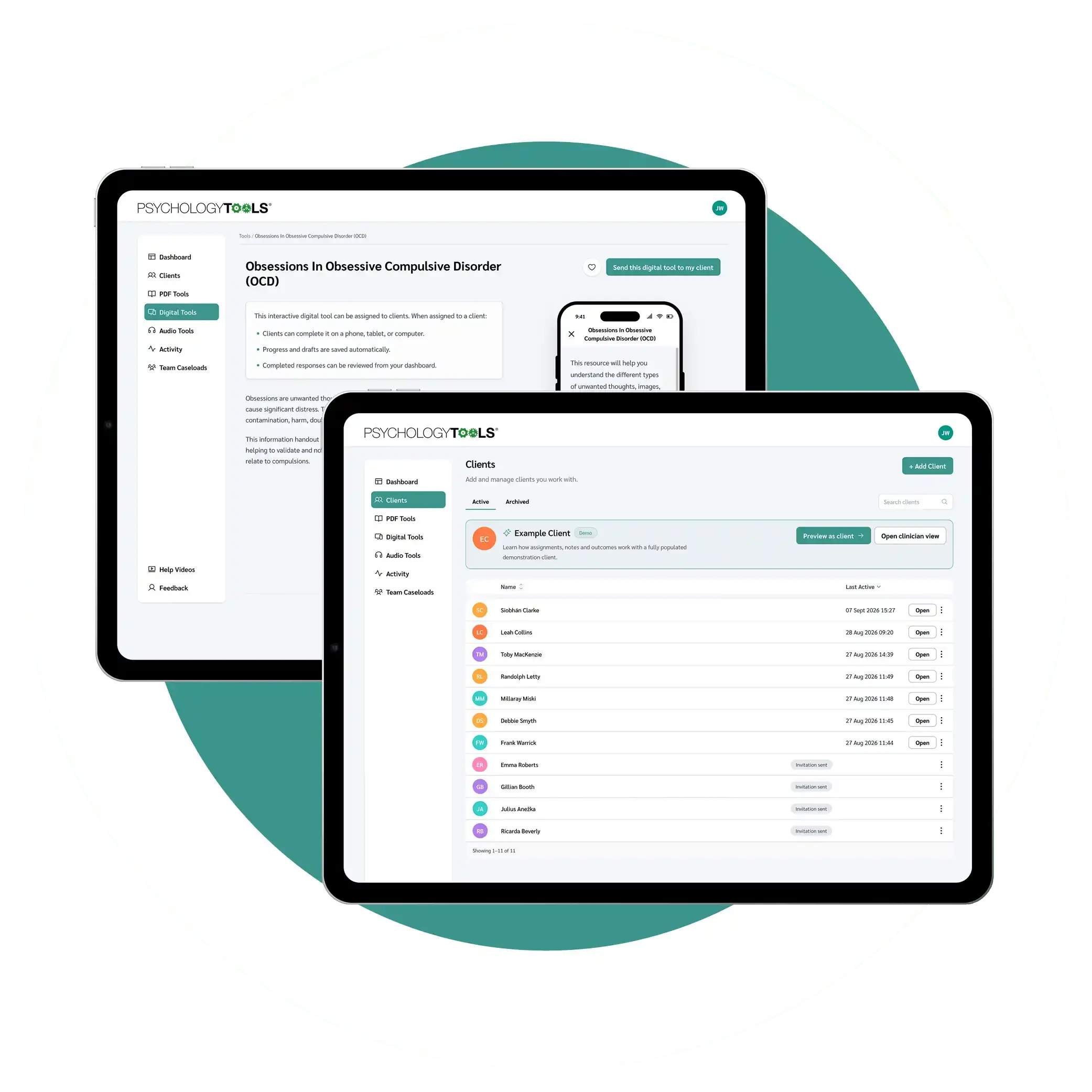
Part of a complete library of evidence-based tools
Worksheets, guides, audio resources and interactive digital tools for mental health professionals.