Barriers Abusers Overcome In Order To Abuse
A comprehensive resource detailing stages abusers navigate to perpetrate child sexual abuse, fostering clinician understanding and client discussions.
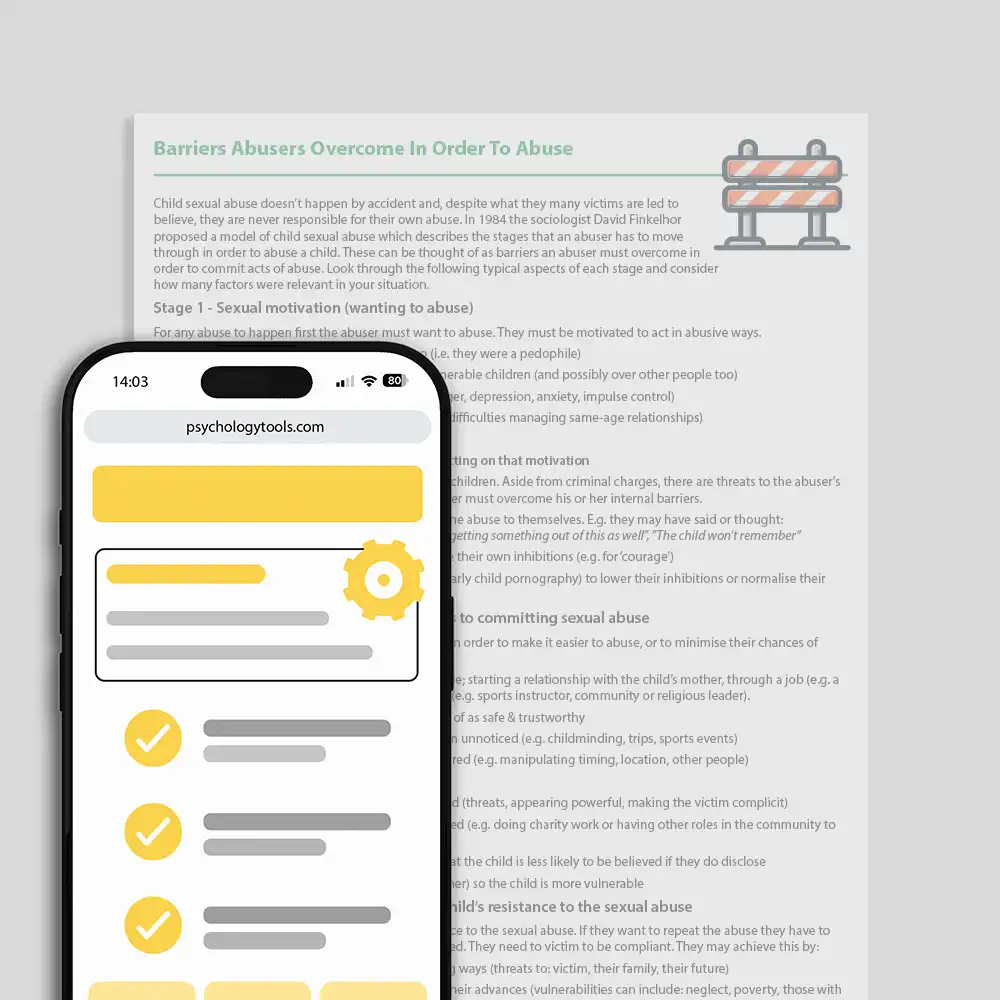
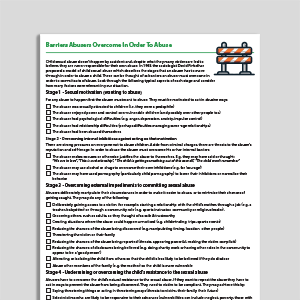
Barriers Abusers Overcome In Order To Abuse
This tool explains the steps an abuser must take before committing abuse. Understanding these steps can help you make sense of your own experiences, especially if you blame yourself or feel responsible.
Overview
This resource introduces David Finkelhor’s (1984) model outlining the psychological and situational barriers that perpetrators must overcome to commit child sexual abuse. The model identifies four distinct stages: overcoming internal inhibitions, external obstacles, and the child’s resistance, in addition to the presence of deviant motivation. By mapping out the deliberate and manipulative efforts abusers engage in, the handout offers a powerful tool for reframing clients’ understanding of their abuse.
The primary aim of this resource is to support survivors in recognizing that abuse is never their fault. By illustrating how abusers intentionally bypass multiple barriers in order to offend, it helps shift the narrative away from victim self-blame. Therapists can use this handout to facilitate psychoeducation, challenge distorted beliefs about responsibility, and support clients in the process of healing. It is equally valuable for clinician training, deepening understanding of abuse dynamics and informing sensitive, evidence-based interventions.
Also available as:
PDF ToolUse this tool with your clients
Support therapeutic work between sessions.
Assign
Send the tool securely to your client.
Client completes
Your client works through it on any device, at their own pace.
Review
Review their responses before the next session.

Part of a complete library of evidence-based tools
Worksheets, guides, audio resources and interactive digital tools for mental health professionals.