Boundaries - Self-Monitoring Record
Enhance client awareness and understanding of personal boundaries with this structured self-monitoring tool.
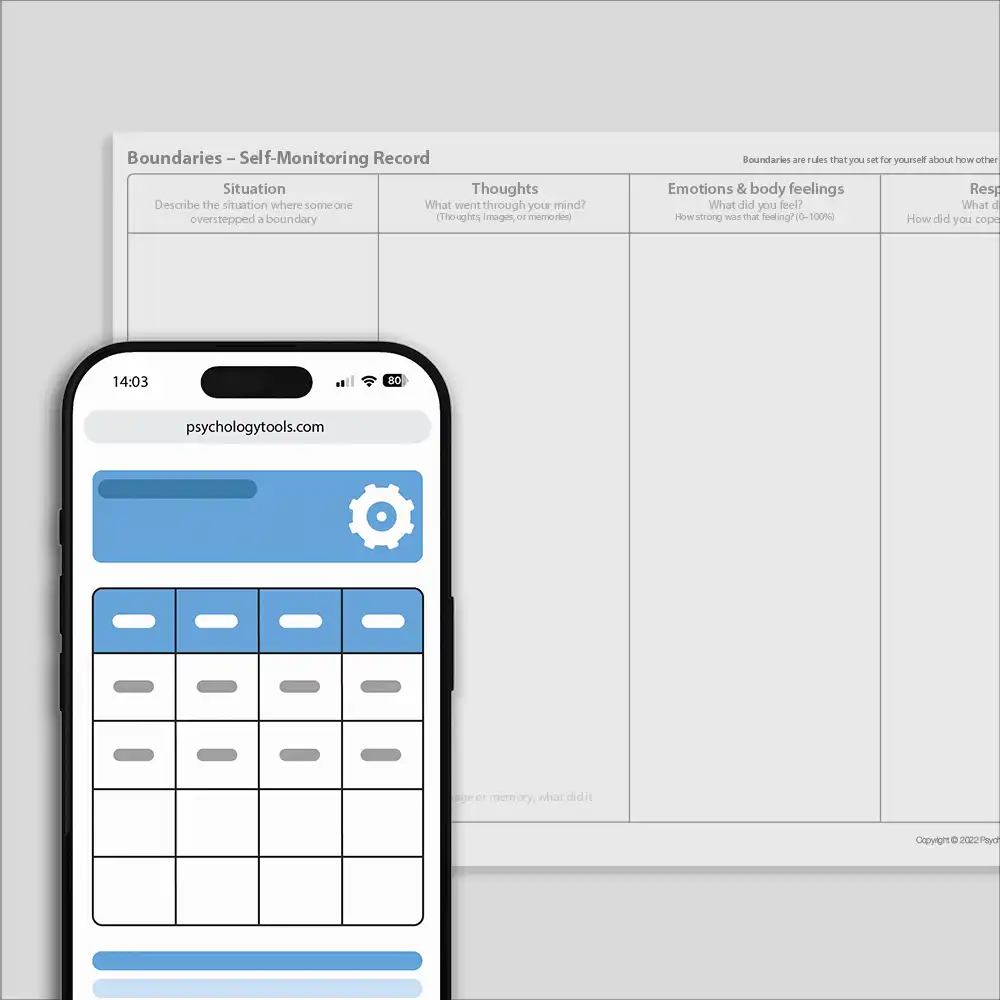
Boundaries - Self-Monitoring Record
Boundaries are an important part of managing relationships. If you struggle with setting boundaries, you might find yourself in difficult situations, such as:
- Going along with decisions you don’t agree with.
- Putting other people’s needs and preferences above your own.
- Struggling to get your needs met in your relationships.
- Feeling frustrated, intruded upon, or taken advantage of.
One way to learn more about how you manage your boundaries is to use a self-monitoring record. It’s like a diary that provides information about a problem, like when it tends to happen and other important details. You can use it to understand patterns and themes related to your boundaries and plan meaningful changes.
Complete this diary whenever you notice an issue related to your boundaries (such as being mistreated or intruded upon) or as your therapist has instructed.
Overview
The Boundaries - Self-Monitoring Record is designed to help clients identify and record situations where their personal boundaries are overstepped. It includes columns to record information about: situational context; thoughts about the boundary violation; emotional and physiological responses; and coping responses. An additional ‘extended’ version of the form includes a column for recording the consequences of these coping responses, which may help therapists to generate hypotheses about how the client’s existing coping strategies contribute to their reactions to further boundary violations.
Also available as:
PDF ToolUse this tool with your clients
Support therapeutic work between sessions.
Assign
Send the tool securely to your client.
Client completes
Your client works through it on any device, at their own pace.
Review
Review their responses before the next session.
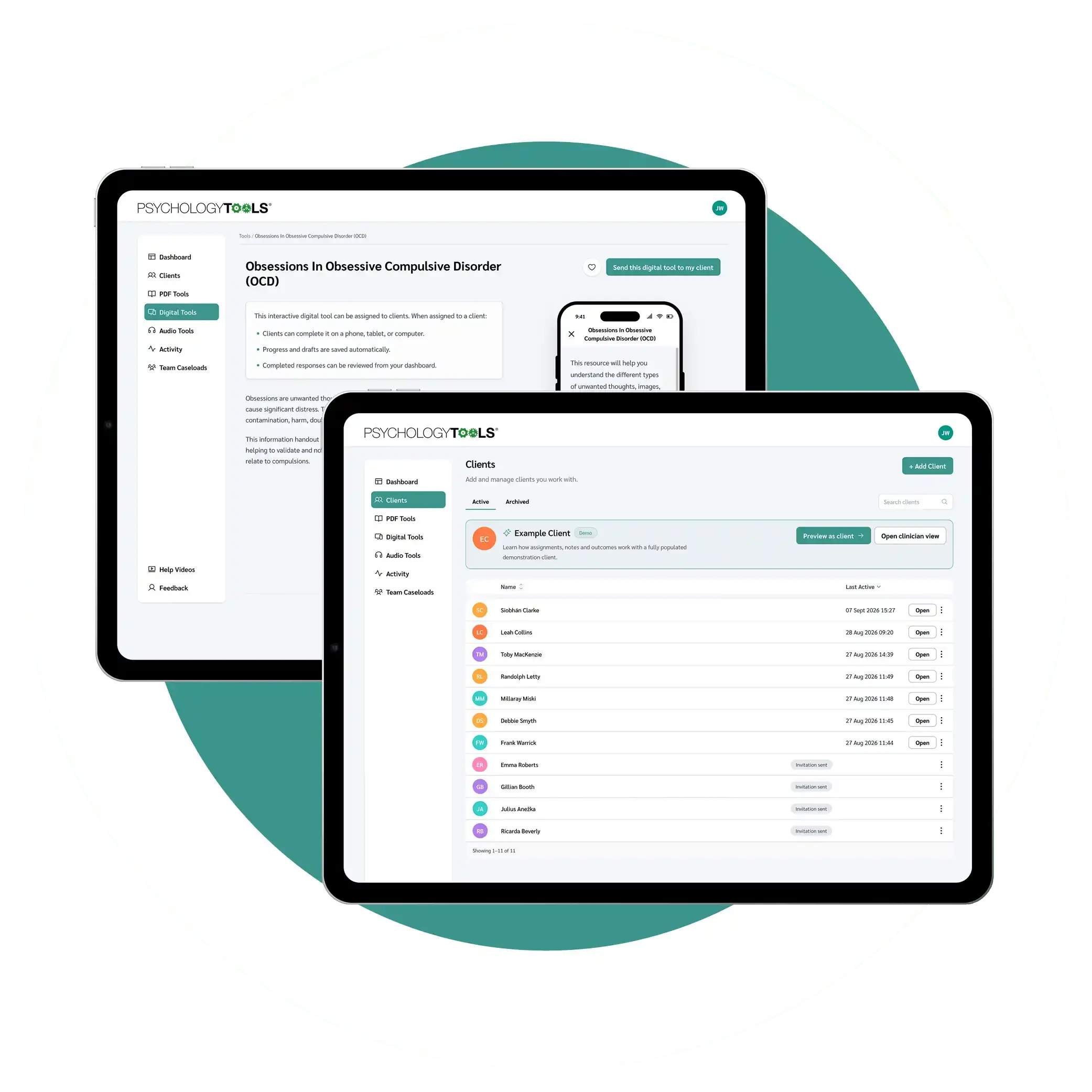
Part of a complete library of evidence-based tools
Worksheets, guides, audio resources and interactive digital tools for mental health professionals.