Catastrophizing
Catastrophizing is a cognitive distortion where individuals habitually anticipate the worst possible outcomes in situations, often leading to increased anxiety and emotional discomfort.
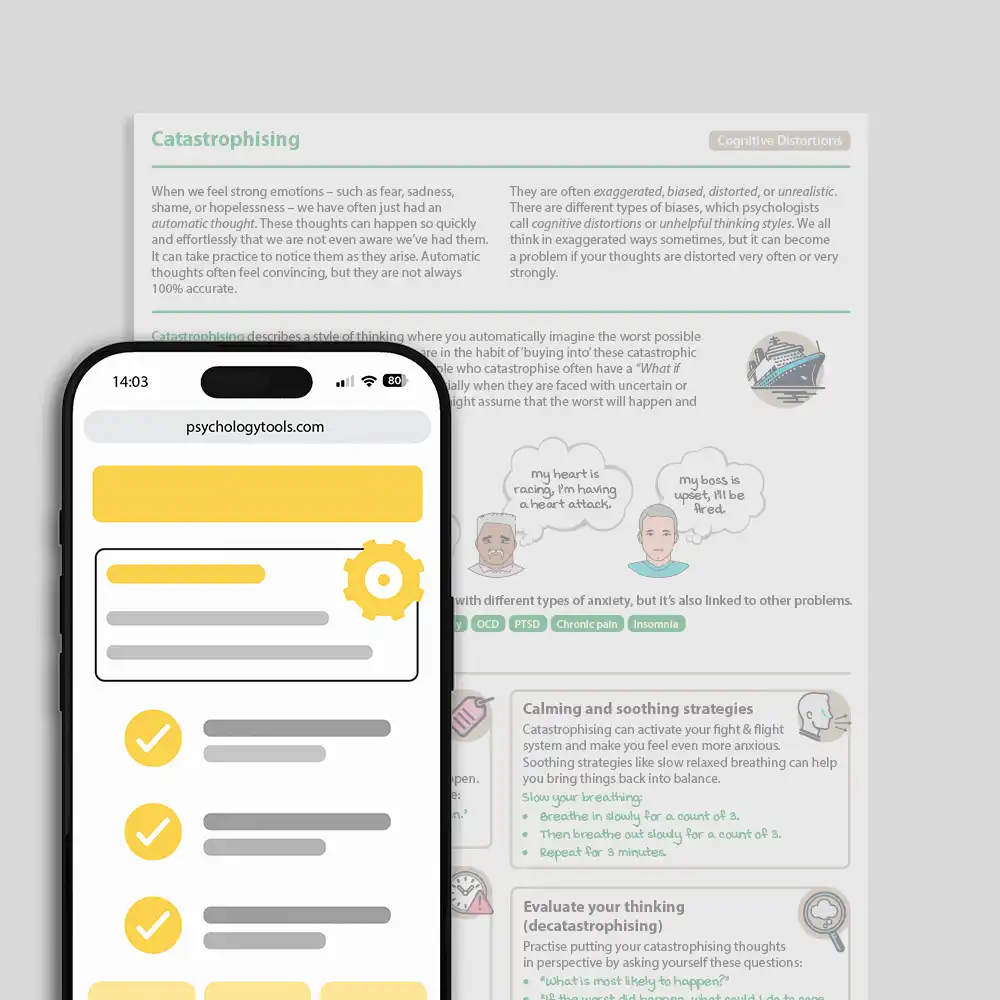
Catastrophizing
Cognitive behavior therapy (CBT) suggests that our thoughts influence how we feel and how we act. However, some of our thoughts can be biased. Recognizing these ‘cognitive distortions’ or ‘unhelpful thinking styles’ can help you judge how accurate and useful your automatic thoughts are. This tool will introduce you to a common distortion called catastrophizing.
Overview
Catastrophizing is a common thinking bias outlined in cognitive-behavioral therapies. It involves jumping to the most severe conclusions without evidence, fostering anxiety and distress. This information handout is a part of the cognitive distortions series, designed to provide mental health professionals with tools to assist clients in recognizing and addressing these patterns. Catastrophizing plays a significant role in various clinical disorders, including anxiety disorders, PTSD, and chronic pain.
Also available as:
PDF ToolUse this tool with your clients
Support therapeutic work between sessions.
Assign
Send the tool securely to your client.
Client completes
Your client works through it on any device, at their own pace.
Review
Review their responses before the next session.

Part of a complete library of evidence-based tools
Worksheets, guides, audio resources and interactive digital tools for mental health professionals.