CBT Model - Maintaining Processes - Past And Present
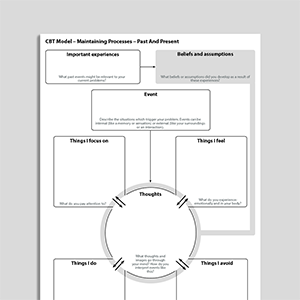
This CBT Model - Maintaining Processes - Past And Present worksheet provides a framework for explaining what triggers a problem, why it persists, and why it has arisen.
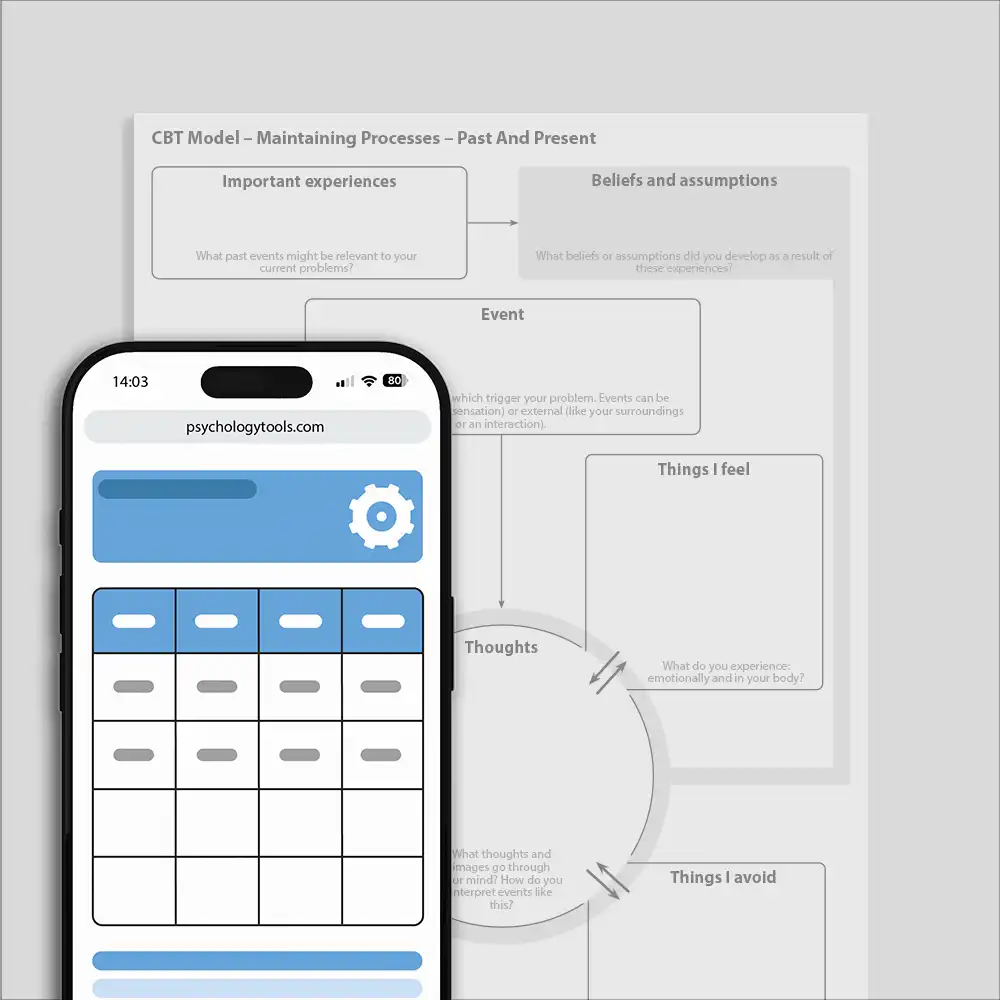
CBT Model – Maintaining Processes – Past And Present
Cognitive behavioral therapy (CBT) suggests that difficult feelings are not directly caused directly by what happens to us, but how we think about and interpret these experiences. In other words, it is often our thoughts about events – rather than the events themselves – that lead to distress.
Certain patterns can cause unhelpful thoughts to become stuck in place and keep difficulties going. These include what we pay attention to, how we feel, what we do to cope, and what we avoid. Together, they can form a vicious cycle that maintains problems such as anxiety, low mood, or shame.
This CBT Model – Maintaining Processes – Past And Present will help you identify what maintains unhelpful patterns of thinking and the experiences that contributed to them.
Overview
Formulation is a key component of cognitive behavioral therapy (CBT) and essential to effective practice. Effective cognitive behavioral formulations tend to focus on maintenance cycles that explain why difficulties persist across situations, and research has identified several ‘common’ maintaining factors that operate across psychological disorders - including attentional processes, safety-seeking behaviors, and avoidance. This CBT Model - Maintaining Processes - Past And Present worksheet provides a framework for exploring the origins and persistence of a problem. It focuses on key maintaining factors that operate across various disorders, as well as life experiences, core beliefs, and dysfunctional assumptions that have contributed to the development of these difficulties.
Also available as:
PDF ToolUse this tool with your clients
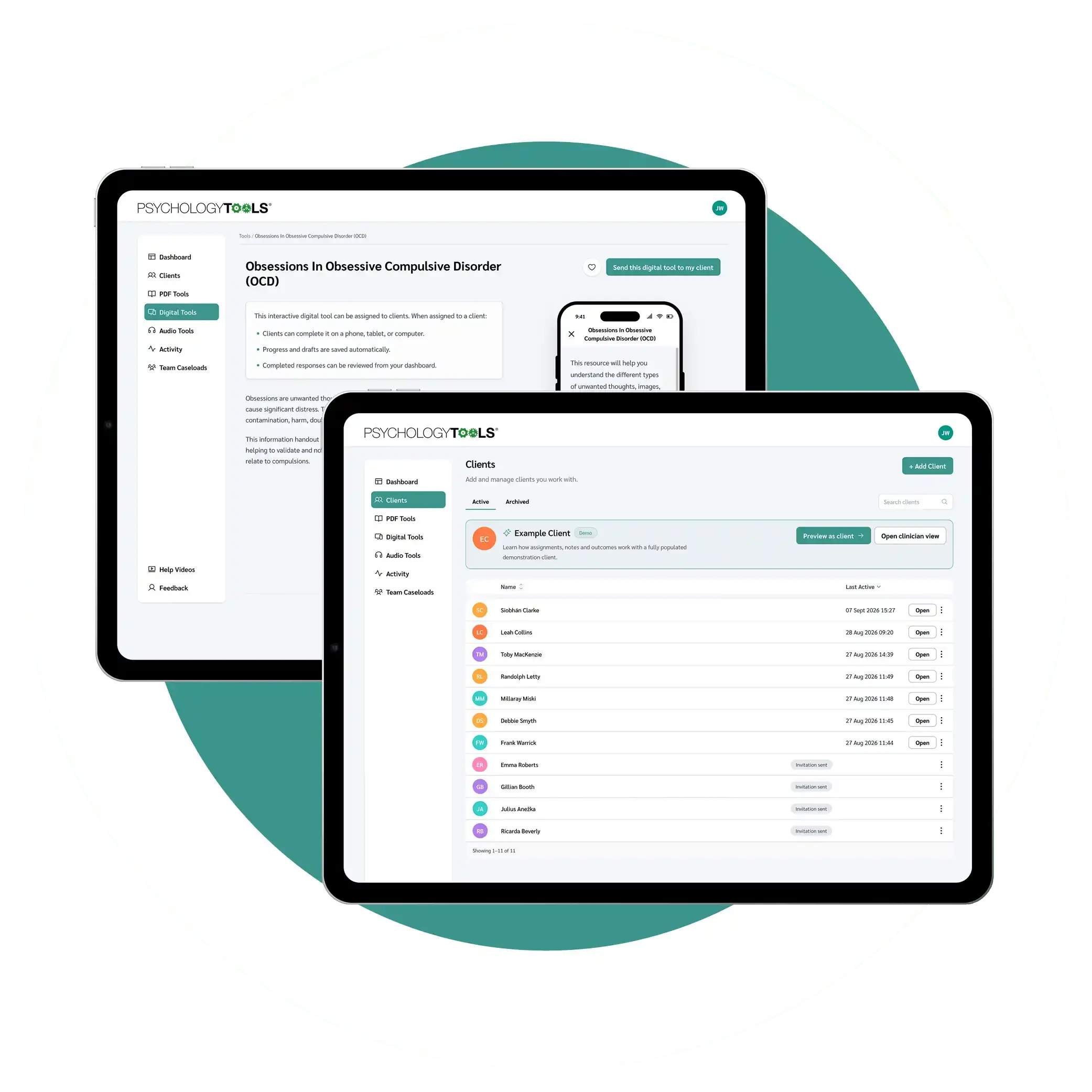
Support therapeutic work between sessions.
Assign
Send the tool securely to your client.
Client completes
Your client works through it on any device, at their own pace.
Review
Review their responses before the next session.
Part of a complete library of evidence-based tools
Worksheets, guides, audio resources and interactive digital tools for mental health professionals.