CBT Model - Past And Present
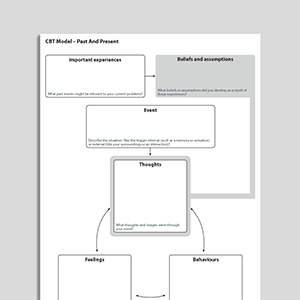
Formulation is a key component of cognitive behavioral therapy (CBT) and essential to effective practice. This CBT Model – Past And Present is a descriptive formulation that introduces clients to the cognitive behavioral model, highlighting the interplay between thoughts, feelings, and behavior. It also explains how past life experiences, underlying core beliefs, and dysfunctional assumptions shape cognitive appraisals and contribute to current difficulties.

CBT Model – Past And Present
Cognitive behavior therapy (CBT) is based on the idea that difficult feelings don’t come directly from what happens to us, but from our thoughts or ‘interpretations’ of these experiences. Our thoughts and feelings can also influence our actions, shaping how we respond to events. CBT suggests that our thoughts, feelings, and behaviors are connected, with each one affecting the others.
The way we interpret a situation is also influenced by the beliefs we have developed about ourselves, the world, and other people. These beliefs are based on the experiences we’ve had in life – our history.
The CBT Model – Past and Present helps you explore how past experiences contribute to your responses to events. By identifying important past events and the beliefs you formed from them, you can gain insight into how they influence your present-day thoughts, feelings, and behaviors. This can help you uncover patterns and make meaningful changes.
Overview
The CBT Model - Past And Present worksheet provides a descriptive formulation that can be used with a range of clients. It highlights how past experiences and core beliefs influence current cognitive appraisals and difficulties more generally. Incorporating core beliefs and dysfunctional assumptions - and the life experiences that have led to their formation - can benefit descriptive formulations in several ways. This information can help clients to make links between the past and the present; contextualize their symptoms and understand their origins; understand why symptoms persist across time and situations; tell a broader story of their lives. Therapists should note that exploring early life experiences is often unnecessary during the early stages of therapy. Kuyken and colleagues (2009) advise exploring negative core beliefs and associated developmental experiences only when it is necessary, after constructing other conceptualizations, and when a strong therapeutic alliance has been developed.
Also available as:
PDF ToolUse this tool with your clients
Support therapeutic work between sessions.
Assign
Send the tool securely to your client.
Client completes
Your client works through it on any device, at their own pace.
Review
Review their responses before the next session.

Part of a complete library of evidence-based tools
Worksheets, guides, audio resources and interactive digital tools for mental health professionals.