Changing Avoidance (Behavioral Activation)
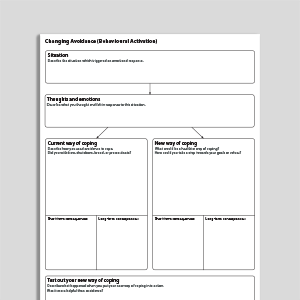
Changing Avoidance (Behavioral Activation) is a worksheet designed to help clients identify and modify their avoidance behaviors.
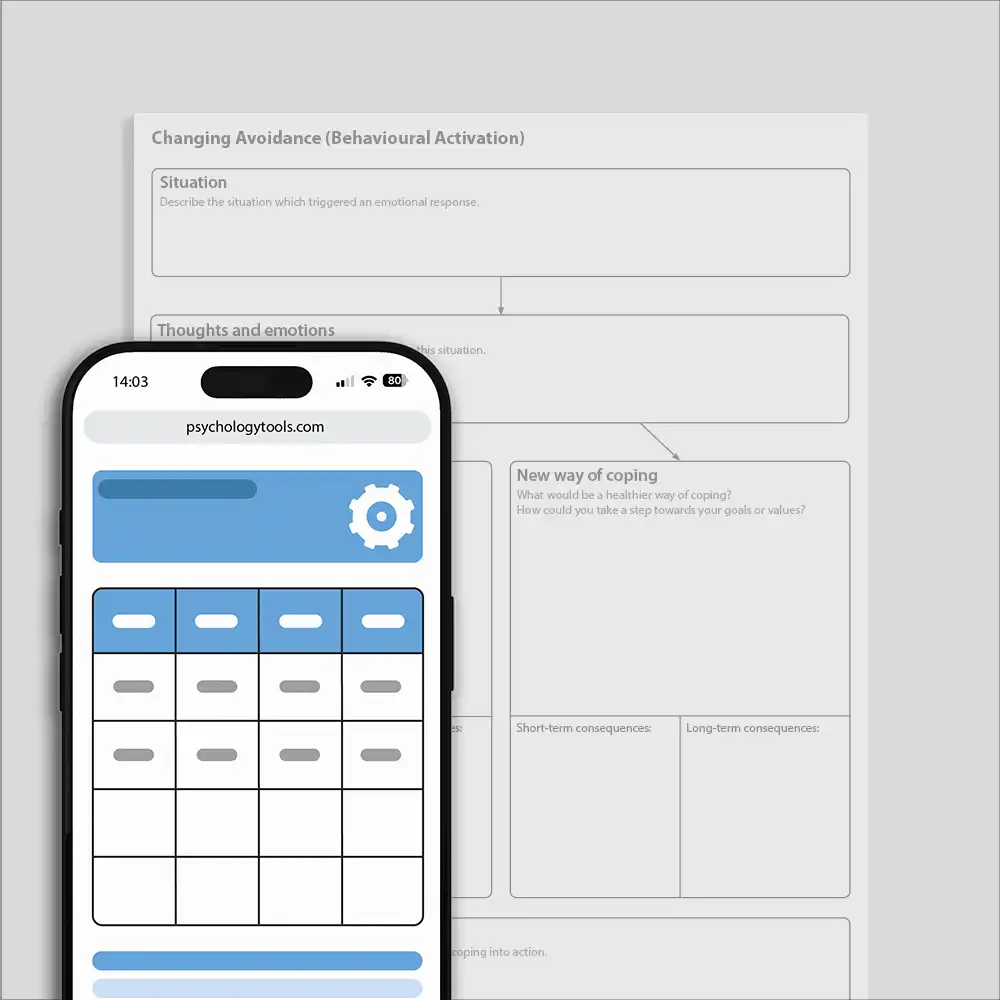
Changing Avoidance (Behavioral Activation)
Re-engaging with activities can be an effective way to improve your mood.
One of the biggest barriers to becoming more active is avoidance. Avoidance is a common way of coping with low mood. It can take many forms, including withdrawing, shutting down, postponing tasks, and dwelling on problems. While avoidance might give you some relief in the short term, it often makes things worse in the long run. For example, putting off a task you don’t want to do might feel better at first, but it won’t address a problem that might be contributing to your low mood.
The Changing Avoidance (Behavioral Activation) tool will help you:
- Identify coping strategies that are contributing to your difficulties.
- Develop new ways of coping.
- Reflect on which coping strategies work better for you in the long run.
Use this resource to explore a situation where you you used avoidance to cope, or as your therapist has instructed.
Overview
Behavioral activation (BA) is an evidence-based therapeutic approach for treating disorders such as depression. BA emphasizes engagement in valued activities, reducing avoidance behaviors, and addressing barriers to rewards. This worksheet supports clients in evaluating their avoidance behaviors and implementing adaptive coping mechanisms.
Also available as:
PDF ToolUse this tool with your clients
Support therapeutic work between sessions.
Assign
Send the tool securely to your client.
Client completes
Your client works through it on any device, at their own pace.
Review
Review their responses before the next session.
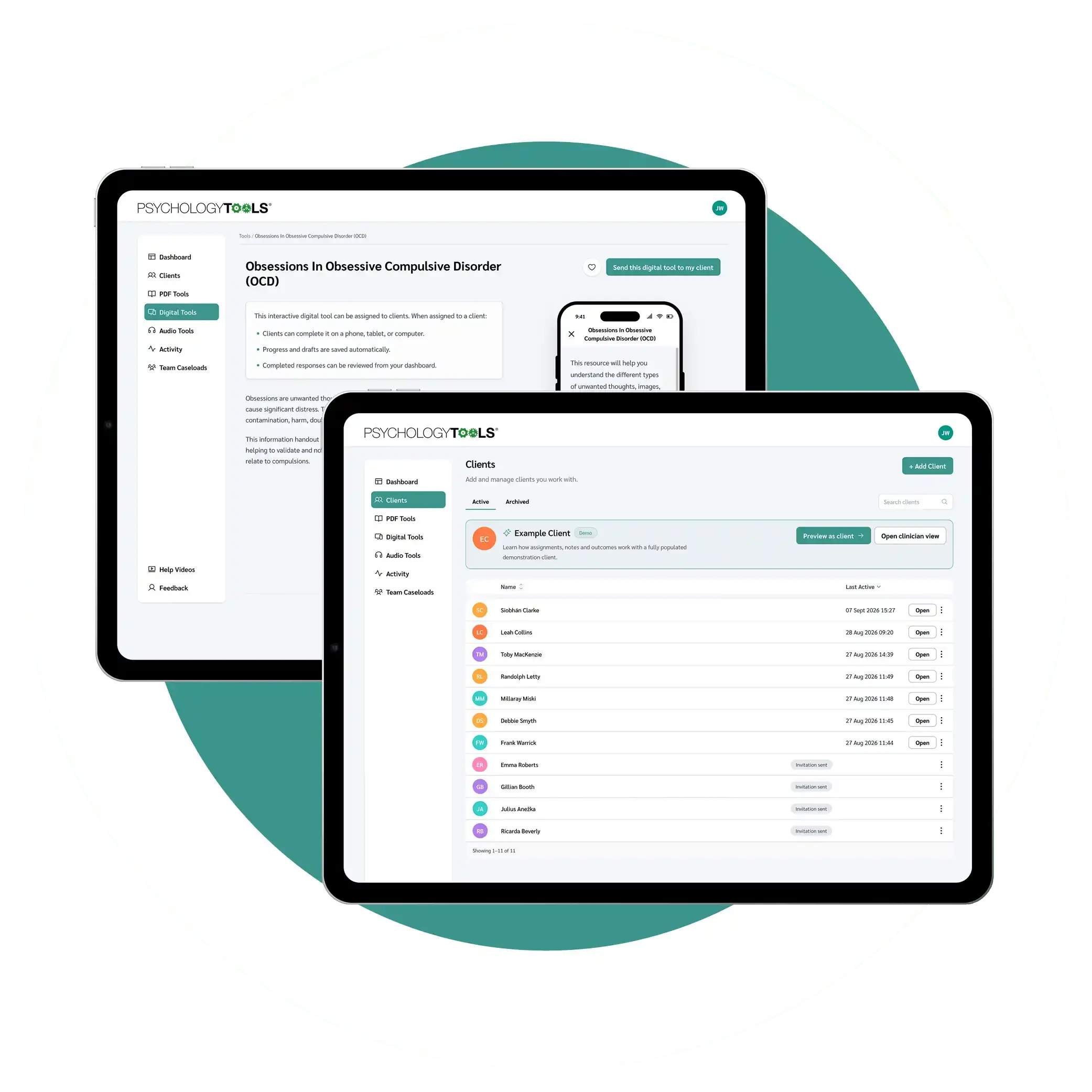
Part of a complete library of evidence-based tools
Worksheets, guides, audio resources and interactive digital tools for mental health professionals.