Classical Conditioning
Explore the role of classical conditioning with this practical handout designed for clinicians seeking to better understand and utilize conditioning principles.
Classical Conditioning
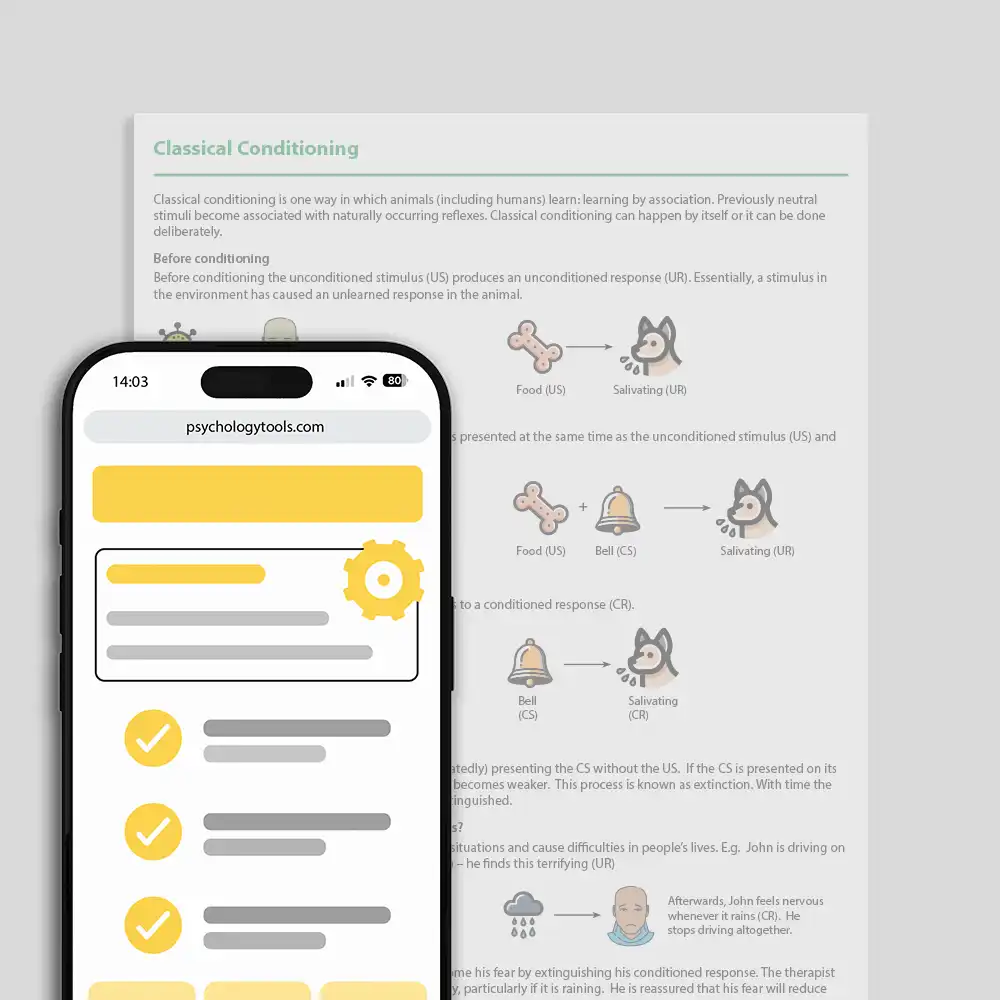
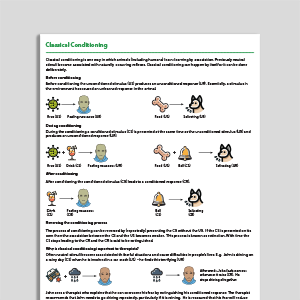
The Classical Conditioning tool explains how the mind links certain situations with automatic reactions. This can help you understand why certain fears or responses develop and how they can change.
Overview
Classical conditioning is a foundational principle in psychology that helps explain how emotional and behavioral responses can become linked to previously neutral stimuli. Its relevance extends across many psychological formulations, and understanding classical conditioning supports clinicians in identifying how client difficulties may arise and persist through learned associations. This resource offers a clear, practical introduction to classical conditioning for mental health professionals, with guidance on recognizing and working with conditioned responses—particularly in presentations such as phobias, anxiety disorders, and trauma-related conditions where exposure-based strategies can be especially effective.
Also available as:
PDF ToolUse this tool with your clients
Support therapeutic work between sessions.
Assign
Send the tool securely to your client.
Client completes
Your client works through it on any device, at their own pace.
Review
Review their responses before the next session.

Part of a complete library of evidence-based tools
Worksheets, guides, audio resources and interactive digital tools for mental health professionals.