Cognitive Distortions – Self-Monitoring Record
An accessible self-monitoring worksheet that helps clients identify automatic thoughts and common cognitive distortions.
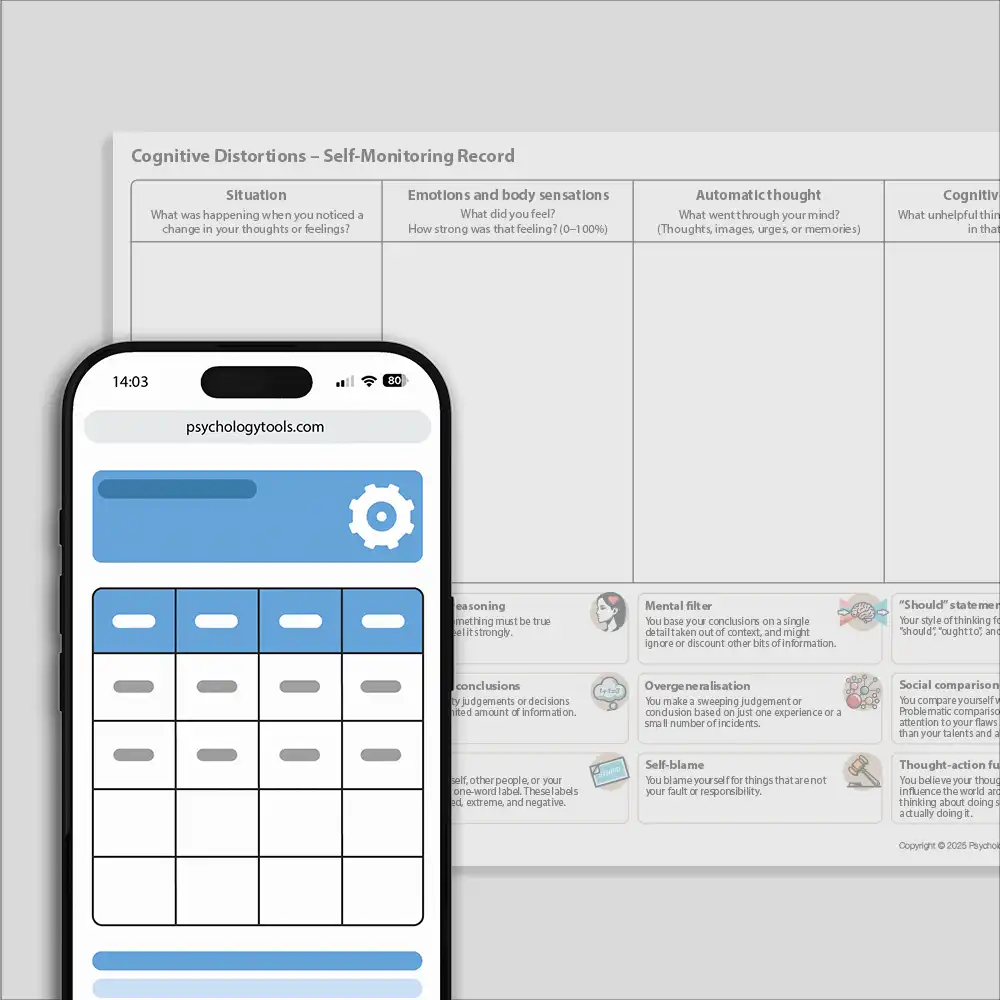
Cognitive Distortions – Self-Monitoring Record
Each day, hundreds of ‘automatic’ thoughts pop into our minds, often without us noticing. Depending on their content, these thoughts can lead to us feel different emotions, such as joy, fear, anger, or sadness (to name just a few).
Our thoughts can also be biased: not every thought we have is 100% accurate. Psychologists have identified different biases that can show up in our thinking, known as ‘unhelpful thinking styles’ or ‘cognitive distortions’.
One way to become more aware of these distortions is to use a self-monitoring record. This record will help you identify your automatic thoughts and how they might be biased or inaccurate.
Complete this record whenever you notice a negative thought or experience a significant change in your mood, or as your therapist has instructed.
Overview
Self-monitoring is a technique in which clients learn to systematically observe and record specific targets such as their own thoughts, body feelings, emotions, and behaviors. The aim is to improve clients’ awareness of their experiences and the contexts in which they occur to help them gain insight into their symptoms and difficulties. Self-monitoring supports collaboration between the therapist and client, creating opportunities to formulate and test hypotheses about these difficulties. It is usually introduced early in therapy, providing an inexpensive and continuous measure of problem symptoms and behaviors throughout treatment.
The Cognitive Distortions – Self-Monitoring Record is designed to help clients become more aware of their negative automatic thoughts, and any cognitive distortions (unhelpful thinking styles) which are present within them.
Also available as:
PDF ToolUse this tool with your clients
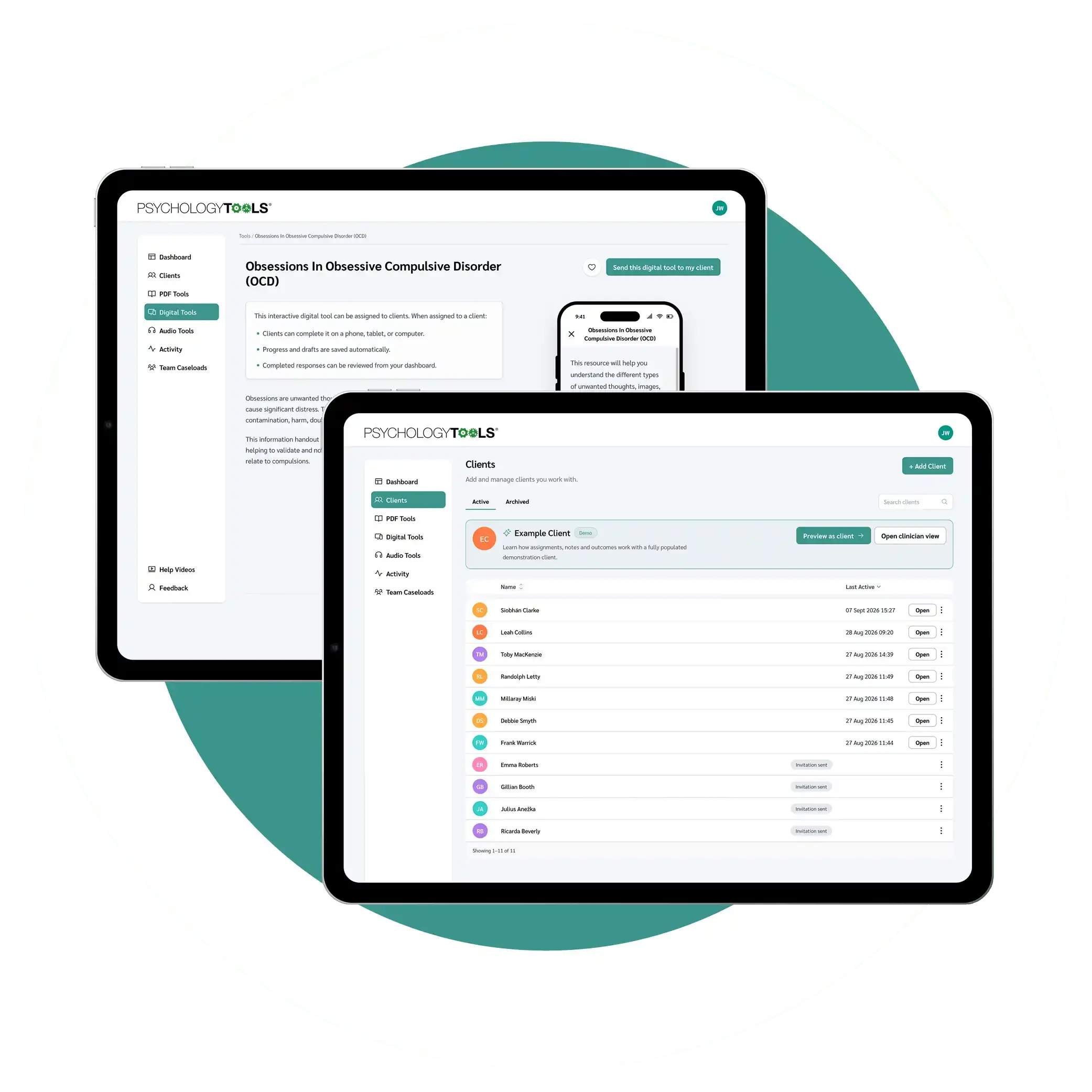
Support therapeutic work between sessions.
Assign
Send the tool securely to your client.
Client completes
Your client works through it on any device, at their own pace.
Review
Review their responses before the next session.
Part of a complete library of evidence-based tools
Worksheets, guides, audio resources and interactive digital tools for mental health professionals.