Cognitive Distortions - Unhelpful Thinking Styles (Extended)
Cognitive distortions are habitual thought patterns that skew perceptions, often resulting in biased and inaccurate views. This professional handout delineates common distortion types, facilitating their identification and remediation in therapy.
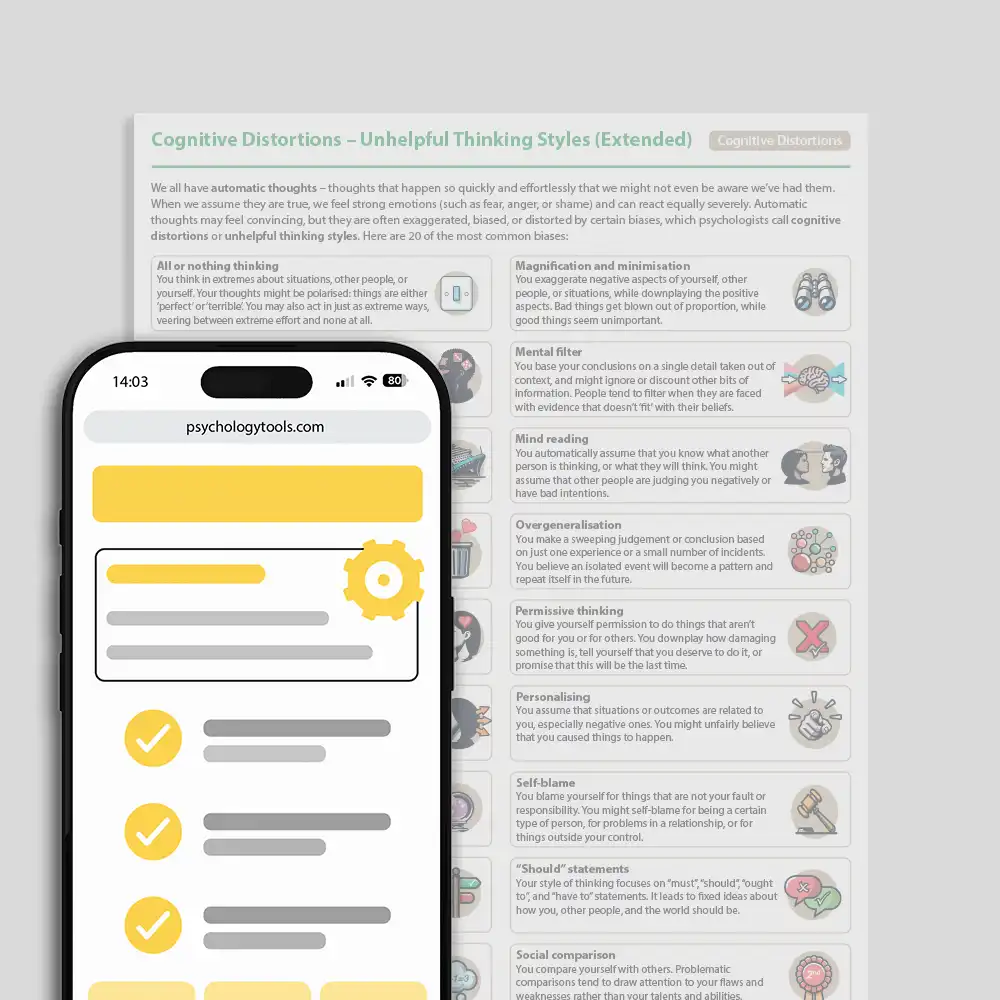
Cognitive Distortions – Unhelpful Thinking Styles (Extended)
Cognitive behavior therapy (CBT) suggests that our thoughts influence how we feel and how we act. However, some of our thoughts can be biased. Recognizing these ‘cognitive distortions’ or ‘unhelpful thinking styles’ can help you judge how accurate and useful your automatic thoughts are. This tool will introduce you to 20 of the most common cognitive distortions.
Overview
Cognitive distortions represent characteristic biases in thinking, affecting how we perceive and react to our experiences. Identifying and modifying these distortions is a crucial component of cognitive therapy. This professional handout outlines common cognitive biases, their clinical relevance, and therapeutic strategies for addressing them.
Also available as:
PDF ToolUse this tool with your clients
Support therapeutic work between sessions.
Assign
Send the tool securely to your client.
Client completes
Your client works through it on any device, at their own pace.
Review
Review their responses before the next session.

Part of a complete library of evidence-based tools
Worksheets, guides, audio resources and interactive digital tools for mental health professionals.