Communication Style – Self-Monitoring Record
This structured tool helps clients identify, track, and reflect on their communication styles across different situations.
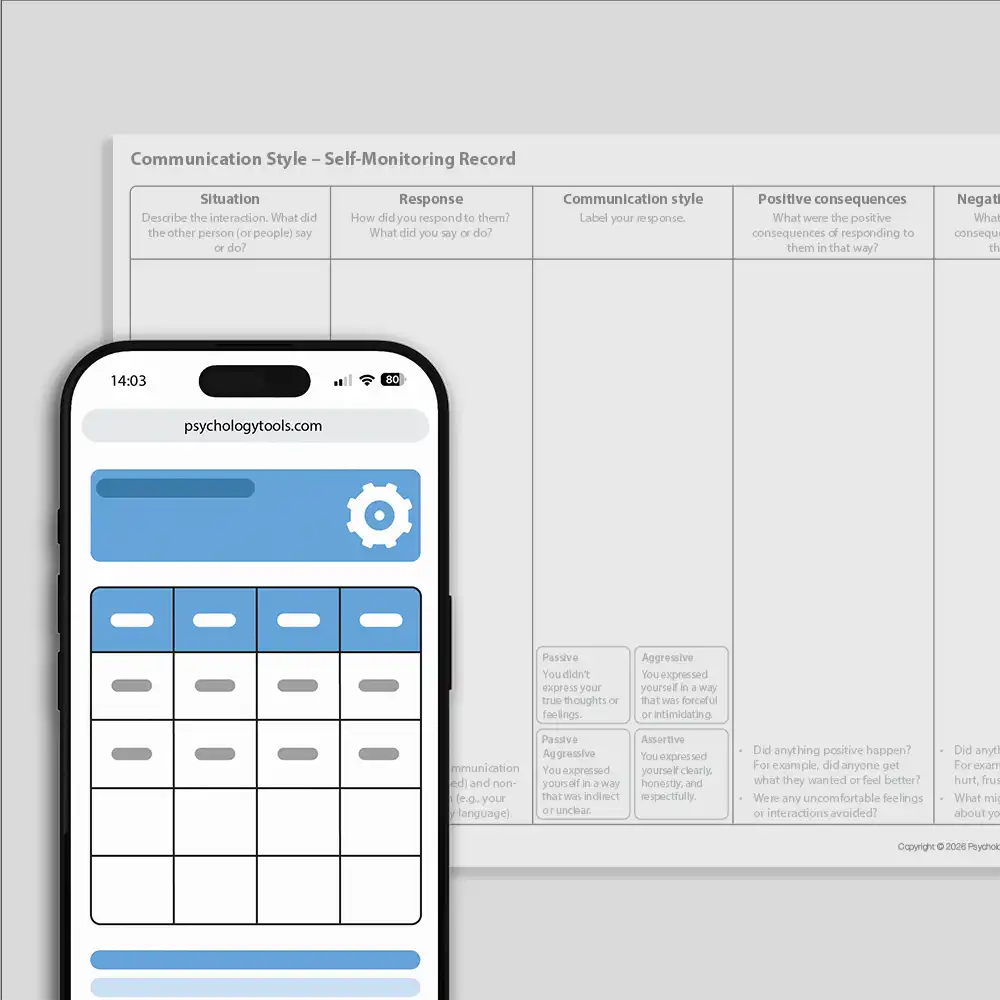
Communication Style – Self-Monitoring Record
People communicate in unique ways, but they often fall back on a particular ‘style’ of communication. They include:
- Passive communication. You avoid expressing what you really think and feel, perhaps to avoid conflict or gain other people’s approval.
- Aggressive communication. You express yourself in ways that come across as forceful or intimidating, such as raising your voice.
- Passive-aggressive communication. You express yourself in subtle or indirect ways, like sulking or using sarcasm.
- Assertive communication. You express yourself clearly, honestly, and respectfully.
While no communication style is perfect, learning to assert yourself can improve your relationships, mood, and experiences at work.
This Communication Style – Self-Monitoring Record will help you learn about your communication style, reflect on the consequences of communicating in particular ways, and identify times when being assertive might be helpful.
Complete this record whenever you experience a difficult interaction or feel unhappy with how you communicate, or as your therapist has instructed.
Overview
Self-monitoring teaches clients to systematically observe and record specific targets, such as their thoughts, body feelings, emotions, and behaviors. This Communication Style – Self-Monitoring Record worksheet is designed to help clients capture information about how they communicate, including the use of assertive and non-assertive communication styles (such as passive, aggressive, and passive-aggressive communication). This information can be used to assess communication patterns, monitor changes during treatment, reinforce improvements, and enhance self-awareness during interactions.
Also available as:
PDF ToolUse this tool with your clients
Support therapeutic work between sessions.
Assign
Send the tool securely to your client.
Client completes
Your client works through it on any device, at their own pace.
Review
Review their responses before the next session.
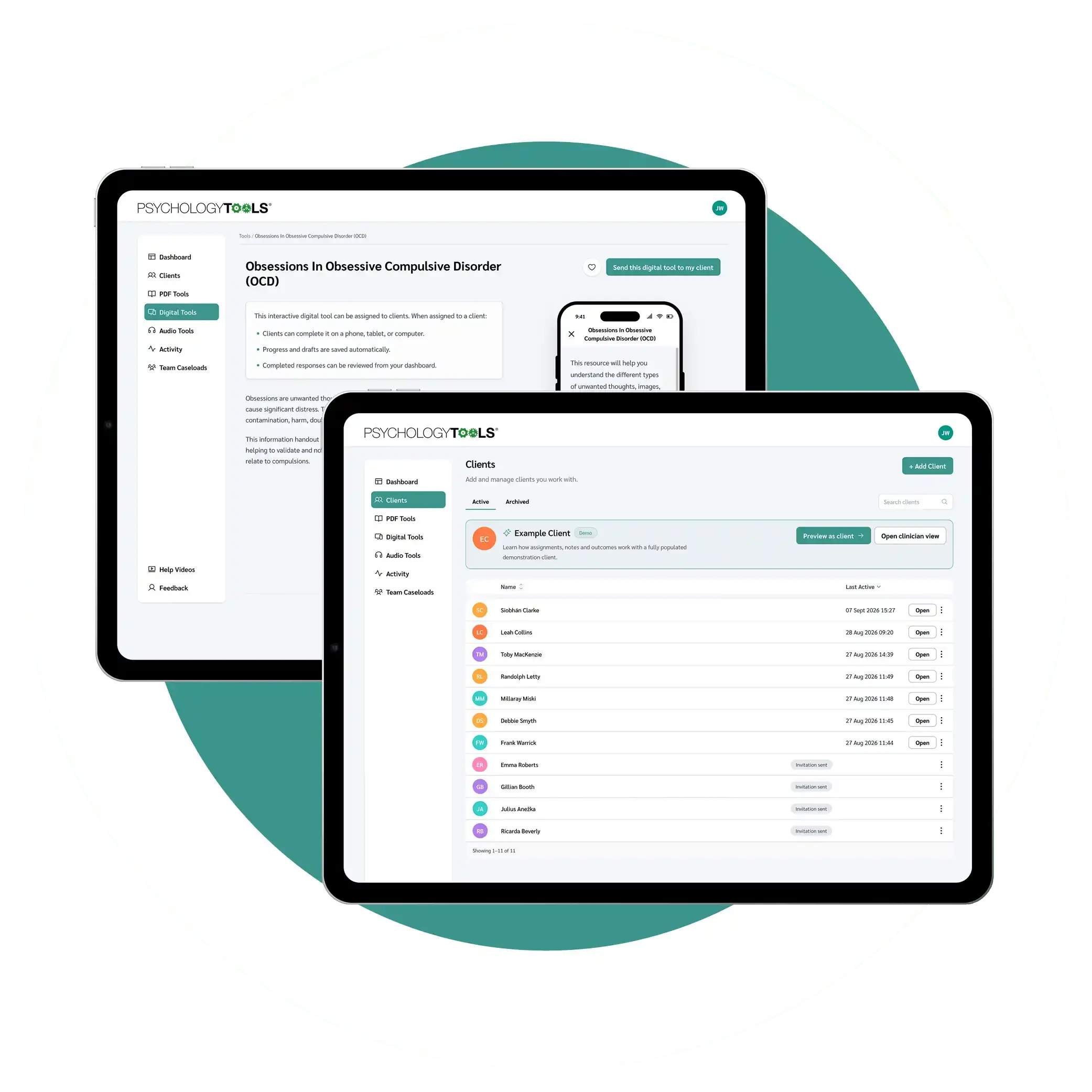
Part of a complete library of evidence-based tools
Worksheets, guides, audio resources and interactive digital tools for mental health professionals.