Communication Styles – Extended
A detailed handout describing four key communication styles (assertive, passive, aggressive, and passive-aggressive) to support psychoeduction and communication skills development.
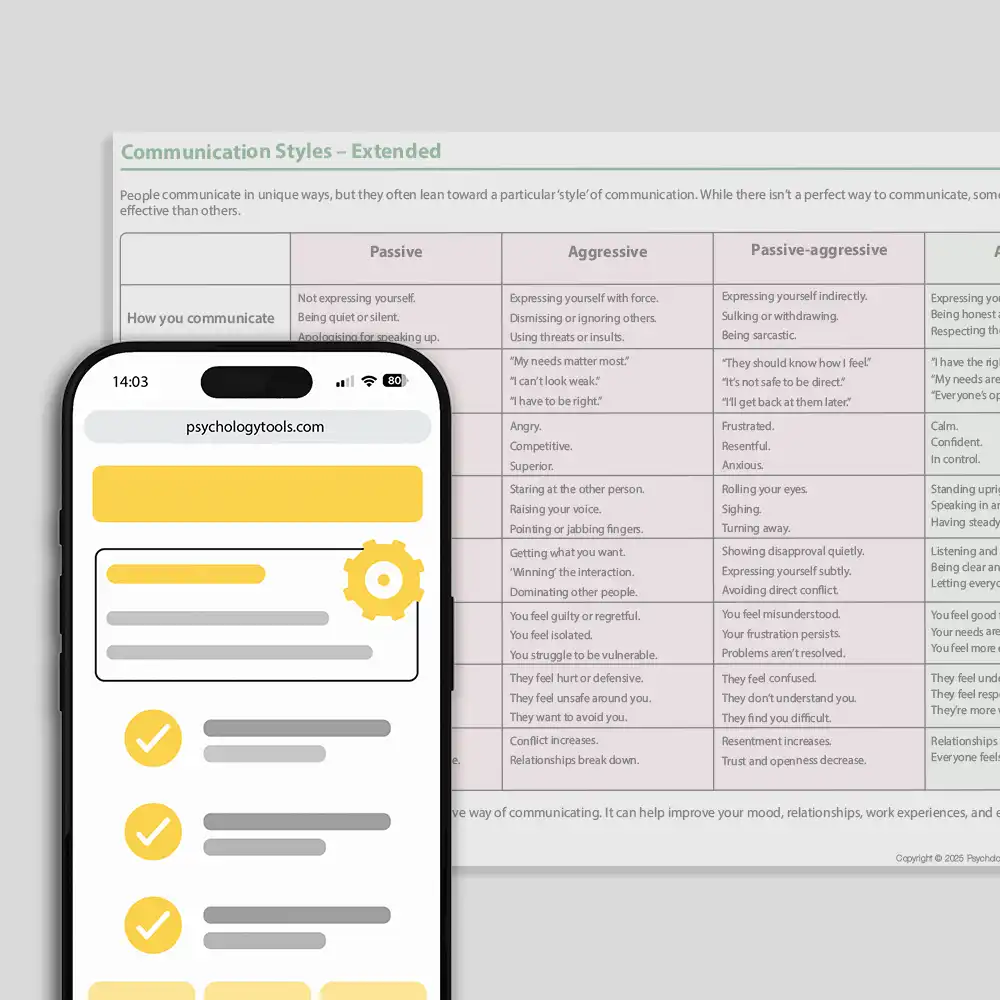
Communication Styles – Extended
This detailed Communication Styles resource explains how people express themselves in different ways: passively, aggressively, passive-aggressively, and assertively. Understanding your own communication style can help you find more effective ways to communicate, such as being assertive.
Overview
Assertive communication can lead to improvements in mental health symptoms, relationships, workplace performance, and personal safety. A key component of assertiveness training is recognizing different ‘styles’ of communication and correcting misconceptions about assertiveness. This information handout provides a detailed overview of assertive and non-assertive styles of communication (i.e., passive, aggressive, and passive-aggressive), outlining the thoughts, feelings, behaviors, intentions, and typical consequences associated with each style.
Also available as:
PDF ToolUse this tool with your clients
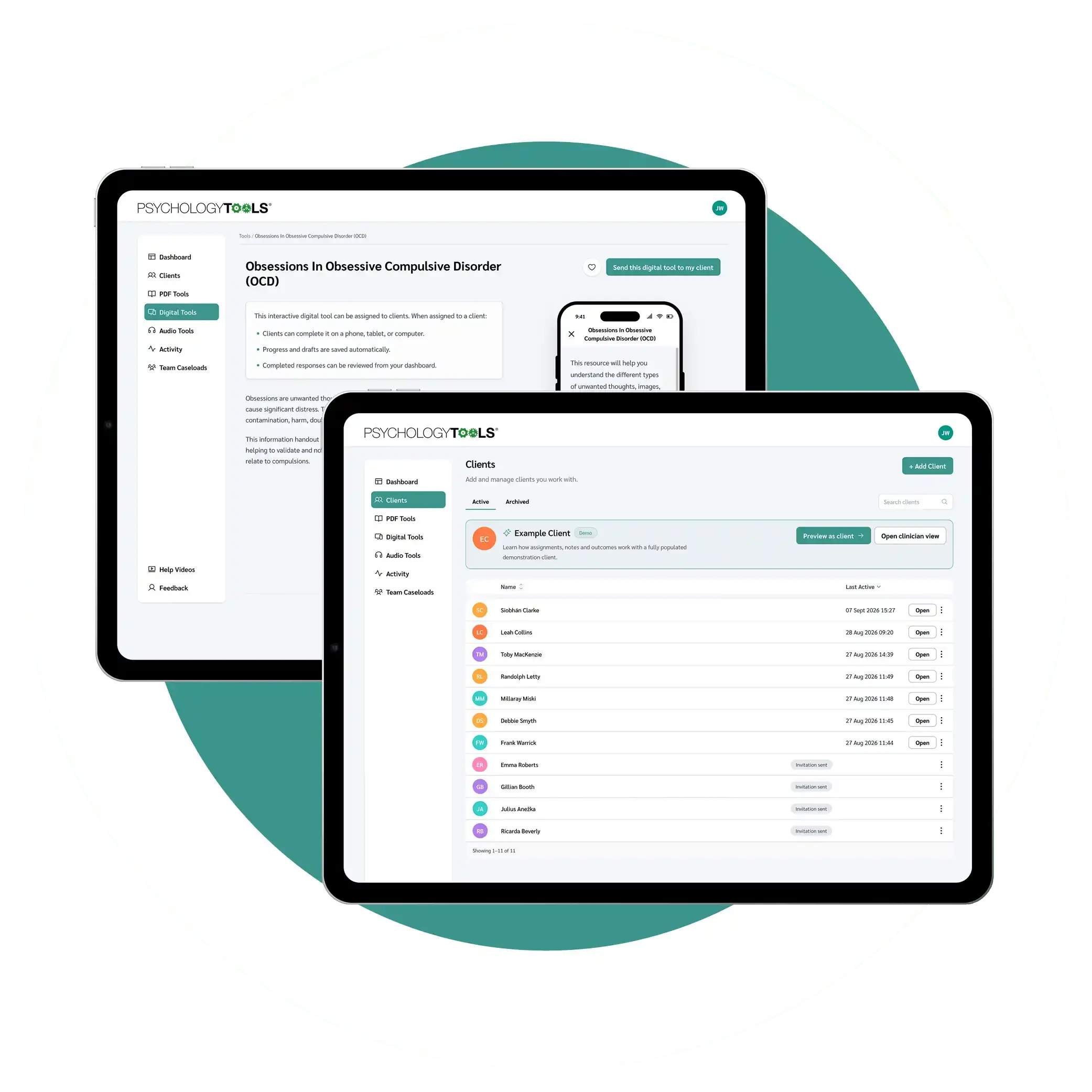
Support therapeutic work between sessions.
Assign
Send the tool securely to your client.
Client completes
Your client works through it on any device, at their own pace.
Review
Review their responses before the next session.
Part of a complete library of evidence-based tools
Worksheets, guides, audio resources and interactive digital tools for mental health professionals.