Decatastrophizing
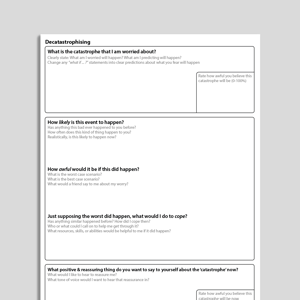
The Decatastrophizing worksheet is a cognitive restructuring tool aimed at reducing catastrophic thinking, taken from the self-help workbook Psychology Tools For Overcoming Panic.

Decatastrophizing
Catastrophic thoughts are common in many emotional problems, particularly anxiety. When we catastrophize, we think (1.) something bad is very likely to happen, (2.) this ‘thing’ would be truly awful, and (3.) we wouldn’t be able to cope with it. These thoughts can make us feel very anxious.
This Decatastrophizing exercise will help you identify and re-evaluate your catastrophic thoughts. It will explore how accurate these ‘scary’ thoughts are, and whether there might be more useful and realistic ways of viewing the situation.
Overview
Decatastrophizing, a term originally coined by Albert Ellis in the context of rational emotive behavior therapy (REBT), helps clients address catastrophic thoughts. This technique is designed to help clients shift perspective by evaluating the likelihood, perceived severity, and protective coping factors related to a feared event. This worksheet guides clients through a systematic reflection on different aspects of their anxieties and helps them to develop their ability to evaluate anxiety-provoking situations independently.
Also available as:
PDF ToolUse this tool with your clients
Support therapeutic work between sessions.
Assign
Send the tool securely to your client.
Client completes
Your client works through it on any device, at their own pace.
Review
Review their responses before the next session.

Part of a complete library of evidence-based tools
Worksheets, guides, audio resources and interactive digital tools for mental health professionals.