Depression - Self-Monitoring Record
The Depression - Self-Monitoring Record worksheet is designed to help clients capture information about situations where they experienced significant feelings of depression.
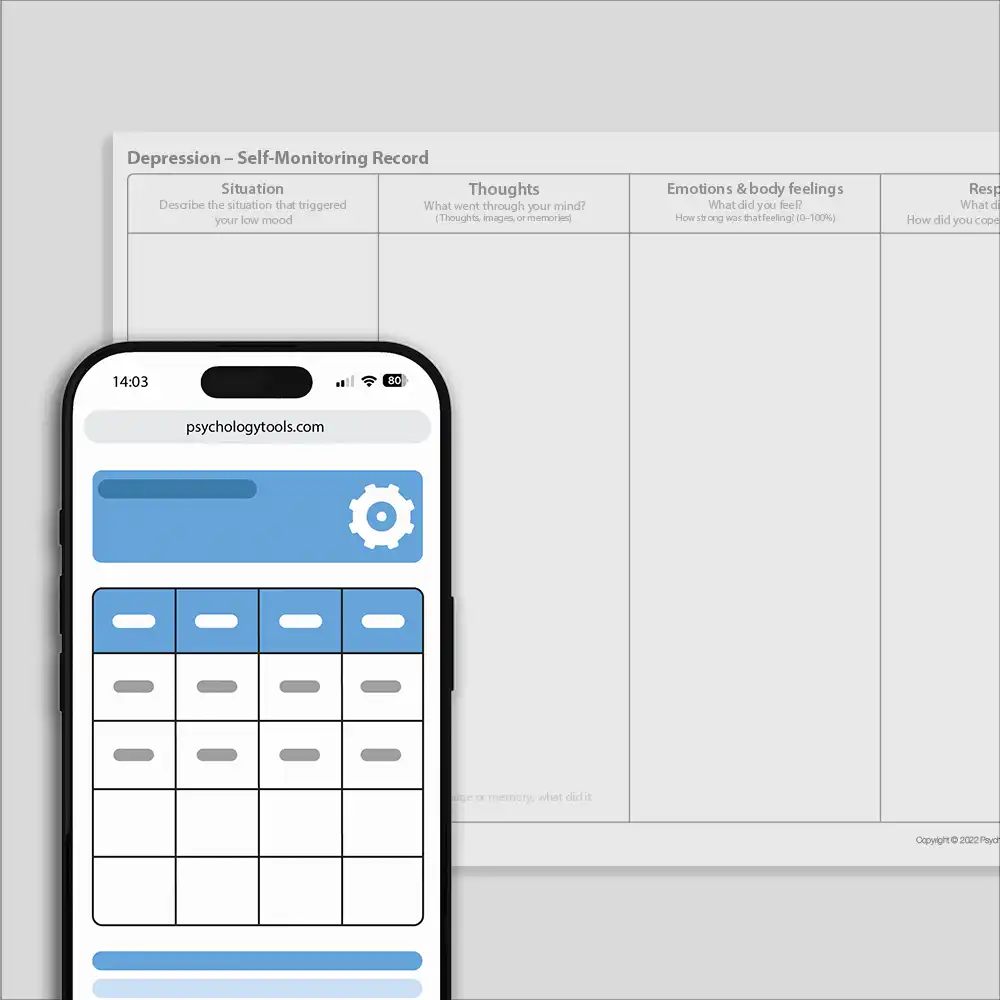
Depression - Self-Monitoring Record
Everyone feels ‘down’ sometimes, but depression is more than that. When you are depressed, your mood can be very low and might stay that way for weeks at a time. At its most severe, depression can leave you feeling hopeless or unable to function normally.
Cognitive behavior therapy (CBT) suggests that the way we think and act influences our mood. One way to learn more about your depression is to use a self-monitoring record. It’s like a diary that can help you become more aware of what triggers your low mood, how you respond to it, and the role your thoughts play.
Complete this record whenever your mood worsens or you experience thoughts that leave you feeling depressed
Overview
Developing self-monitoring skills teaches clients to systematically observe and record specific targets such as their own thoughts, body feelings, emotions, and behaviors. Though it’s usually introduced early in the therapy process, it can continue to provide an inexpensive and constant measure of problem symptoms and behaviors throughout treatment.
The Depression Self-Monitoring Record aims to support clients in identifying and recording situations in which they experience depressive symptoms. By systematically capturing contextual information—such as triggering events, associated thoughts, behaviors, and mood ratings—this tool can aid clients and therapists in recognizing patterns, clarifying contributing factors, and informing targeted interventions.
Also available as:
PDF ToolUse this tool with your clients
Support therapeutic work between sessions.
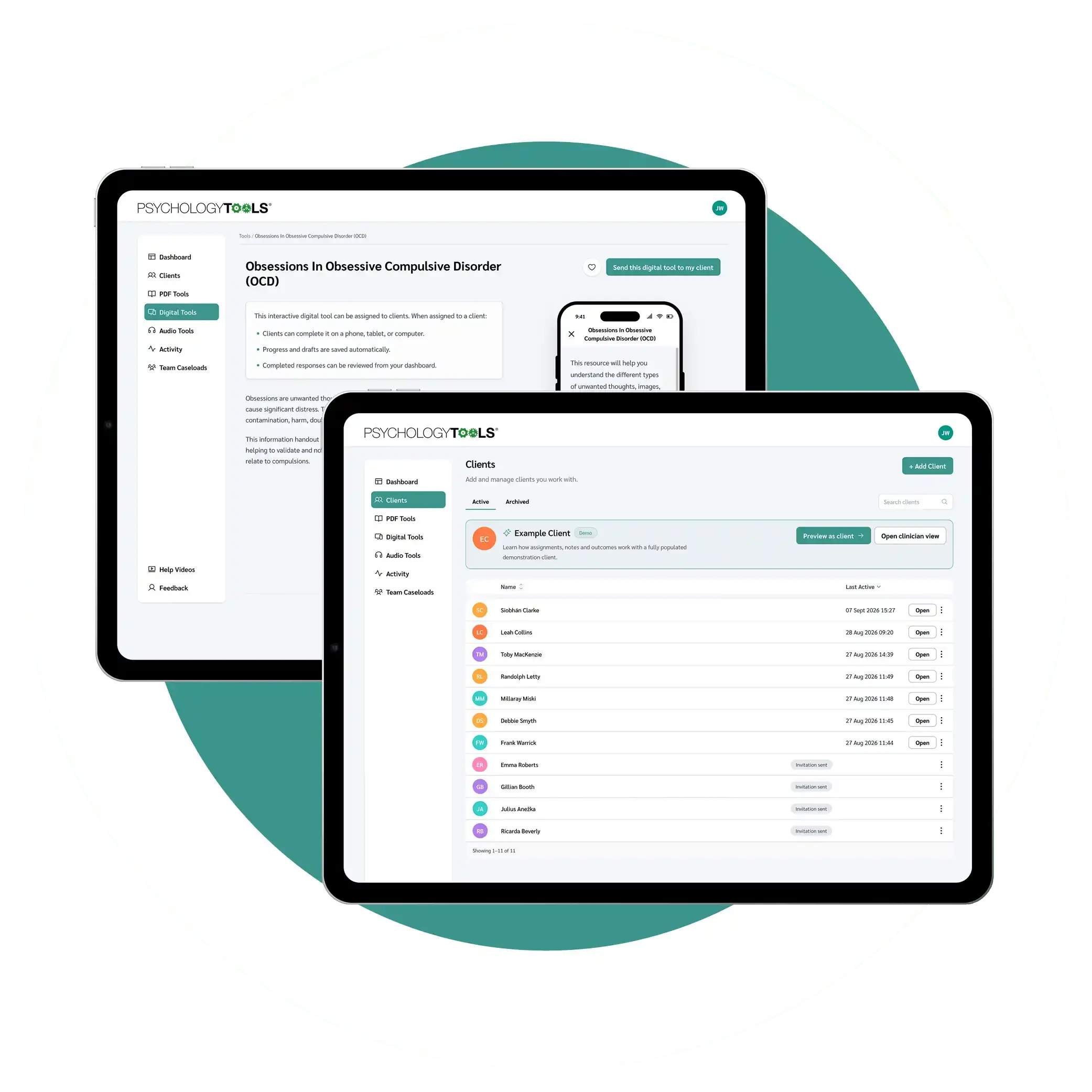
Assign
Send the tool securely to your client.
Client completes
Your client works through it on any device, at their own pace.
Review
Review their responses before the next session.
Part of a complete library of evidence-based tools
Worksheets, guides, audio resources and interactive digital tools for mental health professionals.