Distancing And Decentering
An overview of effective strategies that support distancing, which involves understanding that thoughts are interpretations of events, and decentering, which means stepping back from immediate experiences and examining appraisals from different viewpoints.
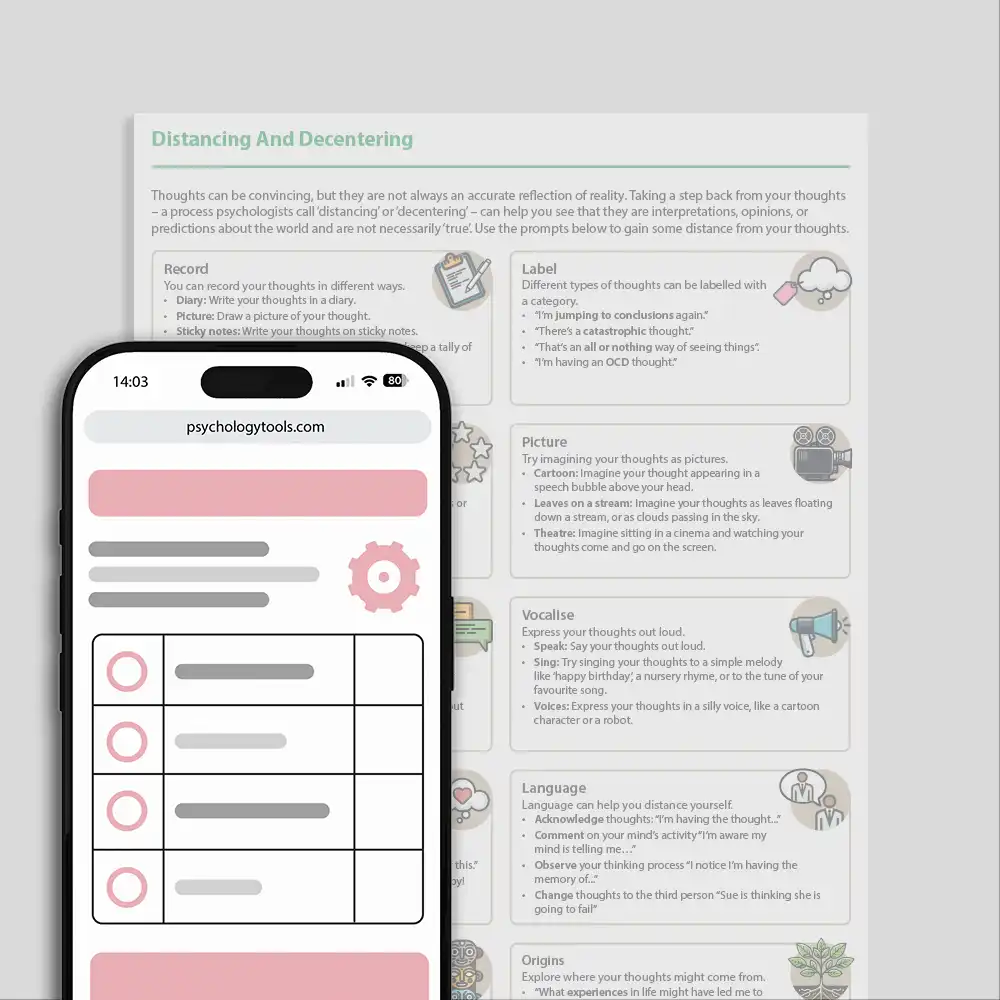
Distancing And Decentering
Taking a step back from our thoughts – a process psychologists call ‘distancing’ or ‘decentering’ – can help us notice that they are not always an accurate reflection of reality. Treating our thoughts as ideas rather than facts can also support more balanced ways of thinking and help us feel better.
The Distancing And Decentering tool is designed to help you step back from thoughts that feel upsetting or overwhelming.
Overview
One issue with negative automatic thoughts is that individuals often accept them as facts or truths about a situation, rather than viewing them as potentially biased opinions or interpretations. These interpretations can lead to distressing feelings and unhelpful behaviors.
Distancing and decentering are fundamental concepts in cognitive behavioral therapy (CBT) and related approaches, such as acceptance and commitment therapy (ACT) and mindfulness-based cognitive therapy. Distancing involves recognizing that our thoughts are subjective interpretations. Decentering, on the other hand, entails stepping back from our immediate experiences and examining our thoughts from different perspectives. Both processes can help individuals develop metacognitive awareness, disidentify from their thoughts, and experience less distress in response to their thought content. This handout introduces clients to ten key strategies that promote distancing and decentering.
Also available as:
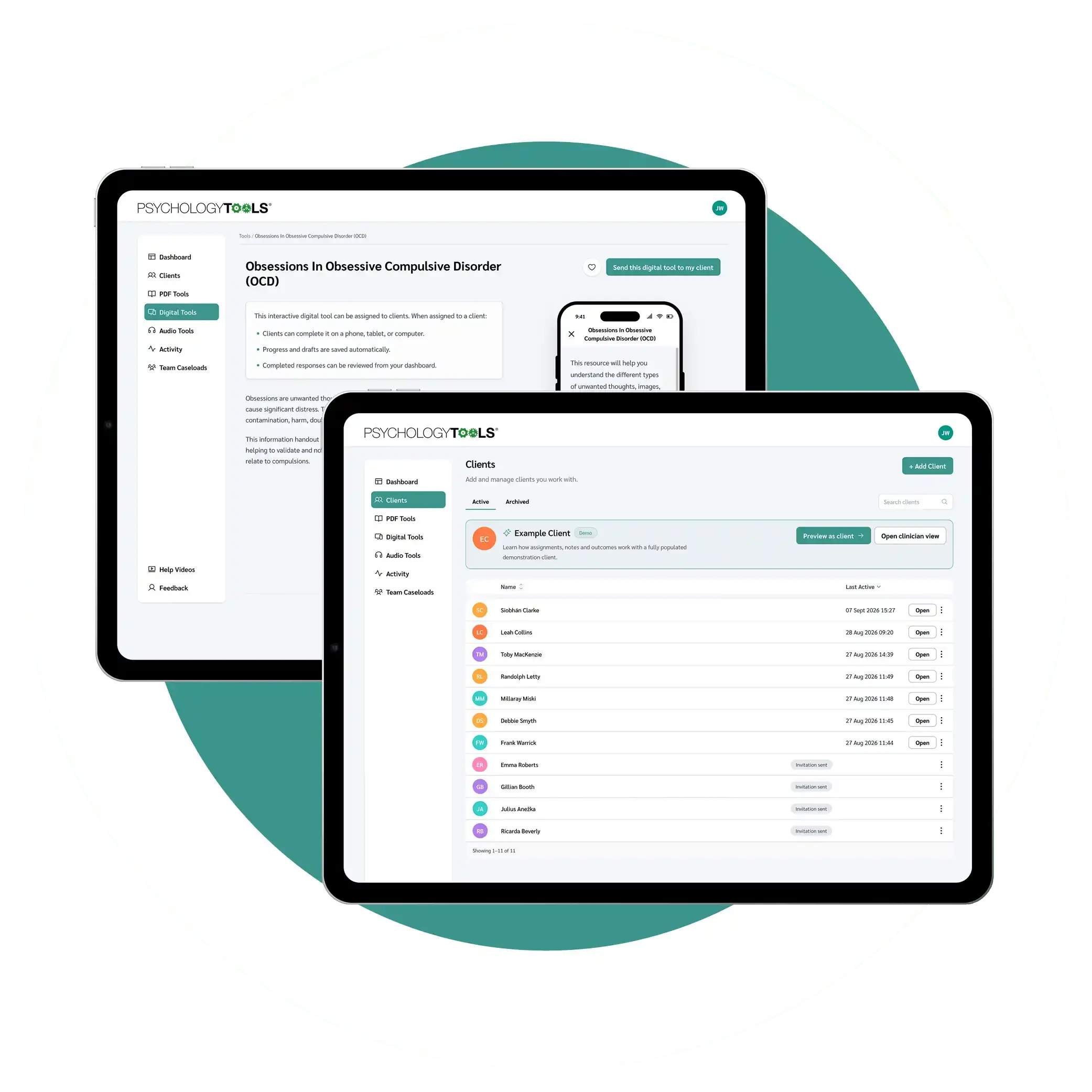
PDF ToolUse this tool with your clients
Support therapeutic work between sessions.
Assign
Send the tool securely to your client.
Client completes
Your client works through it on any device, at their own pace.
Review
Review their responses before the next session.
Part of a complete library of evidence-based tools
Worksheets, guides, audio resources and interactive digital tools for mental health professionals.