Facing Your Fears (CYP)
The Facing Your Fear exercise helps children and young people organize feared situations into a ladder, facilitating a structured approach to exposure therapy.
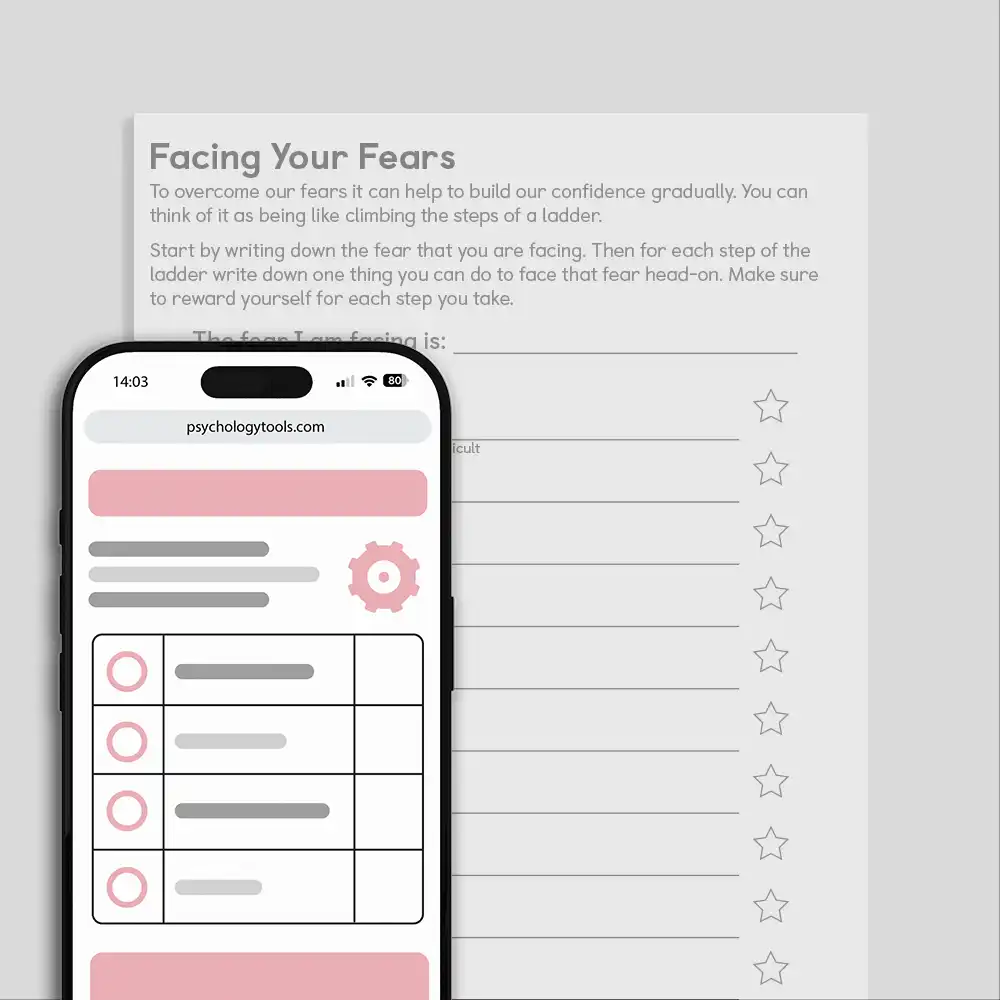
Facing Your Fears (CYP)
One good way to beat fear is called exposure. Exposure means facing the thing that scares you, bit by bit, and staying with it long enough for you to feel better. Facing your fears can help in three ways:
- When you face something scary, your body and brain get used to it, so your fear starts to shrink.
- You learn that the thing that scares you isn’t as dangerous as it seems.
- You start thinking about it differently – instead of seeing danger, you begin to feel more confident and less afraid.
A fear ladder is a list of things that make you feel scared. You put them in order, starting with the least scary and moving up to the most scary. This can help you take on your fears one step at a time.
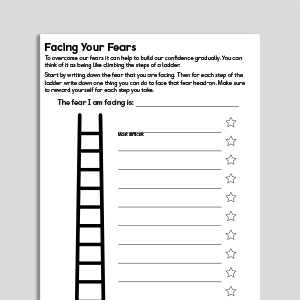
Overview
Graded or graduated exposure is a traditional way of overcoming fears and phobias. The therapist helps the client to draw up a list of feared situations which are then faced in order of increasing difficulty. Graded exposure is helpful because its simple rationale tends to make it acceptable to clients leading to greater adherence. This exercise has been designed specifically for children and young people.
Also available as:
PDF ToolUse this tool with your clients
Support therapeutic work between sessions.
Assign
Send the tool securely to your client.
Client completes
Your client works through it on any device, at their own pace.
Review
Review their responses before the next session.

Part of a complete library of evidence-based tools
Worksheets, guides, audio resources and interactive digital tools for mental health professionals.