Forgiveness
Forgiveness can be healing process that helps clients cope with interpersonal hurts. This information handout describes what forgiveness is, the steps it might entail, and how it is distinguished from other concepts, such as reconciliation.
Forgiveness
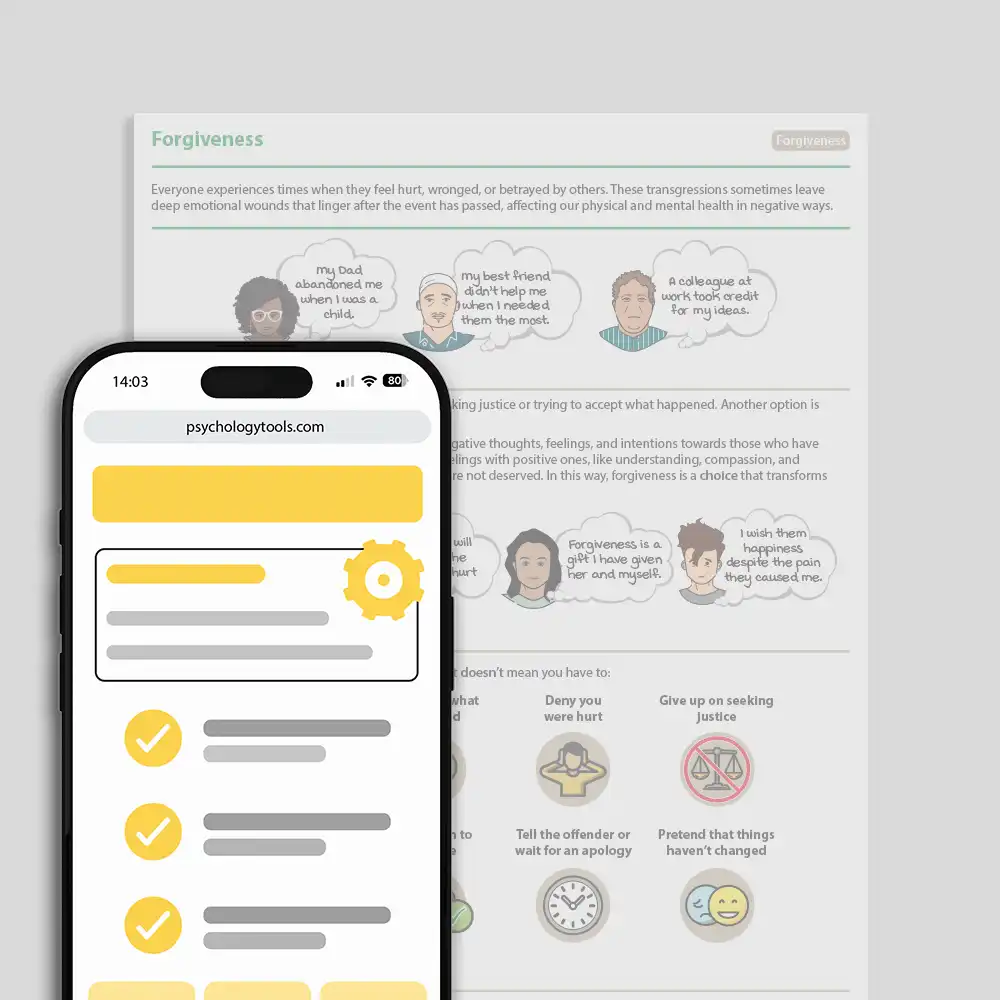
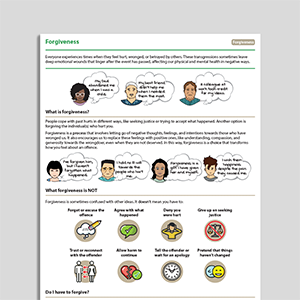
This Forgiveness tool explains what forgiveness means, what it involves, and when it might be helpful. It also explains what forgiveness doesn’t mean and when it might be less helpful. Most importantly, it highlights that forgiveness is a process and a personal choice.
Overview
Everyone experiences interpersonal hurts, such as acts of omission (e.g., being neglected) and acts of commission (e.g., intentional or unintentional harm). People respond to these transgressions in different ways, such as seeking justice or revenge, “letting go” of the offence, or choosing to forgive the wrongdoer. Research indicates that forgiveness is a helpful way to cope with offences, and it can be supported using forgiveness interventions. This handout provides an overview of forgiveness, describing its meaning, the steps involved, and how it differs from concepts like reconciliation.
Also available as:
PDF ToolUse this tool with your clients
Support therapeutic work between sessions.
Assign
Send the tool securely to your client.
Client completes
Your client works through it on any device, at their own pace.
Review
Review their responses before the next session.
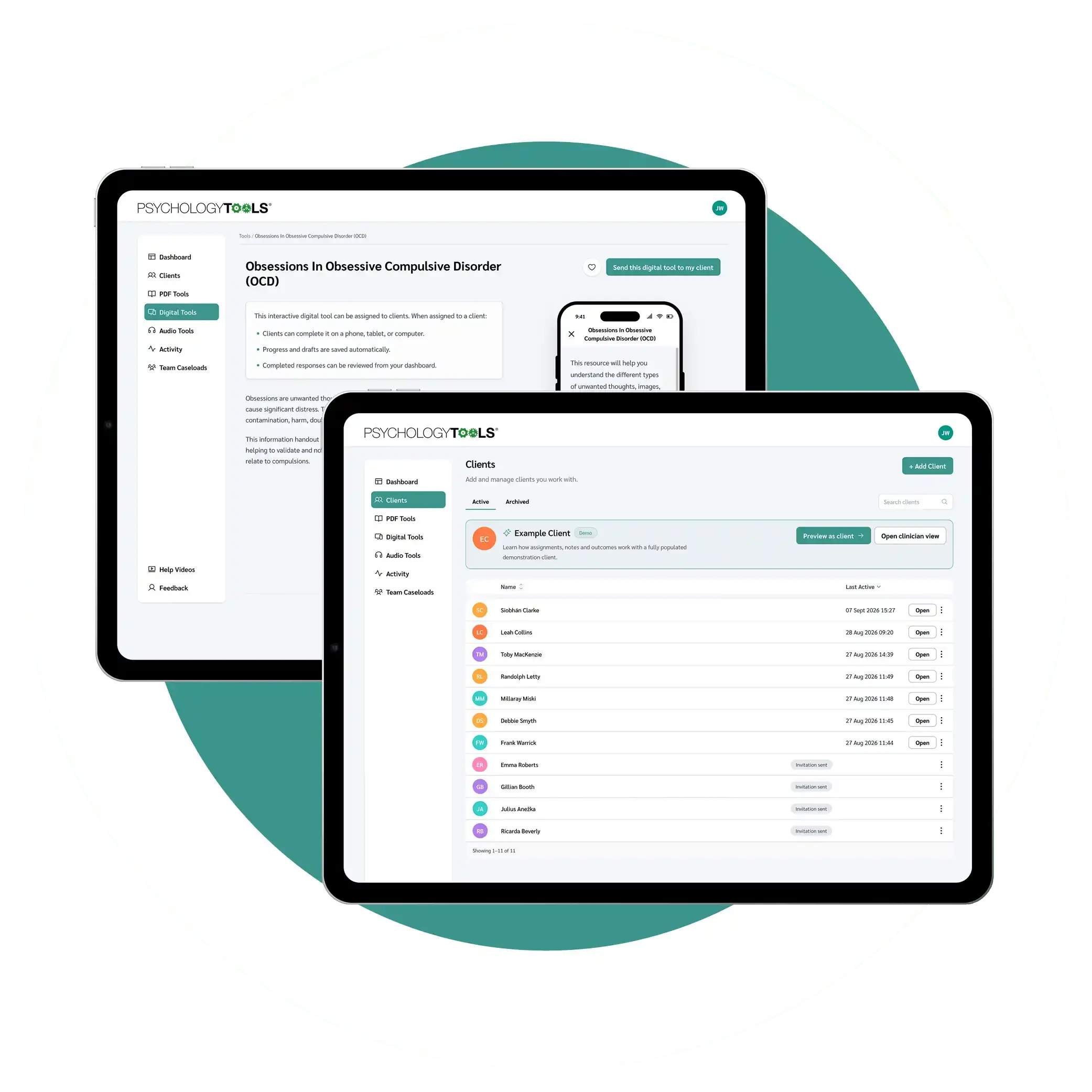
Part of a complete library of evidence-based tools
Worksheets, guides, audio resources and interactive digital tools for mental health professionals.