Habituation
The Habituation information sheets are designed to help clinicians to explain the concept of habituation and its role in exposure therapy.
Habituation
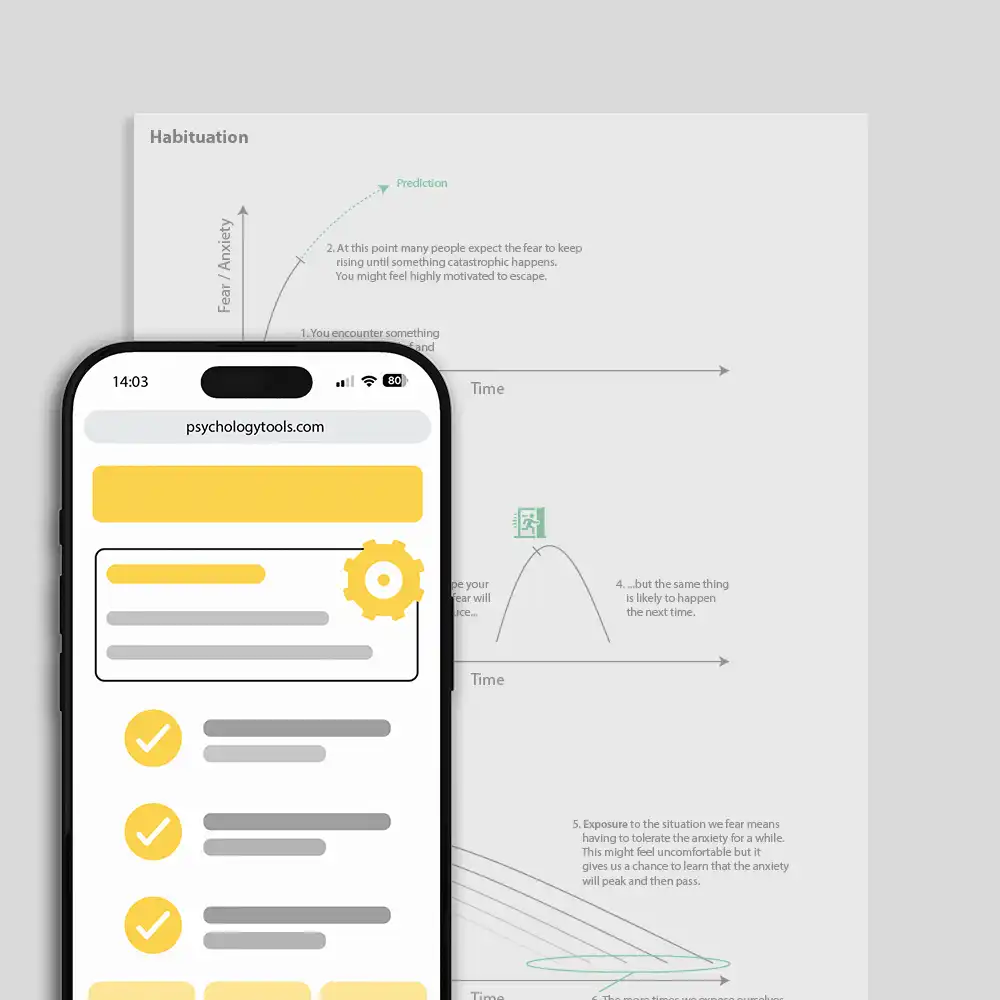
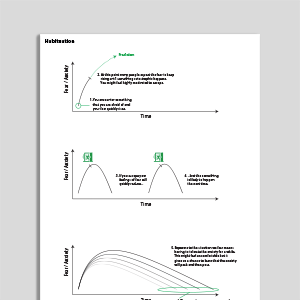
This Habituation handout explains how facing your fears can help reduce anxiety, while avoiding or escaping your fears keeps them going.
Overview
Traditional models of exposure therapy are based on the behavioral principle of habituation. In an exposure trial, habituation occurs when a person's fear response to a stimulus decreases after repeated exposures to that stimulus. The Habituation information handout explains the concept of habituation and its importance in exposure therapy. It discusses key topics including expectations (e.g., appraisals and predictions) when fear escalates, the role of avoidance in maintaining fear, and the effects of exposure.
Also available as:
PDF ToolUse this tool with your clients
Support therapeutic work between sessions.
Assign
Send the tool securely to your client.
Client completes
Your client works through it on any device, at their own pace.
Review
Review their responses before the next session.

Part of a complete library of evidence-based tools
Worksheets, guides, audio resources and interactive digital tools for mental health professionals.