How Breathing Affects Feelings
This information handout explains the physiological effects associated with different breathing types and provides instructions for relaxed breathing.
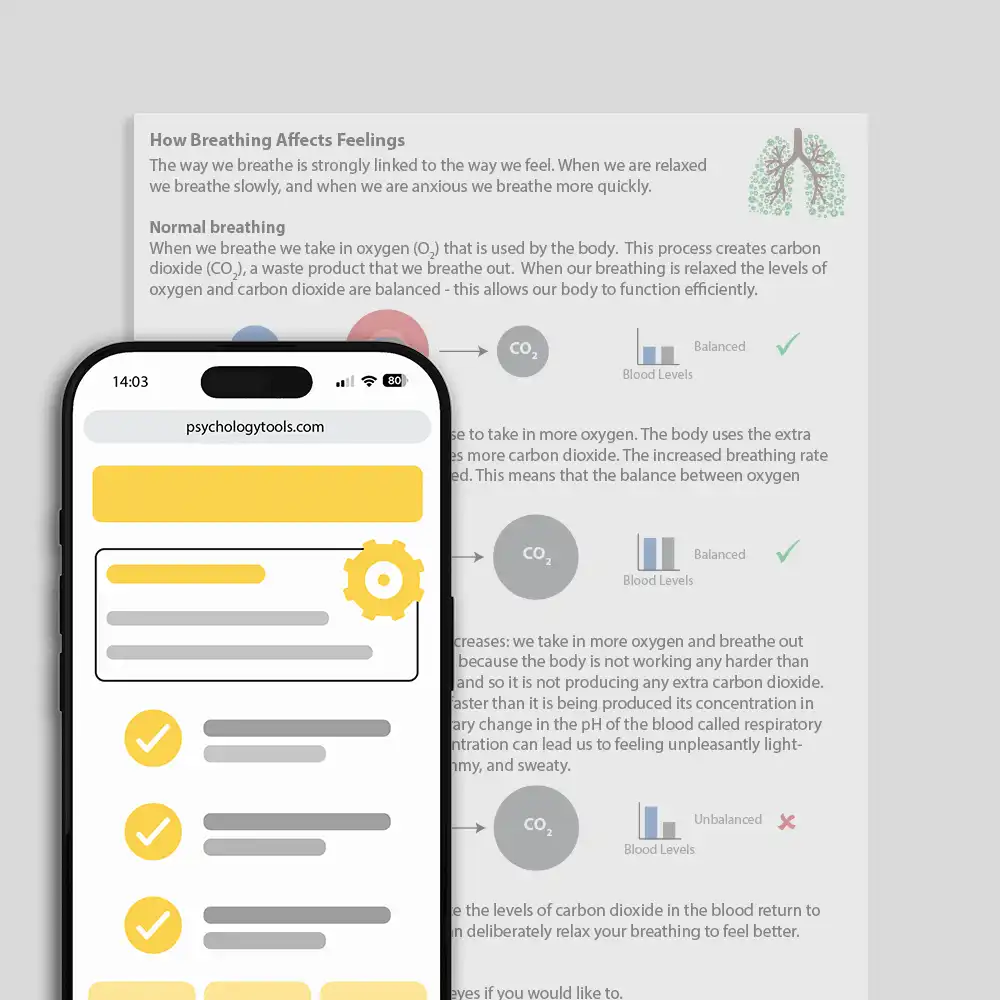
How Breathing Affects Feelings
This How Breathing Affects Feelings tool explains how different types of breathing – like fast and anxious versus slow and relaxed – affect our body. It also provides step-by-step instructions for practicing relaxed breathing, which can help you feel calm.
Overview
Normal, anxious, and exercise breathing have a significant impact on our physiology and emotions. Normal breathing, characterized by slow and deep breaths, promotes relaxation and a sense of calm. In contrast, anxious breathing typically involves rapid, shallow breaths that can lead to increased heart rate and heightened feelings of tension or panic. Meanwhile, exercise breathing - often more vigorous and rhythmic helps to supply the body with the necessary oxygen during physical activity, supporting endurance and stamina.
This handout aims to explore the specific effects associated with these different breathing patterns. Additionally, it provides step-by-step instructions for practicing relaxed breathing techniques, which can help mitigate anxiety and promote a greater sense of calm.
Also available as:
PDF ToolUse this tool with your clients
Support therapeutic work between sessions.
Assign
Send the tool securely to your client.
Client completes
Your client works through it on any device, at their own pace.
Review
Review their responses before the next session.

Part of a complete library of evidence-based tools
Worksheets, guides, audio resources and interactive digital tools for mental health professionals.