Identifying Your Beliefs About Asserting Yourself
This structured worksheet helps clients identify the beliefs and assumptions that make it difficult to communicate assertively.
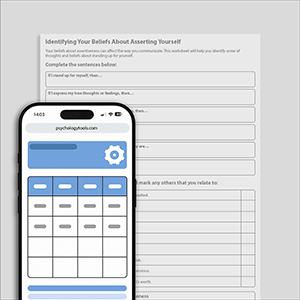
Identifying Your Beliefs About Asserting Yourself
Assertiveness is a clear, honest, and respectful style of communication. Learning to express yourself in this way can have a positive impact on your mood, relationships, and work life.
Negative beliefs about assertiveness can stop you expressing yourself effectively. For example, you might think asserting yourself will come across as pushy, unfriendly, impolite, or weak. Identifying and exploring these beliefs can improve the way you communicate.
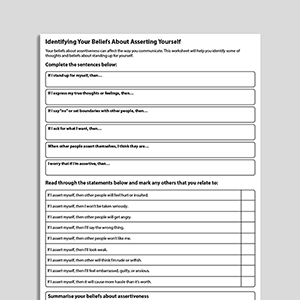
This Identifying Your Beliefs About Asserting Yourself worksheet will help you recognize the beliefs you hold about expressing yourself.
Overview
Beliefs about assertiveness can influence how people communicate. For instance, clients may understand what assertive communication entails but struggle express themselves due to concerns about conflict, rejection, criticism, guilt, or appearing selfish. This worksheet helps clients become more aware of these beliefs so they can be re-evaluated and tested through behavioral experiments.
Use this tool with your clients
Support therapeutic work between sessions.
Assign
Send the tool securely to your client.
Client completes
Your client works through it on any device, at their own pace.
Review
Review their responses before the next session.

Part of a complete library of evidence-based tools
Worksheets, guides, audio resources and interactive digital tools for mental health professionals.