Interoceptive Exposure
Interoceptive exposure is an essential component in the cognitive behavioral treatment of panic attacks and panic disorder. This structured resource guides clients how to safely induce and maintain contact with feared body sensations.
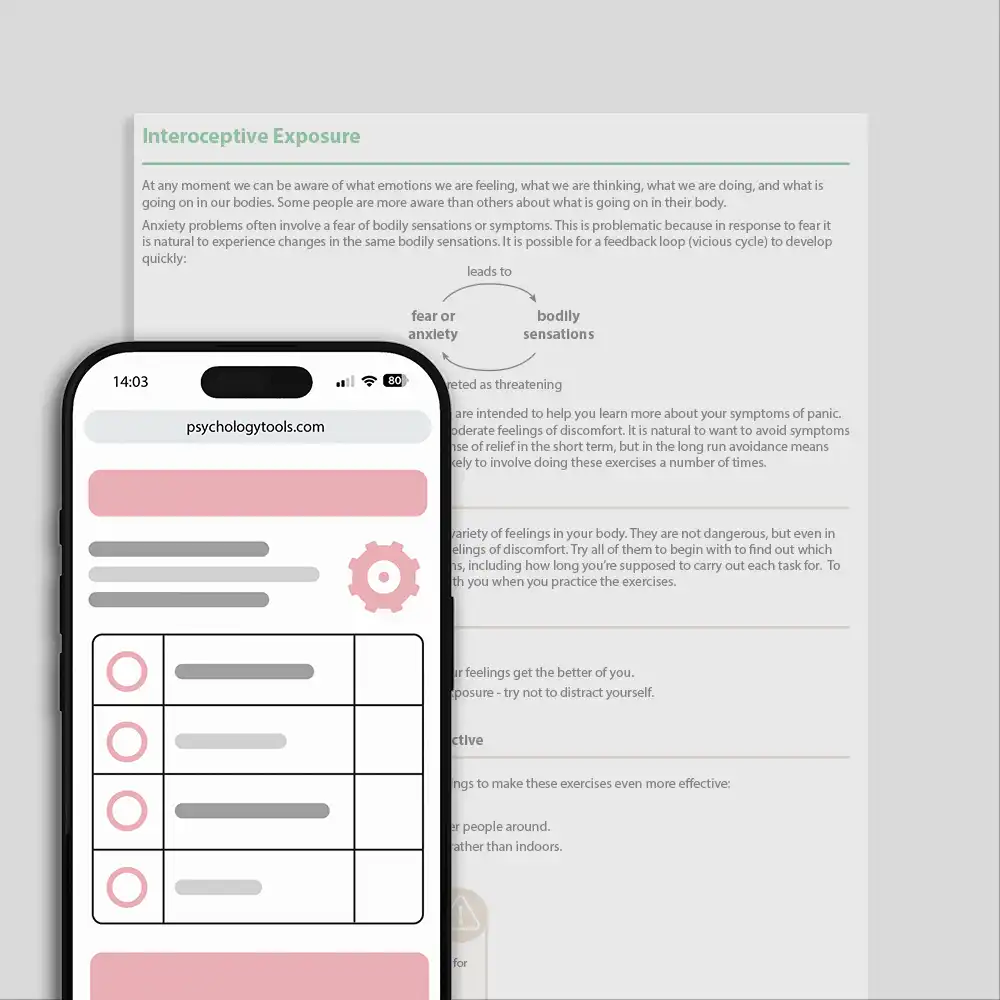
Interoceptive Exposure
If you struggle with anxiety, you may fear certain sensations or bodily symptoms. Unfortunately, feeling afraid can cause certain physical sensations, or make existing ones stronger. This can become a vicious cycle that leads to more fear.
A common response to this experience is trying to avoid the sensations that concern you. However, avoidance can make your fear worse because you don’t find out that these sensations are perfectly normal and not dangerous.
Interoceptive exposure is an effective way to overcome fears of the physical sensations. It involves deliberately exposing yourself to them so you can find out how dangerous they really are. The Interoceptive Exposure exercise will guide you through a selection of exposure exercises.
If you have any physical health concerns or problems, speak to your doctor about the suitability of these exercises before you try them. They are designed to be uncomfortable, but they should not be painful.
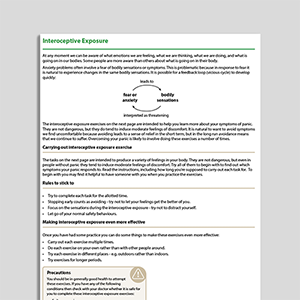
Overview
Interoceptive exposure is a powerful technique for treating panic and anxiety by confronting and reducing fear responses to bodily sensations. The approach encourages patients to experience feared sensations under controlled circumstances, breaking the cycle of avoidance and catastrophic misinterpretations that serve to maintain panic. By creating opportunities for new learning, this method helps patients discover that these sensations are safe and tolerable. Interoceptive exposure is consistent with both habituation-based models — which emphasize reduced distress through repeated exposure — and inhibitory learning theory, which highlights the importance of violating negative expectations to build new, non-threatening associations with bodily sensations.
Also available as:
PDF ToolUse this tool with your clients
Support therapeutic work between sessions.
Assign
Send the tool securely to your client.
Client completes
Your client works through it on any device, at their own pace.
Review
Review their responses before the next session.
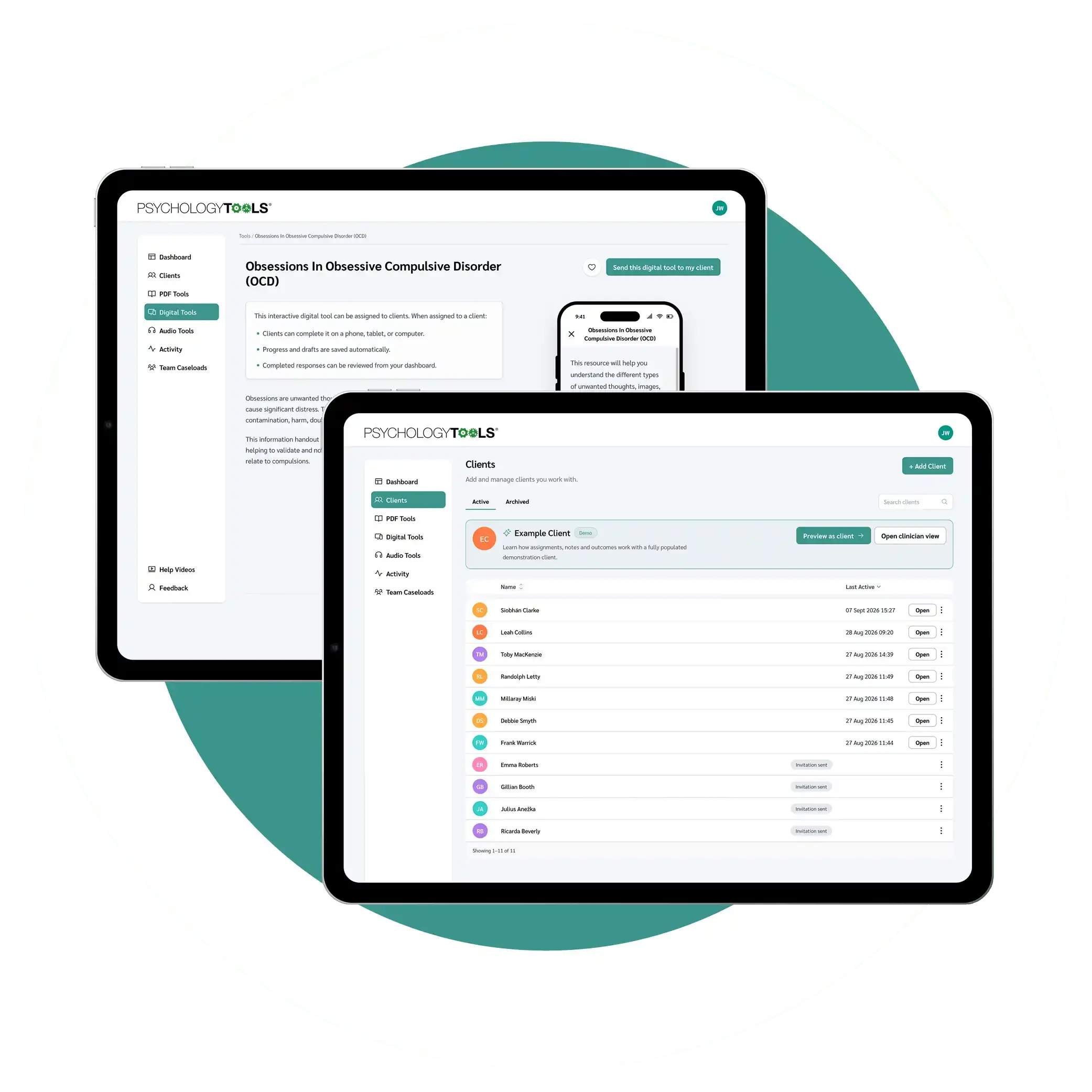
Part of a complete library of evidence-based tools
Worksheets, guides, audio resources and interactive digital tools for mental health professionals.