Labeling
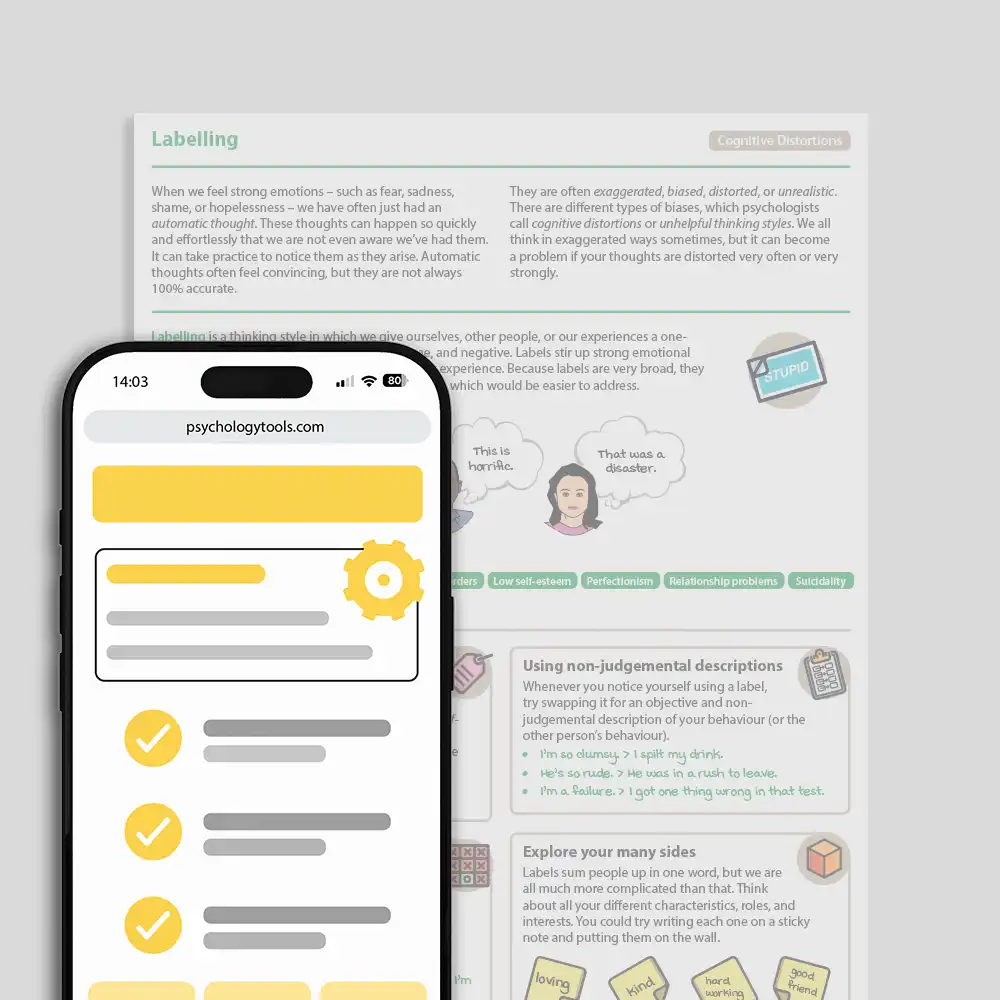
Help clients explore the labeling cognitive distortion, whereby individuals assign fixed, global traits to themselves or others, often leading to strong negative emotions.
Labeling
Cognitive behavior therapy (CBT) suggests that our thoughts influence how we feel and how we act. However, some of our thoughts can be biased. Recognizing these ‘cognitive distortions’ or ‘unhelpful thinking styles’ can help you judge how accurate and useful your automatic thoughts are. This tool will introduce you to a common distortion called labeling.
Overview
Identifying negative automatic thoughts and reappraising unhelpful thinking is a core element of cognitive therapy. Teaching clients to recognize the presence and nature of distortions is a useful way of introducing this skill – clients are often quick to identify with the concept of ‘unhelpful thinking styles’ and to recognize their habitual biases. Labeling (sometimes referred to as ‘negative global evaluations’) is an extreme form of overgeneralization. It is characterized by assigning fixed, global traits to the self or others, usually in the form of pejorative, single-word labels (e.g. "stupid", "useless", "disgusting").
The Labeling information handout forms part of the cognitive distortions series, designed to help clients and therapists to work more effectively with common thinking biases.
Also available as:
PDF ToolUse this tool with your clients
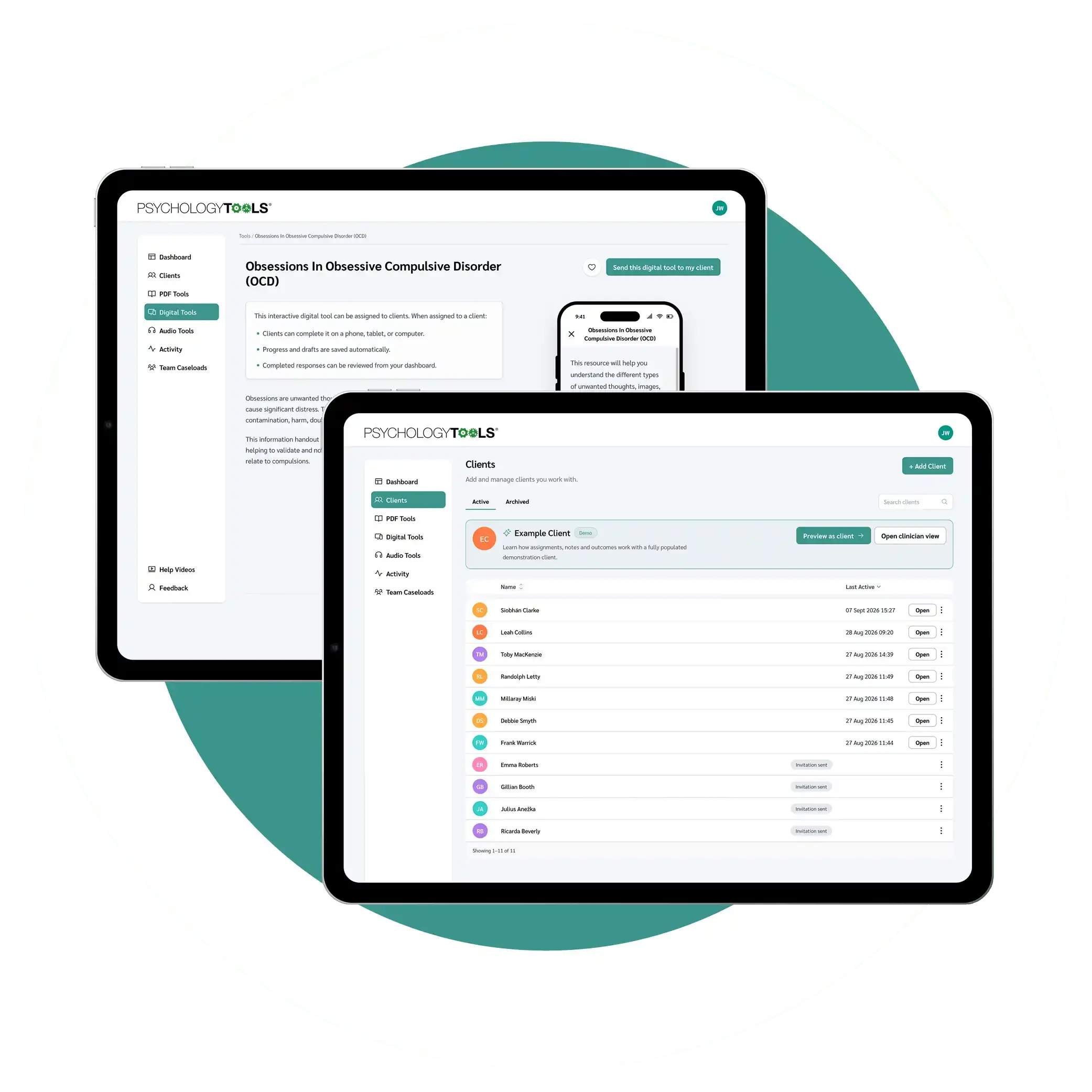
Support therapeutic work between sessions.
Assign
Send the tool securely to your client.
Client completes
Your client works through it on any device, at their own pace.
Review
Review their responses before the next session.
Part of a complete library of evidence-based tools
Worksheets, guides, audio resources and interactive digital tools for mental health professionals.