Pacing For Pain
This practical worksheet introduces pacing as a behavioral strategy to help clients with chronic pain engage in consistent, manageable activity.
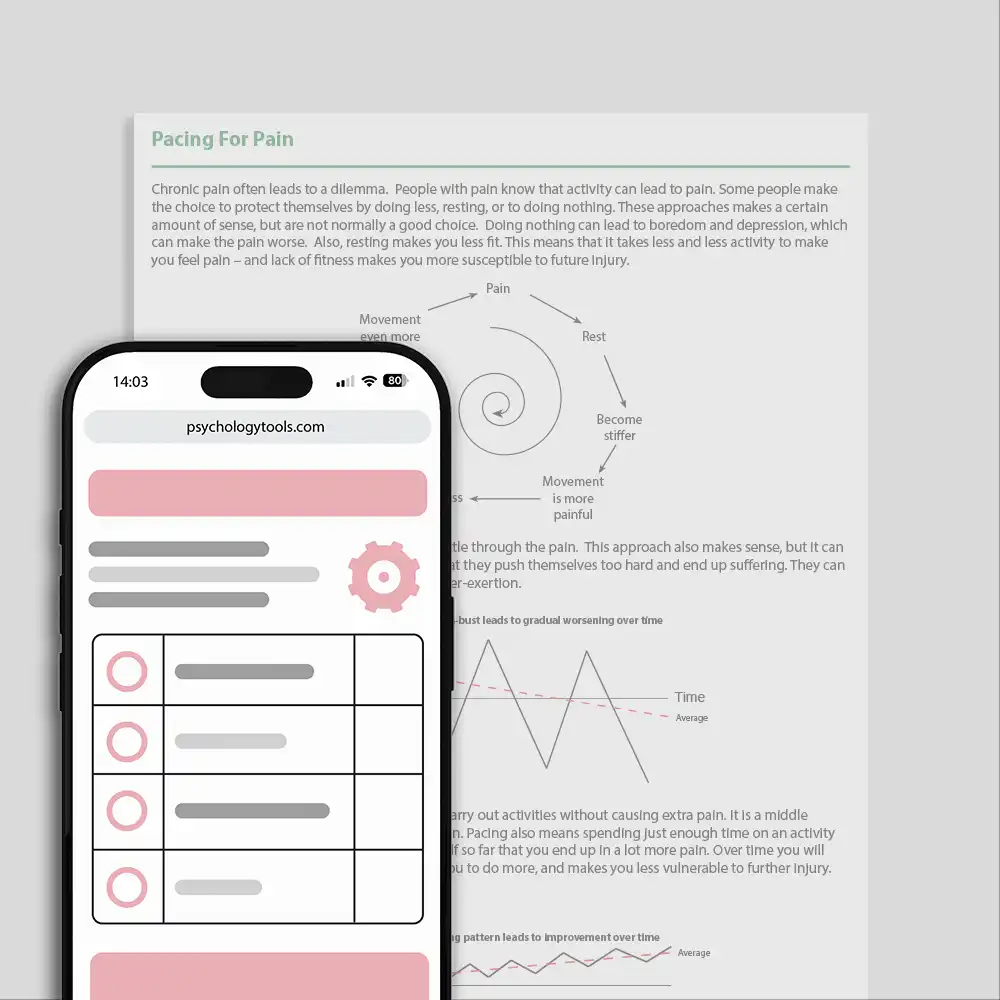
Pacing For Pain
Pain is a very common symptom. It can be affected by many things, including biological factors (such as injuries and illness), psychological factors (such as your habitual ways of thinking and responding) and social factors (such as how much support you have).
Activity also plays an important role in pain. Some people do too much and experience ‘highs’ and ‘lows’. Others do too little and become ‘deconditioned’, meaning they lose fitness or muscular strength.
Pacing is a tool that can help you to do what matters to you, without causing additional pain. It involves completing activities for a previously specified amount of time (rather than being guided by pain) so you can be as in control and consistent with tasks as possible.
Press start tool to learn more about pain and how you can use it.
Overview
Clients with chronic pain often fall into a 'boom and bust' cycle – doing too much when they feel well and suffering increased pain afterward. This pattern can result in reduced physical fitness, low mood, and greater vulnerability to further injury. Pacing offers a structured alternative: engaging in regular activity based primarily on time rather than being driven solely by symptoms.
This resource supports clients in learning how to find their baseline activity level and gradually increase it. It presents psychoeducational material, baseline calculation, and guidance for overcoming common difficulties.
Also available as:
PDF ToolUse this tool with your clients
Support therapeutic work between sessions.
Assign
Send the tool securely to your client.
Client completes
Your client works through it on any device, at their own pace.
Review
Review their responses before the next session.
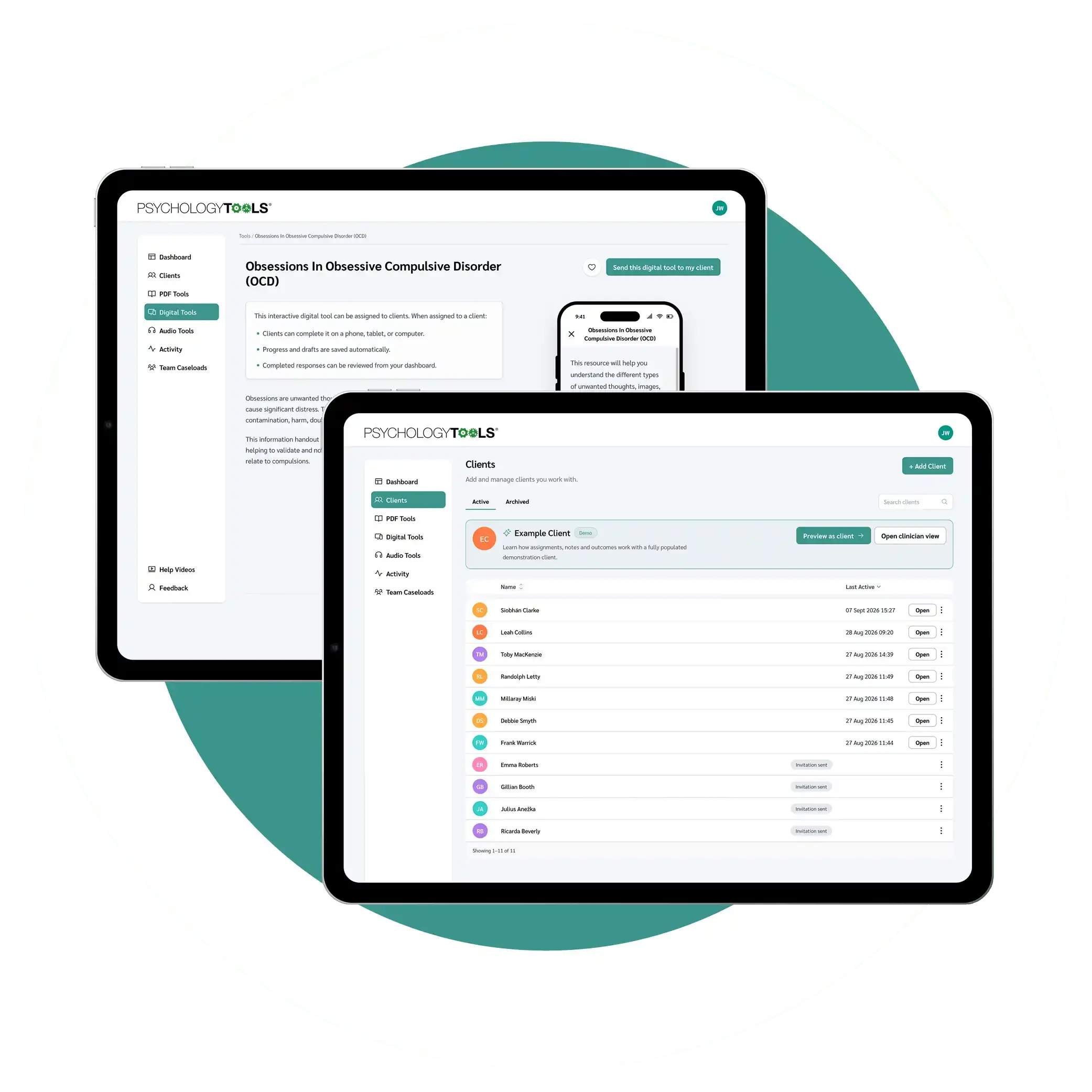
Part of a complete library of evidence-based tools
Worksheets, guides, audio resources and interactive digital tools for mental health professionals.