Passive-Aggressive Communication
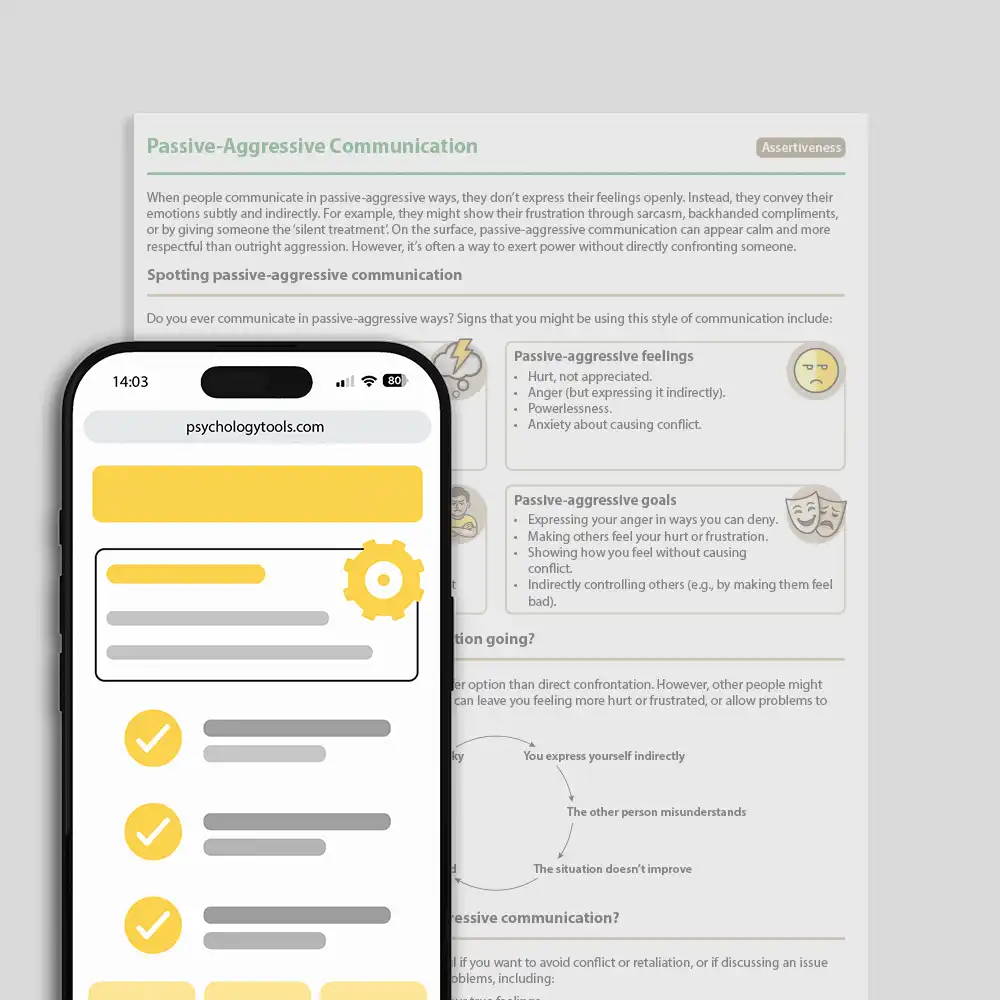
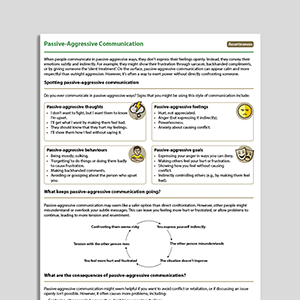
This psychoeducational handout describes what passive-aggressive communication is, the factors that perpetuate it, and the negative consequences it can have for individuals and their relationships.
Passive-Aggressive Communication
People communicate in unique ways, but they often fall back on a particular ‘style’ of communication. This tool can help you spot when you communicate in passive-aggressive ways, understand what keeps this going, and explore the impact it has on you and other people.
Overview
Passive-aggressive communication is a style in which individuals express negative feelings or needs indirectly rather than openly and directly. This form of communication can include sarcasm, backhanded compliments, sulking, or being intentionally obstructive.
This handout describes the common features of passive-aggressive communication and why it causes problems in a clear, client-friendly format. It can be used with clients who tend to communicate in this way or as an educational component of assertiveness training.
Also available as:
PDF ToolUse this tool with your clients
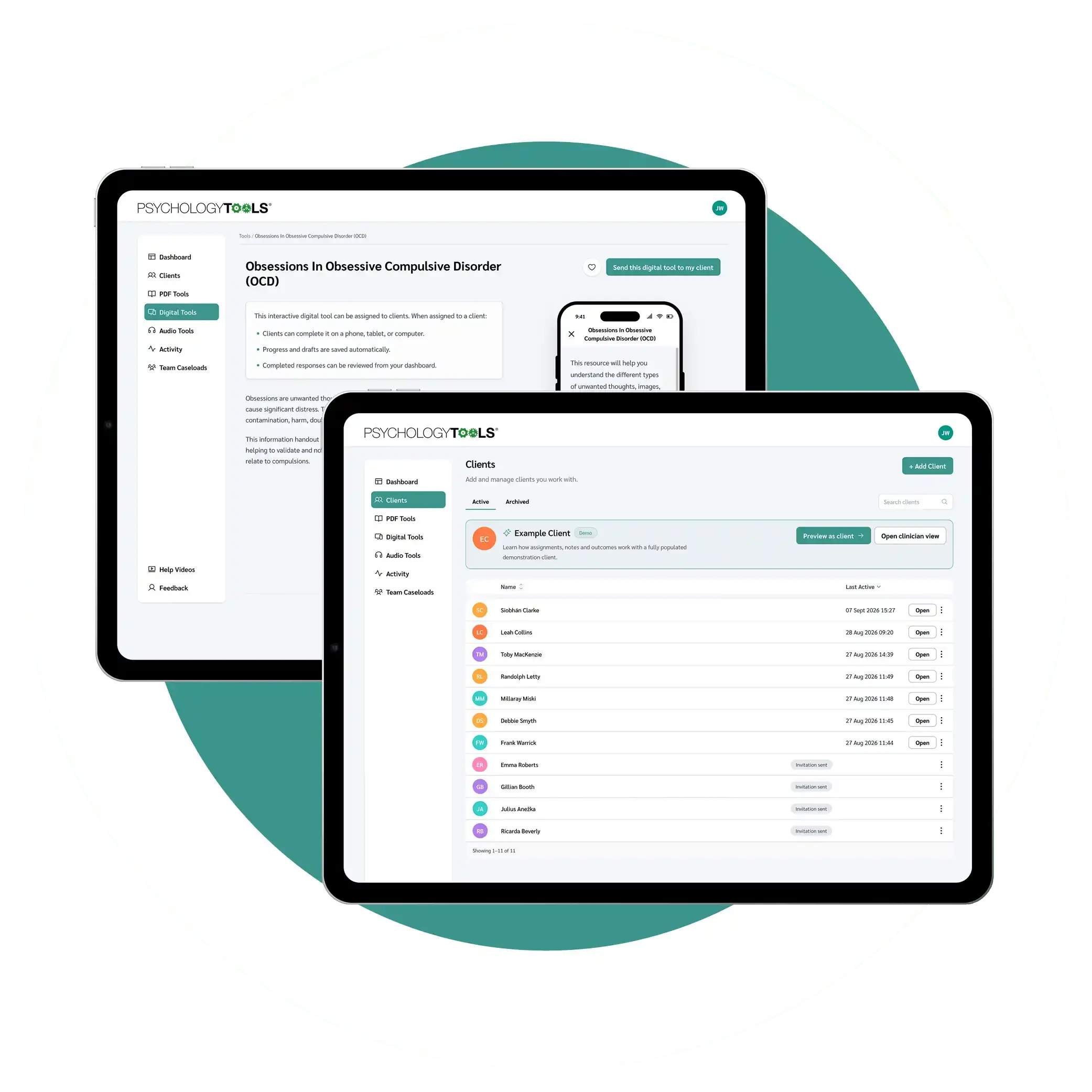
Support therapeutic work between sessions.
Assign
Send the tool securely to your client.
Client completes
Your client works through it on any device, at their own pace.
Review
Review their responses before the next session.
Part of a complete library of evidence-based tools
Worksheets, guides, audio resources and interactive digital tools for mental health professionals.