Progressive Muscle Relaxation
Progressive muscle relaxation (PMR) is a psychotherapeutic technique aimed at achieving deep relaxation through systematic tension and release of muscle groups, helping reduce anxiety and stress.
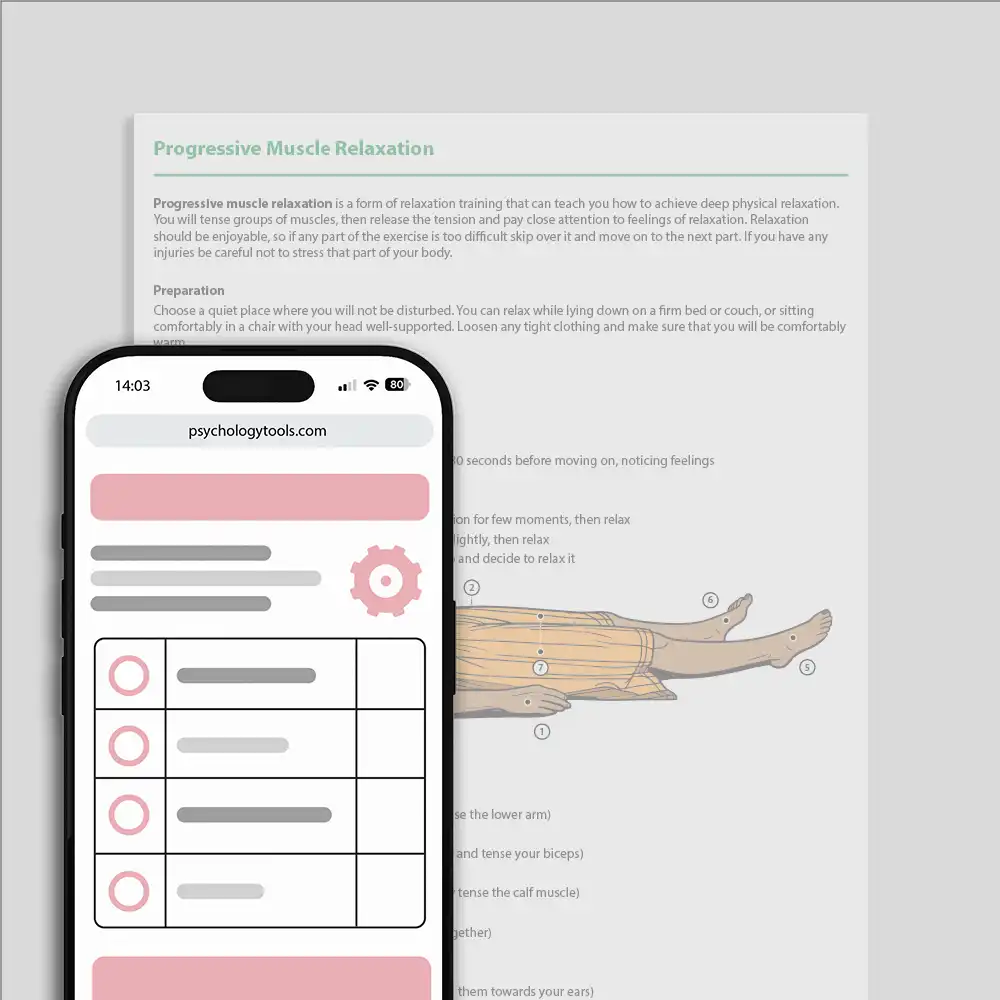
Progressive Muscle Relaxation
Our minds and bodies are closely linked. Stress and anxiety can lead to physical tension, and physical tension can lead to more stressful thoughts and emotions. This feedback loop can cause our stress levels to increase over time.
Progressive muscle relaxation (PMR) is an effective way to break out of this cycle. PMR is a type of relaxation training that can help reduce tension and achieve deep relaxation. It involves slowly tensing and releasing groups of muscles while focusing on the relaxation that follows.
Press start tool to learn how to use PMR.
Overview
Progressive relaxation training originated in the 1930’s as a treatment for tension and anxiety. Edmund Jacobsen developed a systematic and lengthy program of relaxation training which involved training clients to systematically tense and release muscle groups and to attend to the resulting feelings of relaxation (Jacobsen, 1934, 1938, 1964). Joseph Wolpe built upon Jacobsen’s work and integrated relaxation techniques into his program of systemic desensitization. Wolpe’s insight was that fear responses could be counterconditioned: evoking an incompatible response while simultaneously presenting a feared stimulus could eliminate a fear reaction (Wolpe, 1958). Wolpe significantly shortened the Jacobsonian relaxation training program, as well as integrating it within a theory of conditioning for the treatment of anxiety. Bernstein & Borkovec (1973) described standardized progressive muscle relaxation procedures which have subsequently been used in many research trials.
Also available as:
PDF ToolUse this tool with your clients
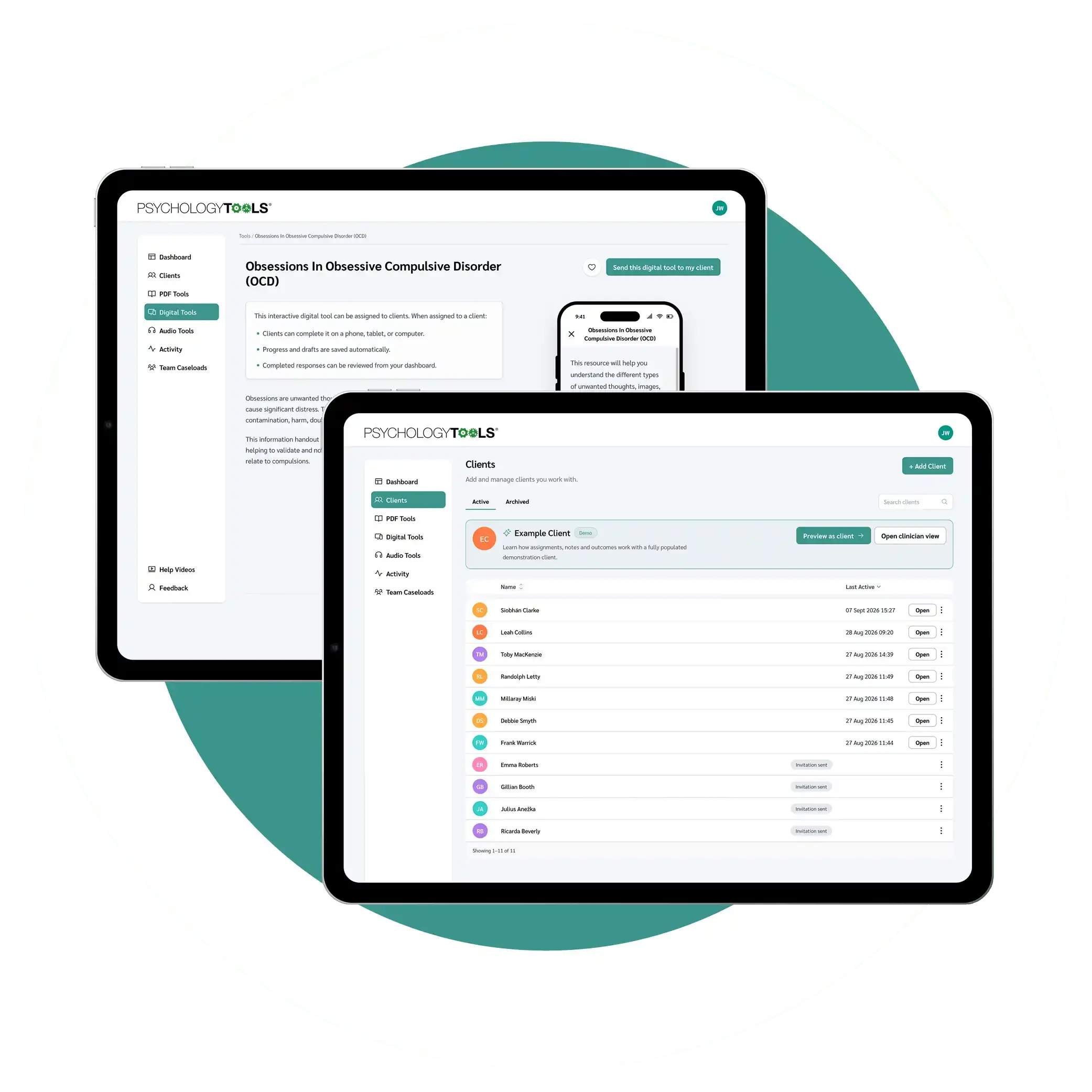
Support therapeutic work between sessions.
Assign
Send the tool securely to your client.
Client completes
Your client works through it on any device, at their own pace.
Review
Review their responses before the next session.
Part of a complete library of evidence-based tools
Worksheets, guides, audio resources and interactive digital tools for mental health professionals.