PTSD And Memory
The PTSD And Memory handout outlines the brain regions typically associated with post-traumatic stress disorder (PTSD). It is ideal for early psychoeducation or therapy rationale in memory-focused trauma treatments.
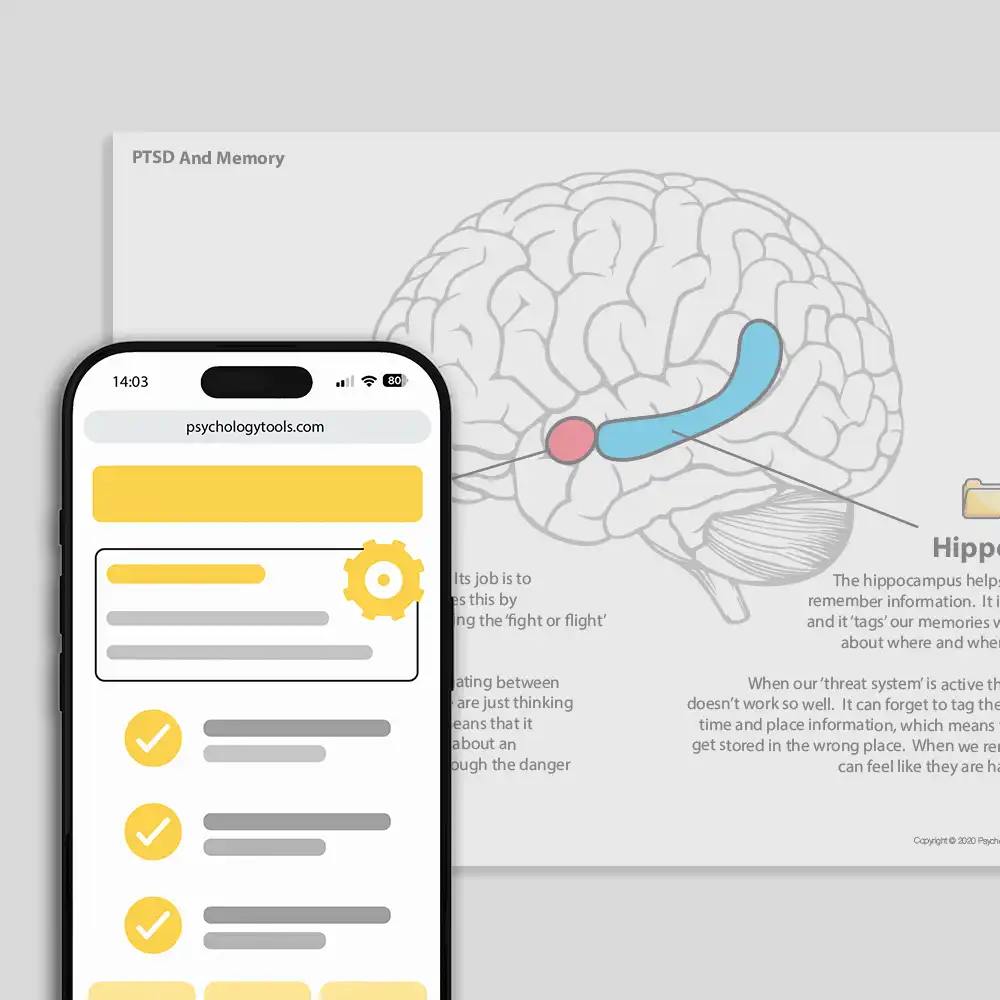
PTSD And Memory
The PTSD And Memory tool explains how traumatic experiences affect parts of the brain involved in threat and memory. This can help you understand why traumatic memories feel so distressing, intense, and like they are happening again.
Overview
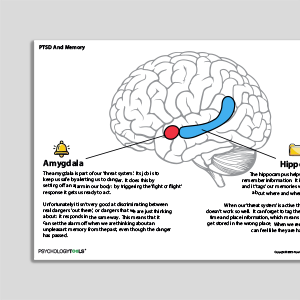
This resource is a concise, one-page psychoeducational guide explaining how trauma can affect memory and brain function. It focuses on two key regions often discussed in PTSD: the amygdala and the hippocampus. These are described using clear, metaphor-based language and visual cues to support client understanding.
The resource illustrates how the amygdala acts as a threat detector and how the hippocampus — responsible for storing memories with time and place — can become disrupted during extreme stress. The content supports conversations about why traumatic memories may feel intrusive, confusing, or as though they are happening in the present.
This tool is suitable for early psychoeducation, especially when helping clients make sense of memory processing techniques such as EMDR or trauma-focused CBT.
Also available as:
PDF ToolUse this tool with your clients
Support therapeutic work between sessions.
Assign
Send the tool securely to your client.
Client completes
Your client works through it on any device, at their own pace.
Review
Review their responses before the next session.

Part of a complete library of evidence-based tools
Worksheets, guides, audio resources and interactive digital tools for mental health professionals.