Rumination – Self-Monitoring Record
The Rumination – Self-Monitoring Record is a structured tool designed to collect information about how clients experience rumination.
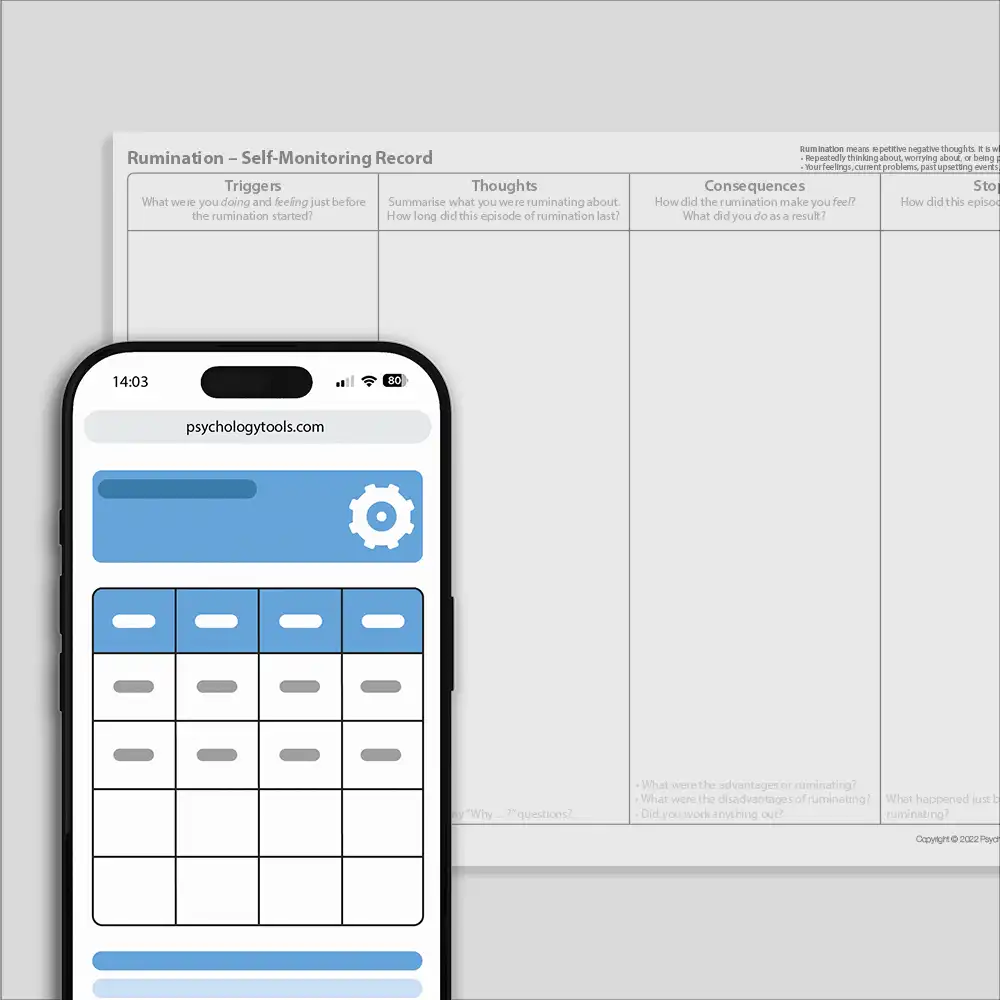
Rumination - Self-Monitoring Record
When people ruminate, they become very preoccupied with upsetting experiences or difficulties. If you ruminate, you might notice the following:
- You spend time dwelling on the past or can’t get a problem out of your mind.
- You ask yourself a similar question over and over, like “why do I feel so bad?”
- You focus on what has gone wrong, which leads to more negative thinking and makes you feel worse.
- You spend less time looking for solutions or changes you can make.
One way to learn more about your experience of rumination is to use a self-monitoring record. It’s like a diary that can help you become more aware of what triggers your rumination, what you ruminate about, and how it impacts you.
Complete this record whenever you find yourself ruminating or as your therapist has instructed.
Overview
Developing self-monitoring skills teaches clients to systematically observe and record specific targets such as their own thoughts, body feelings, emotions, and behaviors. Though it’s usually introduced early in the therapy process, it can continue to provide an inexpensive and constant measure of problem symptoms and behaviors throughout treatment. The Rumination – Self-Monitoring Record is designed to help clients capture information about situations where they engaged in rumination.
Also available as:
PDF ToolUse this tool with your clients
Support therapeutic work between sessions.
Assign
Send the tool securely to your client.
Client completes
Your client works through it on any device, at their own pace.
Review
Review their responses before the next session.
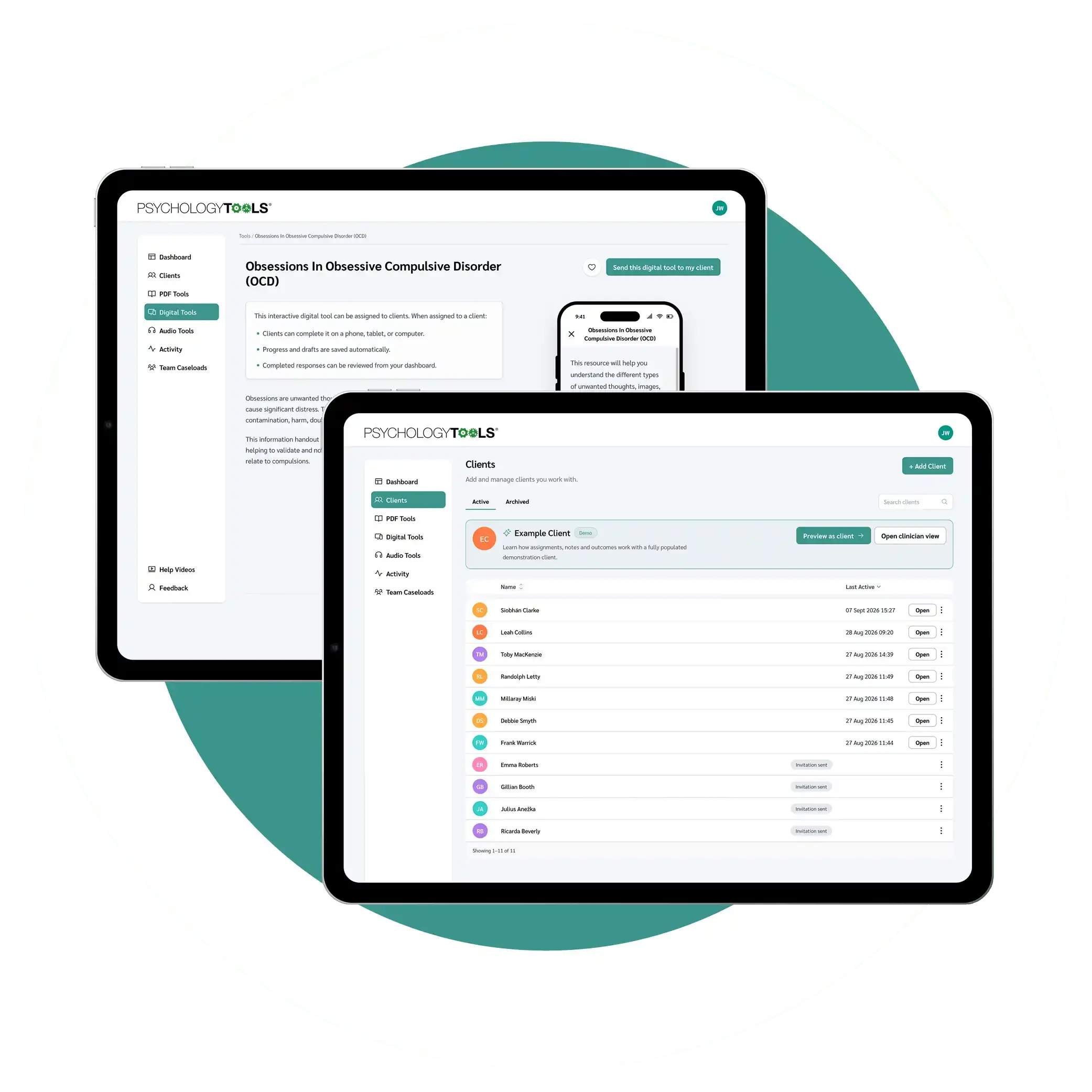
Part of a complete library of evidence-based tools
Worksheets, guides, audio resources and interactive digital tools for mental health professionals.