Safety Behaviors
This information handout describes the essential features of safety-seeking behaviors.
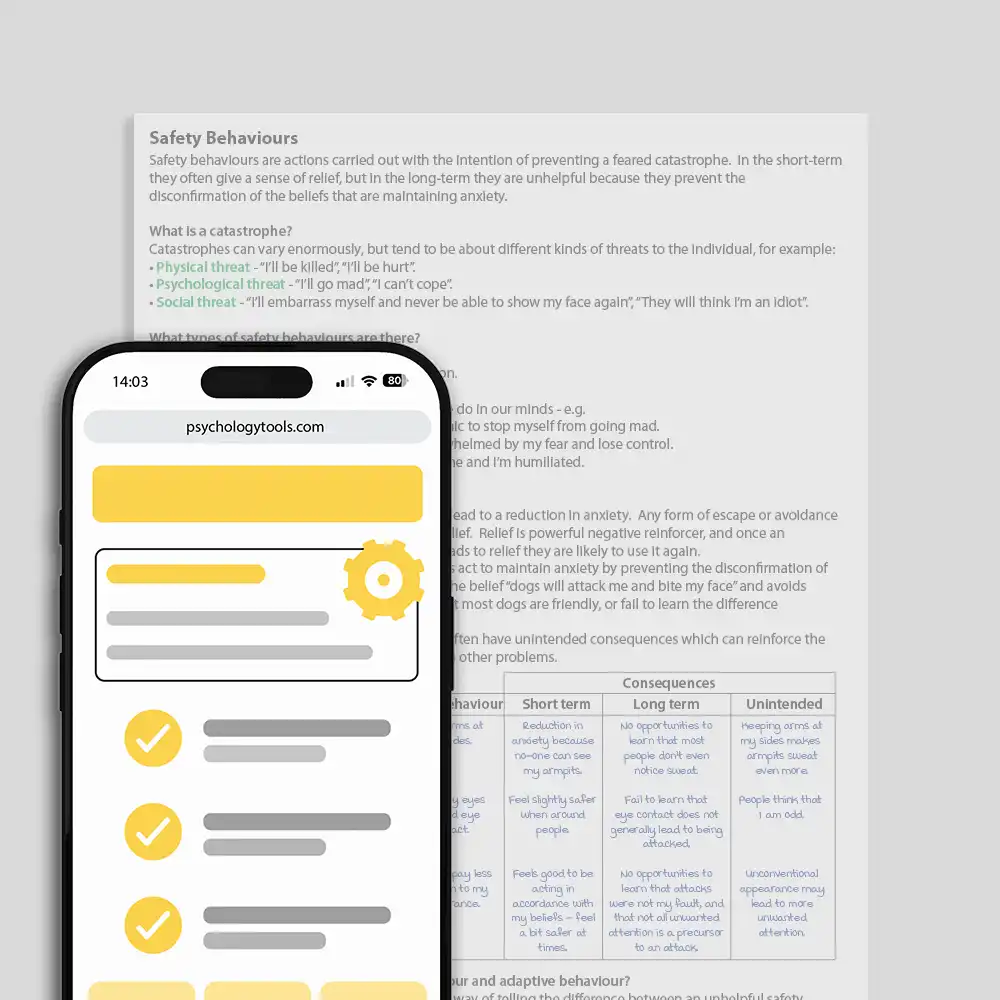
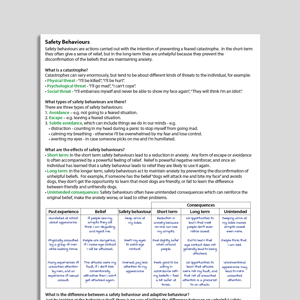
Safety Behaviors
This Safety Behaviors handout explains what safety-seeking behaviors are, why people use them, and how they might be contributing to your difficulties.
Overview
Safety-seeking behaviors develop in response to a perceived threat. In situations viewed as dangerous, people instinctively act to protect themselves, which can include automatic responses like the "fight or flight" reaction. While safety behaviors may provide short-term relief and thus be reinforced, they can also have negative effects. These behaviors may reinforce beliefs about the presence of danger, prevent these beliefs from being challenged, or lead to other unintended consequences.
The Safety Behaviors handout is a cognitive behavioral therapy (CBT) tool that offers a clear and thorough explanation of safety behaviors. For clients to effectively experiment with and ultimately let go of these behaviors, it's crucial they understand their causes and consequences.
Also available as:
PDF ToolUse this tool with your clients
Support therapeutic work between sessions.
Assign
Send the tool securely to your client.
Client completes
Your client works through it on any device, at their own pace.
Review
Review their responses before the next session.

Part of a complete library of evidence-based tools
Worksheets, guides, audio resources and interactive digital tools for mental health professionals.