Self-Forgiveness
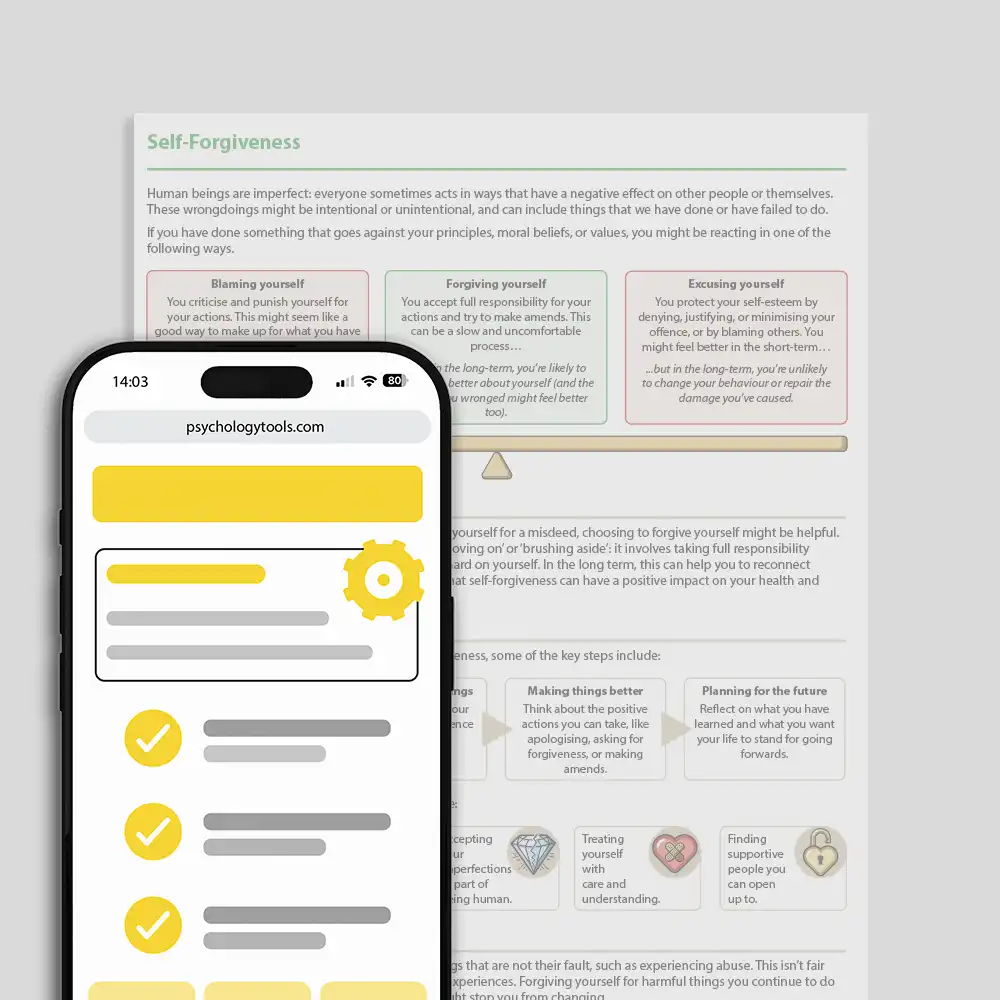
An information handout exploring self-forgiveness - what it is, what it entails, and when it may (or may not) be helpful.
Self-Forgiveness
This Self-Forgiveness tool explains what self-forgiveness means and how you can work towards forgiving yourself, if this is something you are considering. It also explains when self-forgiveness can be unhelpful.
Overview
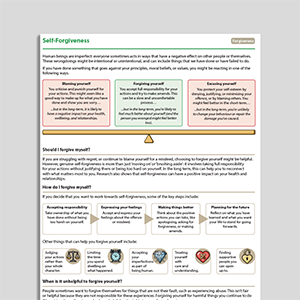
At some point in their lives, everyone acts (or fails to act) in ways that cause harm, whether intentionally or unintentionally. Recognizing that our behavior has fallen short of our values, principles, or personal standards can lead to different responses. These include self-condemnation, pseudo self-forgiveness, and genuine self-forgiveness. Research indicates that genuine self-forgiveness can be a helpful response to offences we have committed, benefitting our physical health, mental health, and relationships.
This illustrated information handout describes what self-forgiveness is, what it entails, and situations where it might be less helpful.
Also available as:
PDF ToolUse this tool with your clients
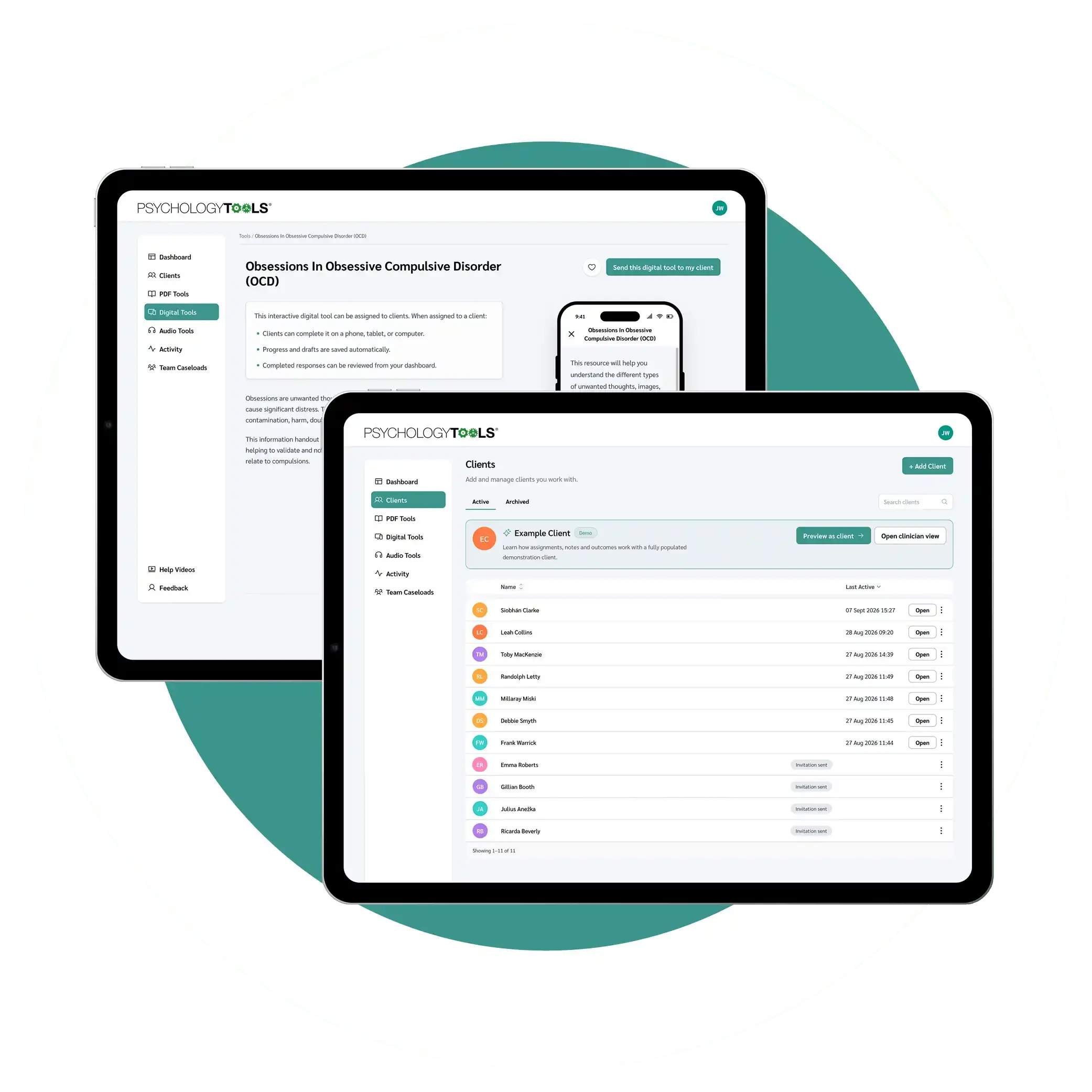
Support therapeutic work between sessions.
Assign
Send the tool securely to your client.
Client completes
Your client works through it on any device, at their own pace.
Review
Review their responses before the next session.
Part of a complete library of evidence-based tools
Worksheets, guides, audio resources and interactive digital tools for mental health professionals.