Self-Monitoring Record - Universal
The Self-Monitoring Record - Universal helps clients systematically observe and record specific targets such as their thoughts, body feelings, emotions, and behaviors.
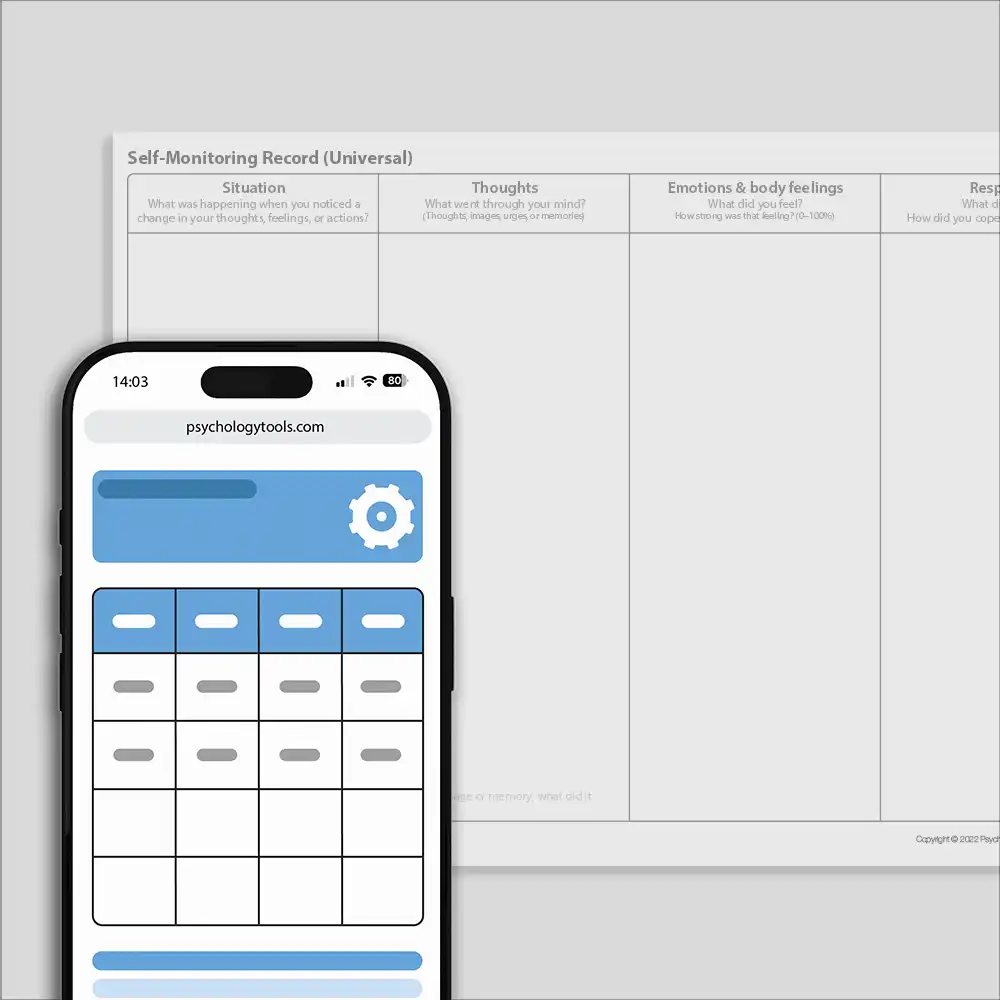
Self-Monitoring Record (Universal)
Most people have a mix of positive and negative thoughts and feelings each day. However, if negative thoughts and feelings happen often, cause you distress, or start to interfere with your life, they can affect your wellbeing.
Cognitive behavior therapy (CBT) suggests that the way we think and behave can have an impact on how we feel. To better understand your experiences, you can use a self-monitoring record. Self-monitoring is a like keeping a diary. It involves paying close attention to the thoughts, body feelings, emotions, and behaviors that might contribute to your difficulties.
Complete this record whenever you experience a difficulty - such as negative thoughts, distressing feelings, or unhelpful behaviors - or as your therapist has instructed you.
Overview
Self-monitoring is a key intervention in cognitive behavioral therapy (CBT), allowing clients to record specific targets such as problematic thoughts, emotions, and behaviors. By increasing clients' awareness of these experiences, self-monitoring can provide insights into these difficulties, support collaboration, and test hypotheses in therapy.
This resource provides regular and extended self-monitoring forms, catering to different therapeutic needs.
Also available as:
PDF ToolUse this tool with your clients
Support therapeutic work between sessions.
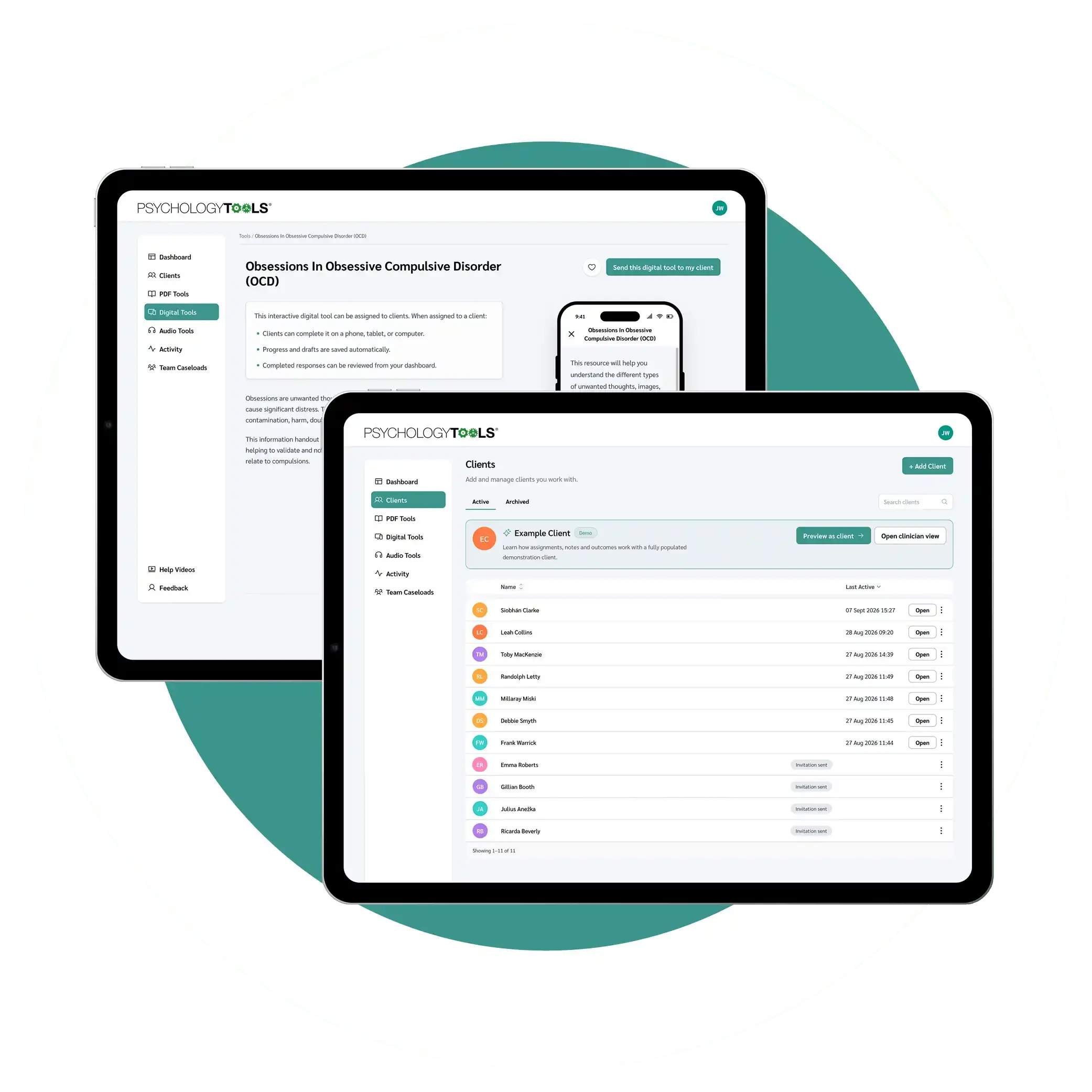
Assign
Send the tool securely to your client.
Client completes
Your client works through it on any device, at their own pace.
Review
Review their responses before the next session.
Part of a complete library of evidence-based tools
Worksheets, guides, audio resources and interactive digital tools for mental health professionals.