Survey – Testing Your Beliefs
This Survey – Testing Your Beliefs exercise guides clients through the process of carrying out a survey - a key intervention in cognitive behavioral therapy (CBT).
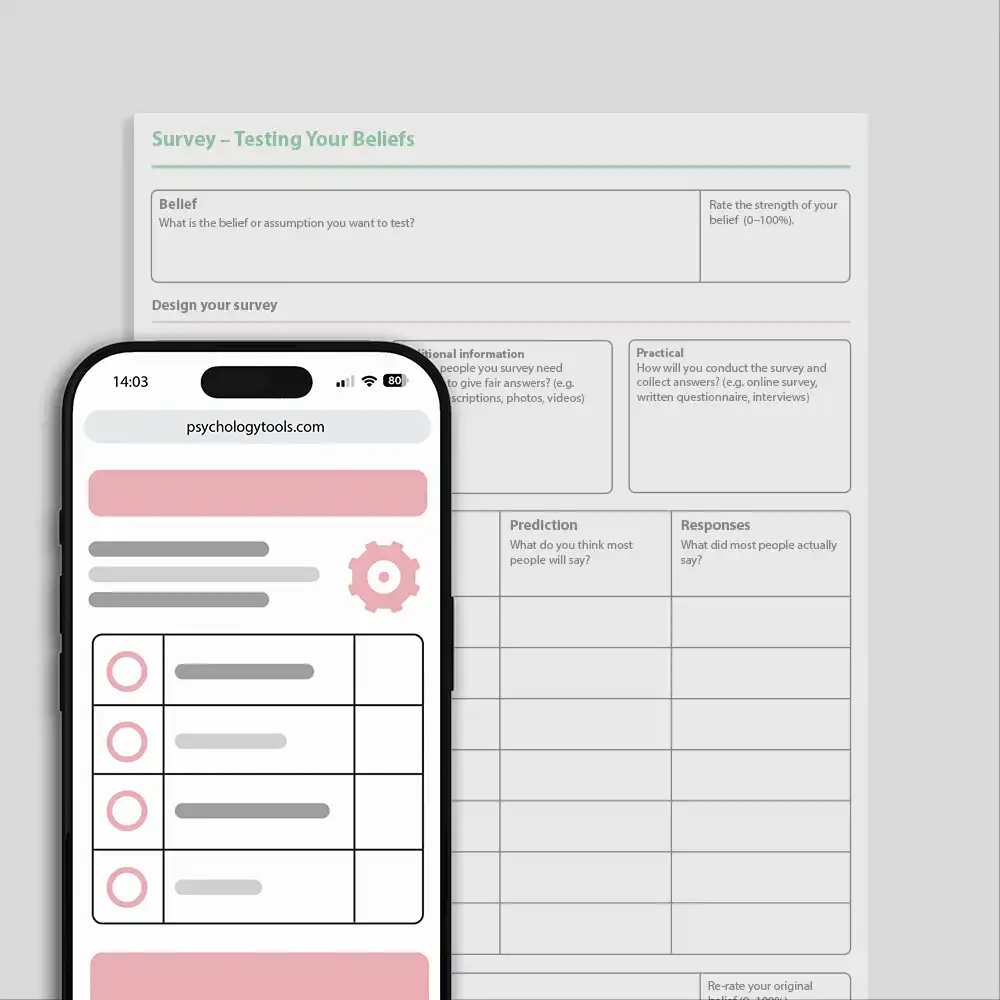
Survey – Testing Your Beliefs
Cognitive behavioral therapy (CBT) suggests that we all hold beliefs and assumptions about ourselves, other people, and how the world works. These beliefs are important because they influence what we think, feel, and do, and how we make sense of our experiences. However, sometimes our beliefs can be inaccurate and negatively affect our lives.
You can test your beliefs by carrying out a survey. A survey (or ‘poll’) involves asking people questions about what they think or do, so you can see if their answers fit with your beliefs. The results might encourage you to change your beliefs and make positive adjustments in your life.
Press start tool to create your own survey.
Overview
Behavioral experiments are a key component of cognitive behavioral therapy (CBT) and regarded as one of the most effective methods for bringing about cognitive change. Surveys (also known as “opinion polling” or “polling experiments”) are a type of observational experiment in which the therapist or client gathers information or opinions that are relevant to the client’s concerns. This can be a useful strategy for normalizing distressing symptoms, assessing other people’s judgments, discovering ‘typical’ behaviors, and ‘testing the water’ before the client engages in more active experiments.
This Survey – Testing Your Beliefs exercise guides clients through the process of carrying out a survey, including identifying a belief, designing a survey, evaluating the results, and reflecting on their learning.
Also available as:
PDF ToolUse this tool with your clients
Support therapeutic work between sessions.
Assign
Send the tool securely to your client.
Client completes
Your client works through it on any device, at their own pace.
Review
Review their responses before the next session.
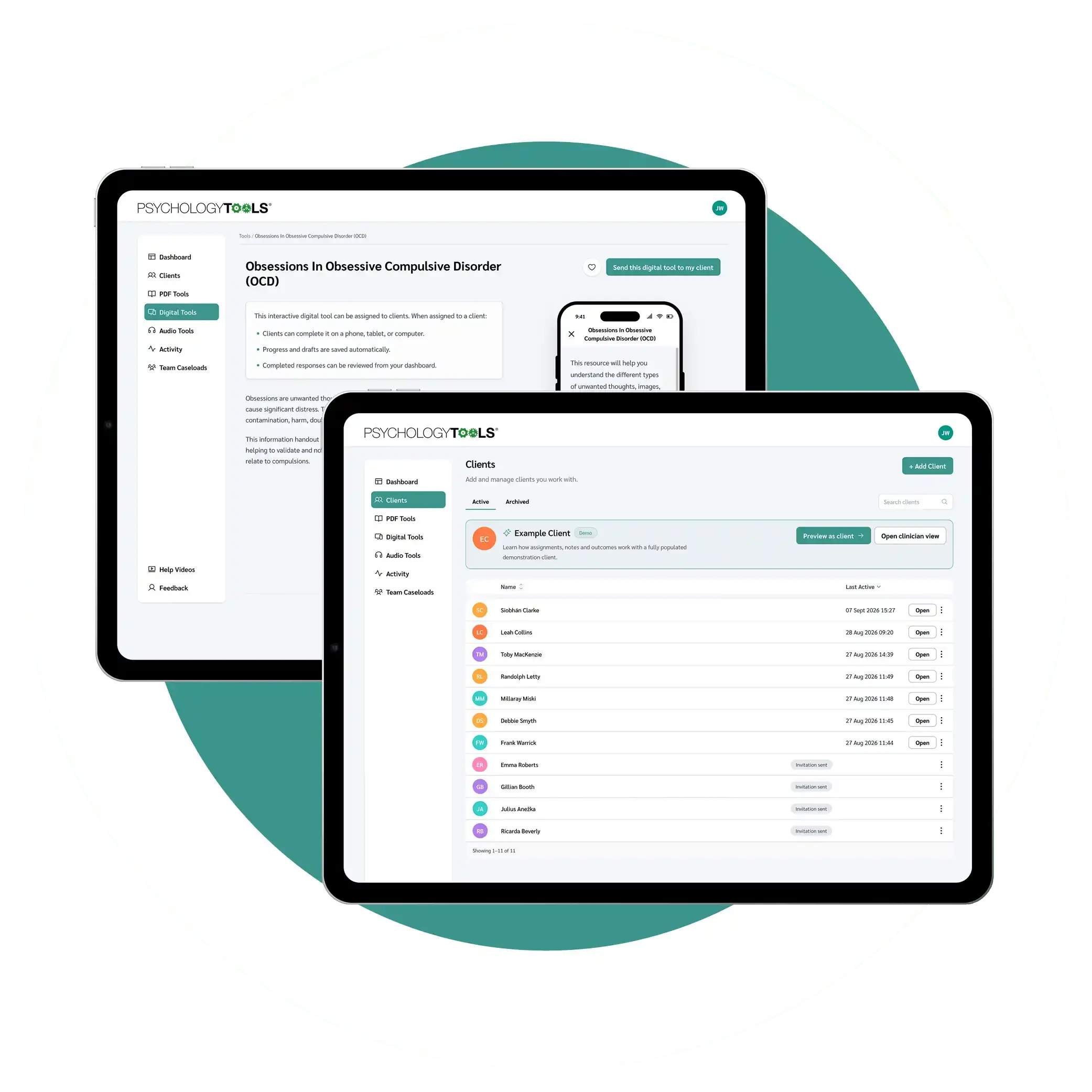
Part of a complete library of evidence-based tools
Worksheets, guides, audio resources and interactive digital tools for mental health professionals.