Theory A / Theory B
The Theory A / Theory B worksheet guides therapists and clients in exploring alternative explanations for the client's problems, promoting behavioral change through the elaboration of new and less threatening perspectives.
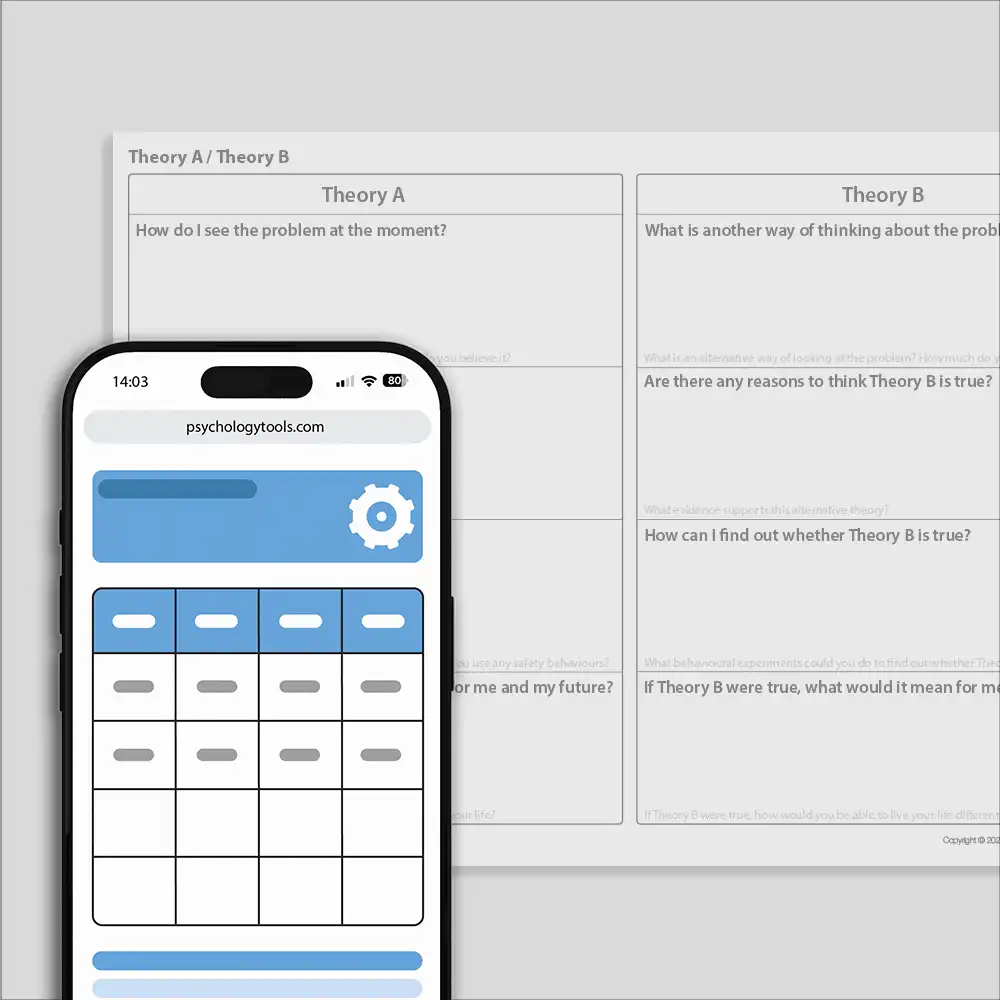
Theory A / Theory B
The explanations we use to make sense of the world are affected by the experiences we have had in our lives. You could think of them as ‘guesses’ that are influenced by our pasts. For example, Hannah’s aunt died of cancer and now when Hannah has headaches, she assumes that she has brain cancer.
Sometimes our guesses are correct. However, incorrect guesses can lead to problems such as anxiety or low mood, which can make us act in ways that profoundly impact our lives. For example, Hannah had extensive medical tests which found no evidence of cancer, but she continued to worry.
A helpful way of working with your beliefs and explanations about a problem is to treat them as ‘theories’ or ‘hypotheses’. This tool will help you clarify the beliefs you hold about a personal difficulty (Theory A) and explore whether an alternative explanation (Theory B) might be more accurate or helpful.
Overview
This resource aids therapists in fostering a collaborative understanding of a client's difficulties through the Theory A / Theory B technique. This approach encourages clients to explore different interpretations of their experiences, facilitating a non-confrontational way to gather evidence and test these perspectives. The worksheet emphasizes a structured approach, with case examples illustrating its application across various clinical contexts.
Also available as:
PDF ToolUse this tool with your clients
Support therapeutic work between sessions.
Assign
Send the tool securely to your client.
Client completes
Your client works through it on any device, at their own pace.
Review
Review their responses before the next session.
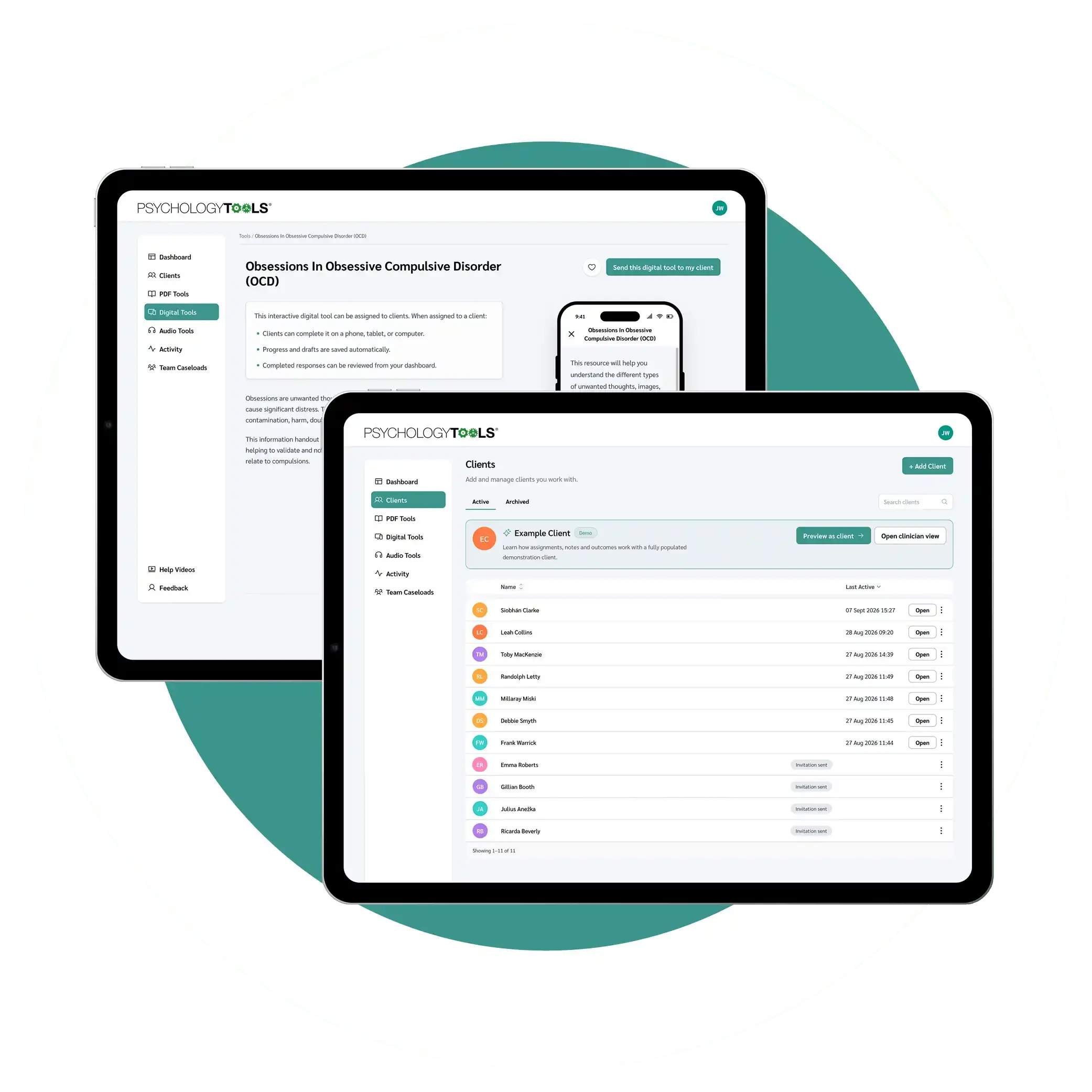
Part of a complete library of evidence-based tools
Worksheets, guides, audio resources and interactive digital tools for mental health professionals.