Thoughts And Depression
This information sheet illustrates how cognitive biases contribute to depression.
Thoughts And Depression
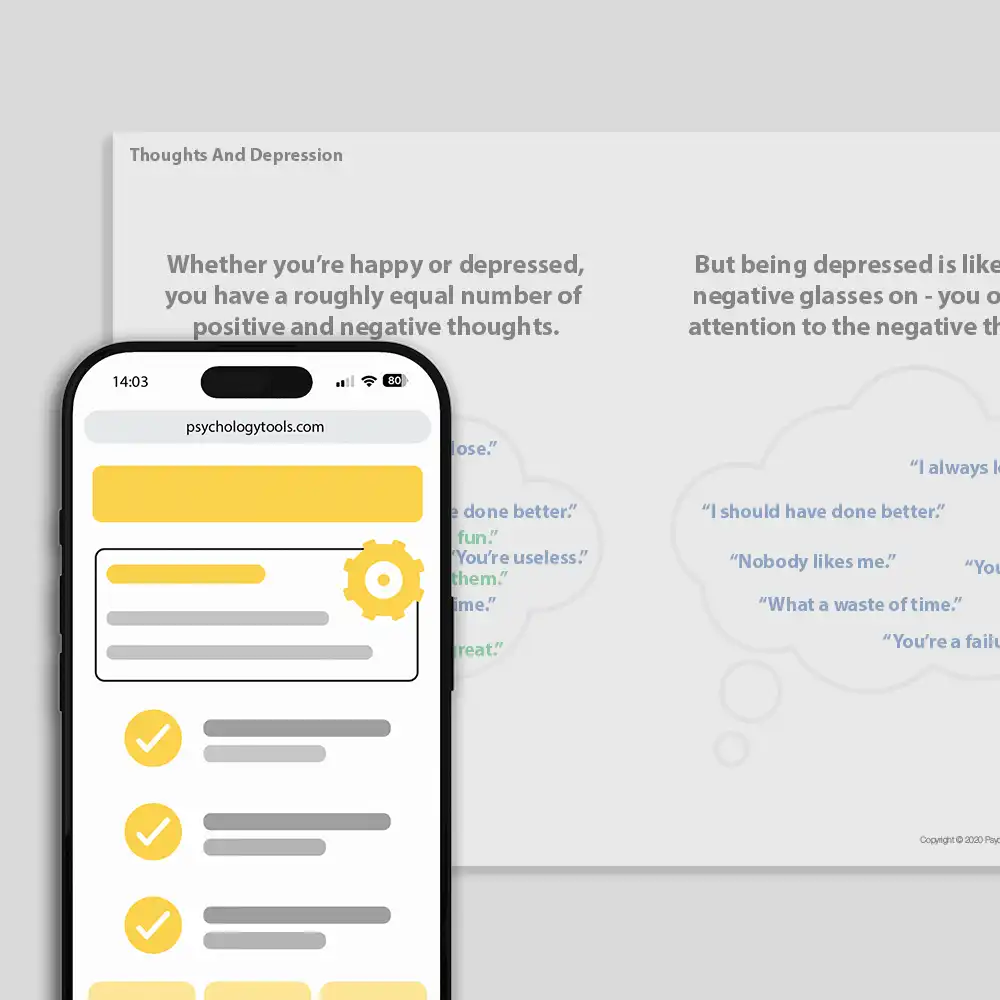
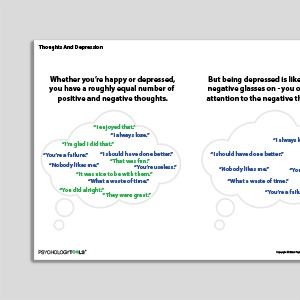
This Thoughts And Depression tool explains how negative thoughts contribute to depression.
Overview
Cognitive distortions or ‘unhelpful thinking styles’ are characteristic ways in which our thoughts can become biased. Different cognitive biases are associated with different clinical presentations. For example, catastrophizing is associated with anxiety disorders (e.g. Nöel et al, 2012) while dichotomous thinking has been linked to emotional instability (Veen & Arntz, 2000).
Depression is associated with a variety of cognitive biases, including a tendency to prioritize negative information while filtering out positive aspects. The Thoughts And Depression handout presents this information in engaging, visual form.
Also available as:
PDF ToolUse this tool with your clients
Support therapeutic work between sessions.
Assign
Send the tool securely to your client.
Client completes
Your client works through it on any device, at their own pace.
Review
Review their responses before the next session.

Part of a complete library of evidence-based tools
Worksheets, guides, audio resources and interactive digital tools for mental health professionals.