Types Of Dissociation
This information handout offers clinicians and clients a clear and accessible overview of dissociation, distinguishing between everyday dissociation and pathological experiences often linked with trauma.
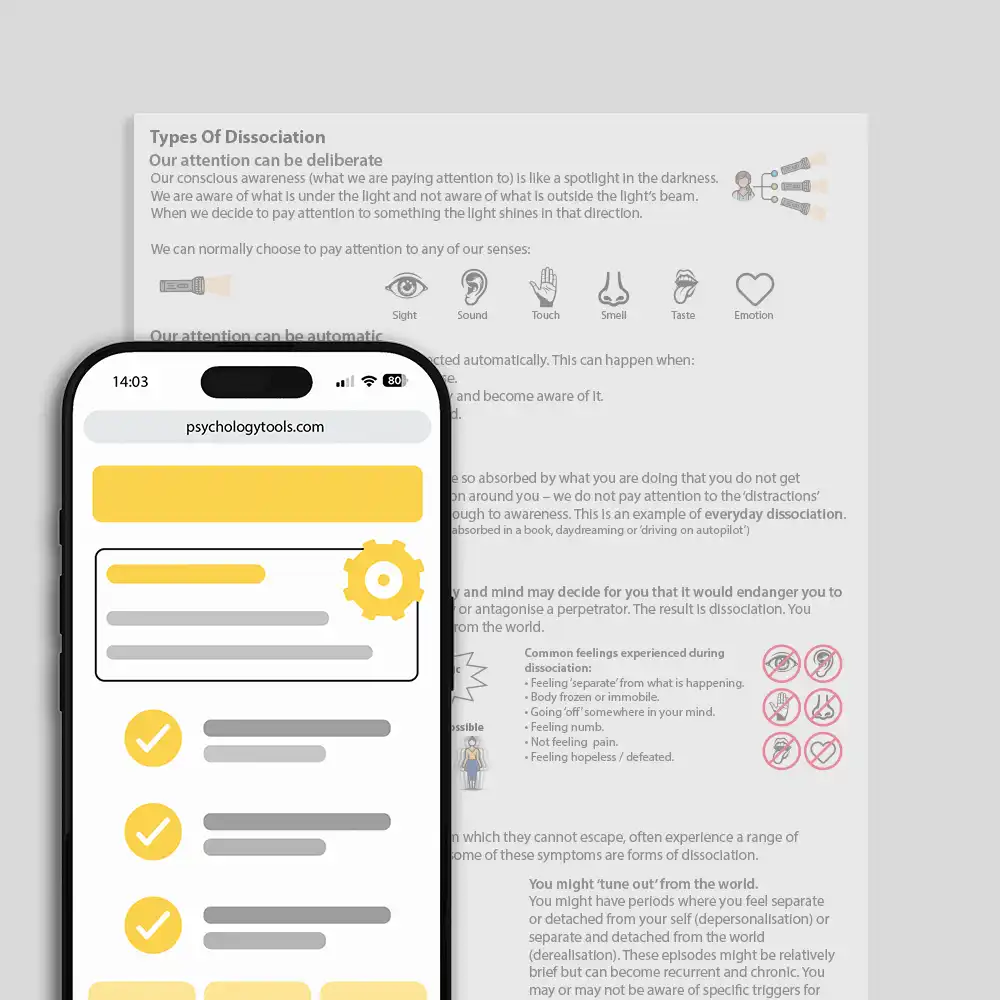
Types Of Dissociation
This Types Of Dissociation tool explains what dissociation is and why it can happen during and after traumatic experiences. Understanding these responses can help you make sense of your own experiences.
Overview
Understanding dissociation is crucial for clinicians working with trauma survivors. Dissociation involves a disruption in conscious awareness, where an individual disengages from the present moment. This handout explains both everyday forms of dissociation, such as 'driving on autopilot', and pathological forms of dissociation often rooted in experiences of trauma.
By demystifying dissociation, this resource aims to reduce fear and confusion for clients, while providing clinicians with a clear, structured way to explore dissociative experiences and normalise these reactions within therapy.
Also available as:
PDF ToolUse this tool with your clients
Support therapeutic work between sessions.
Assign
Send the tool securely to your client.
Client completes
Your client works through it on any device, at their own pace.
Review
Review their responses before the next session.

Part of a complete library of evidence-based tools
Worksheets, guides, audio resources and interactive digital tools for mental health professionals.