Understanding PTSD
This information handout provides a simplified explanation of post-traumatic stress disorder's (PTSD) causes and maintaining factors, in a visual format accessible to clients.
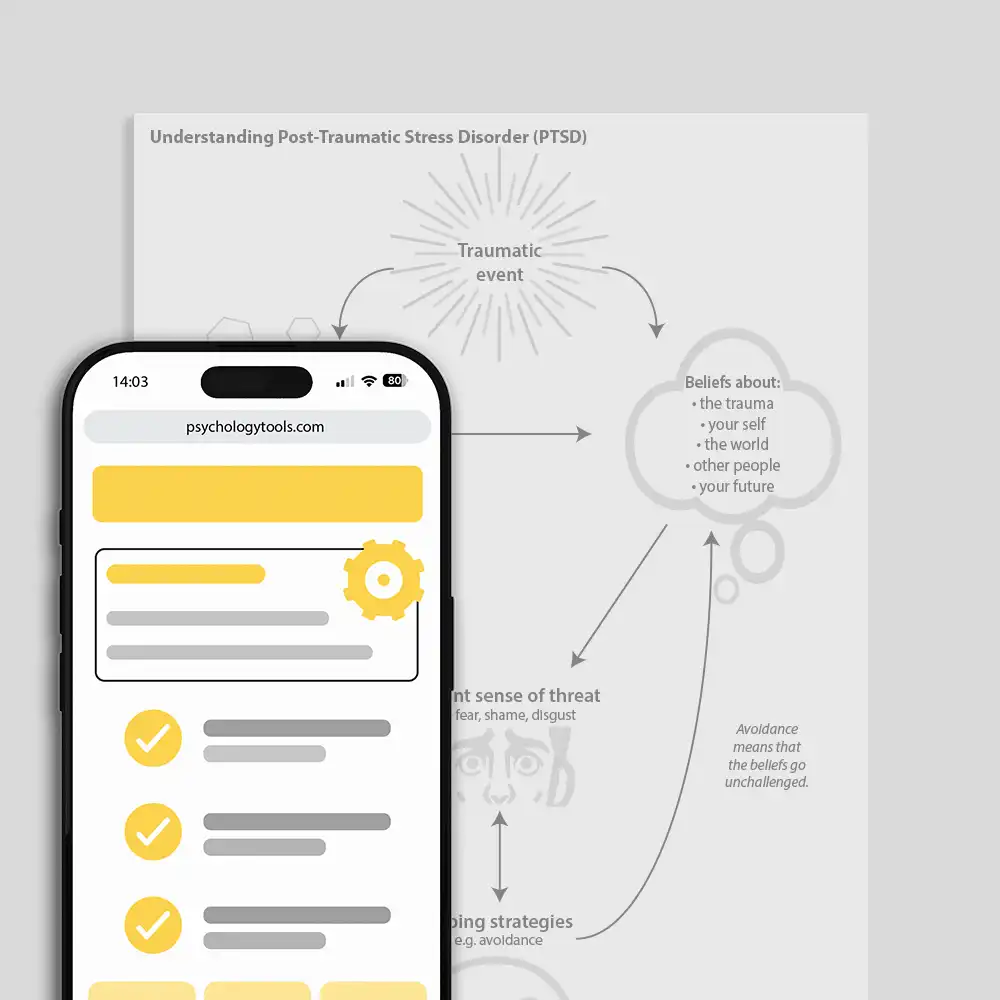
Understanding PTSD
This handout explains post-traumatic stress disorder (or 'PTSD' for short). It describes how trauma memories, negative beliefs, and certain coping strategies can keep trauma-related distress going. This information can help you make sense of your experiences and address symptoms of PTSD.
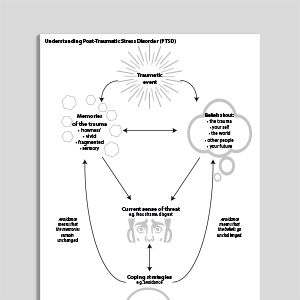
Overview
Understanding PTSD is a psychoeducational handout that visually illustrates the cognitive processes involved in the development and maintenance of post-traumatic stress disorder. Illustrating key elements from Ehlers & Clark’s (2000) cognitive model, it breaks down complex psychological concepts into client-friendly language.
Key mechanisms highlighted include the role of poorly processed trauma memories leading to re-experiencing, the impact of negative appraisals in maintaining a sense of current threat, and the role of coping strategies such as avoidance and hypervigilance in preventing recovery.
Also available as:
PDF ToolUse this tool with your clients
Support therapeutic work between sessions.
Assign
Send the tool securely to your client.
Client completes
Your client works through it on any device, at their own pace.
Review
Review their responses before the next session.

Part of a complete library of evidence-based tools
Worksheets, guides, audio resources and interactive digital tools for mental health professionals.