Vicious Cycle – Costs And Benefits
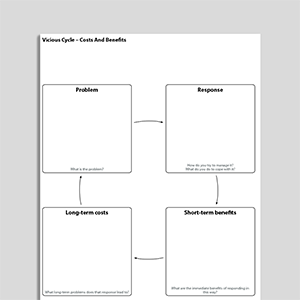
This Vicious Cycle - Costs And Benefits worksheet provides a client-friendly framework for exploring how certain coping strategies maintain or exacerbate problems. It helps clients examine the advantages and disadvantages of responses that might be contributing to their difficulties.
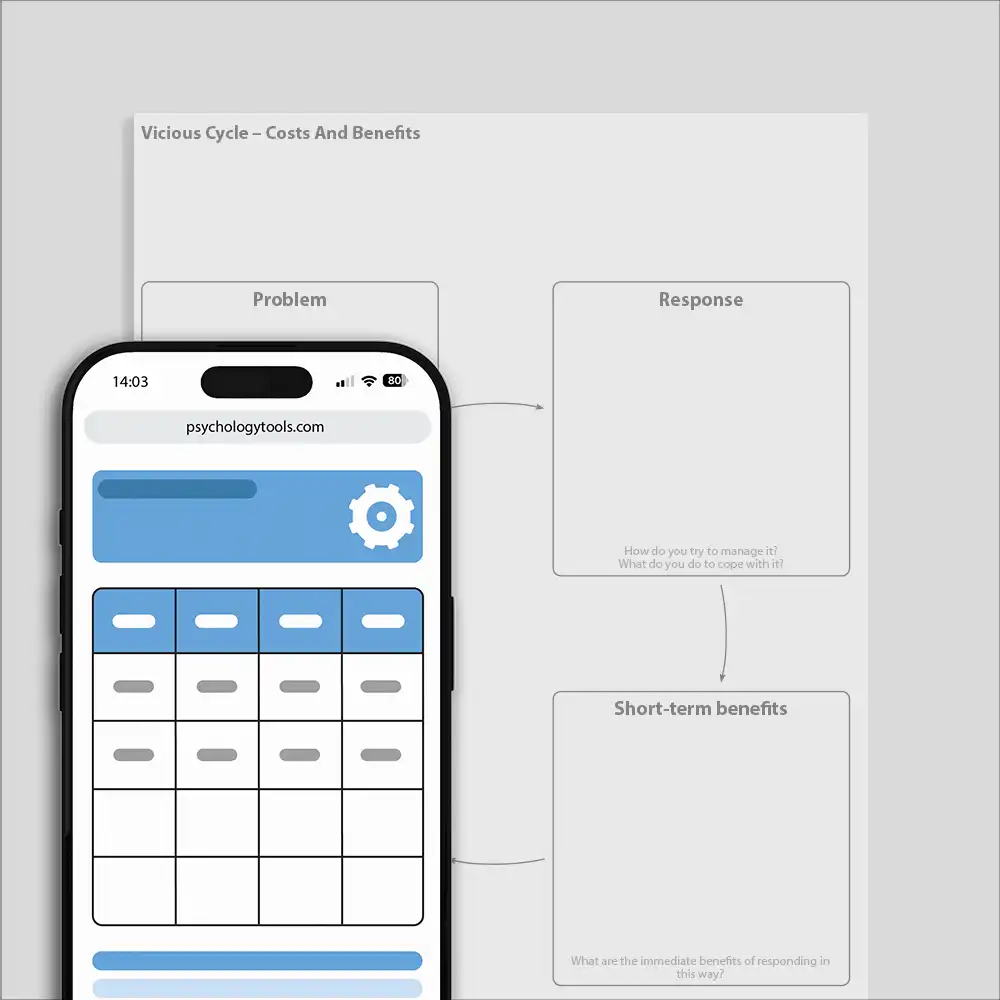
Vicious Cycle - Costs And Benefits
Do you feel like a problem is ‘stuck’ in place despite your best efforts to change it? Psychologists often approach these kinds of issues by drawing out a ‘vicious cycle’ diagram.
Vicious cycles are negative feedback loops: an action that might give you relief in the short term sometimes makes the original problem worse in the long run. For example, avoiding something scary might prevent you from learning that it isn’t dangerous, which leads to more avoidance – leading to a vicious cycle.
This Vicious Cycles – Costs And Benefits tool will help you explore what’s keeping a problem going, what is and isn’t working, and consider more helpful approaches.
Overview
Formulation is a key component in talking therapies, and vicious cycles have long been recognized in psychotherapy as key mechanisms that perpetuate psychopathology. Identifying and mapping out vicious cycles can serve many therapeutic functions including: simplifying complex difficulties, making them more manageable; illustrating how problems manifest in different ways; normalizing ways of coping with difficulties; identifying maladaptive responses that perpetuate problems; identifying adaptive responses that can be strengthened or shaped into more helpful strategies; helping clients to gain distance from their difficulties; pinpointing ways to intervene.
The worksheet is designed to help clients map out vicious cycles that are contributing to their difficulties. By evaluating the advantages and disadvantages of coping strategies and responses to these problems, clients can consider ways to break out of the cycles that perpetuate them.
Also available as:
PDF ToolUse this tool with your clients
Support therapeutic work between sessions.
Assign
Send the tool securely to your client.
Client completes
Your client works through it on any device, at their own pace.
Review
Review their responses before the next session.
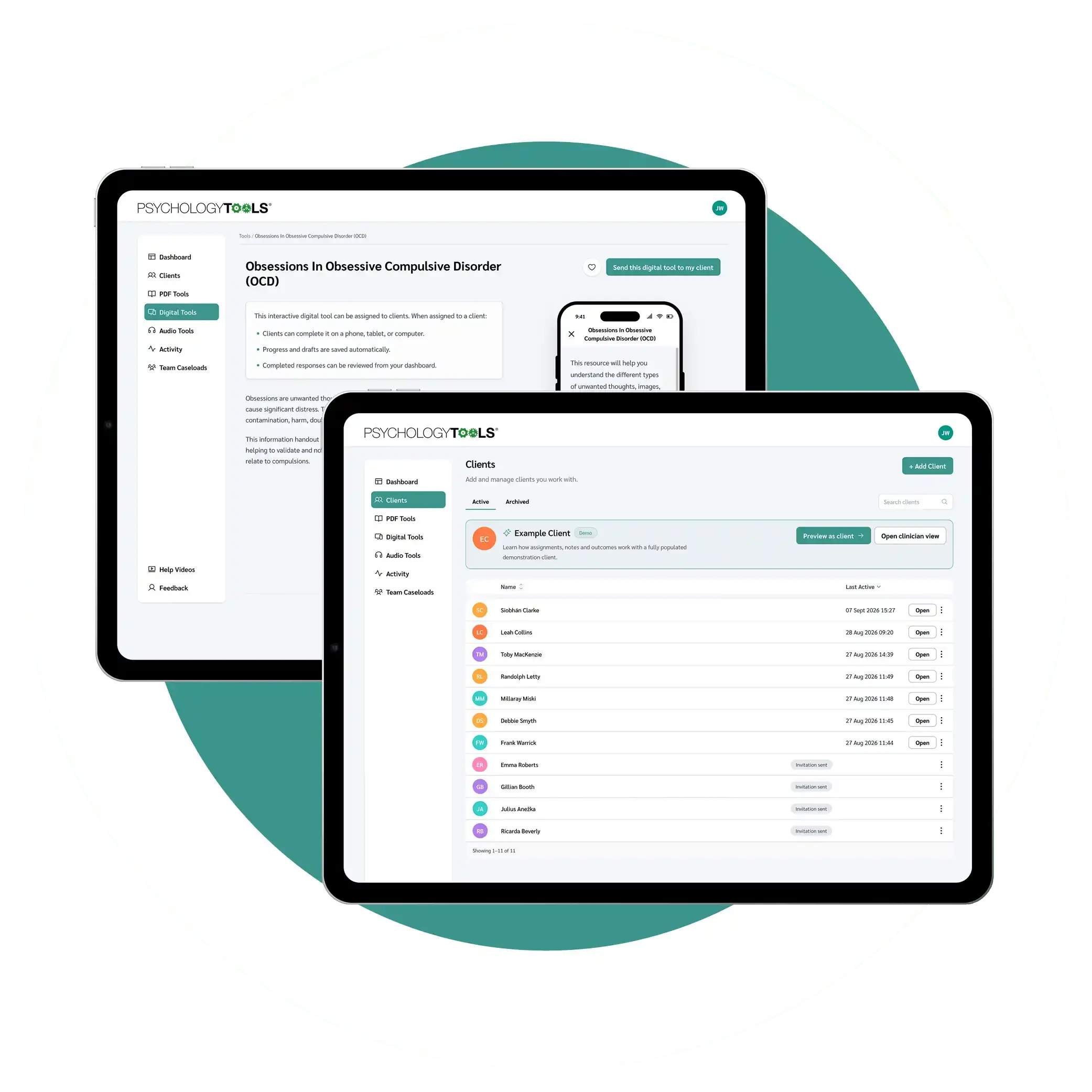
Part of a complete library of evidence-based tools
Worksheets, guides, audio resources and interactive digital tools for mental health professionals.