What Are Safety Behaviors?
The What Are Safety Behaviors? information handout describes the essential features of safety-seeking behaviors, including their short-term benefits and long-term impacts.
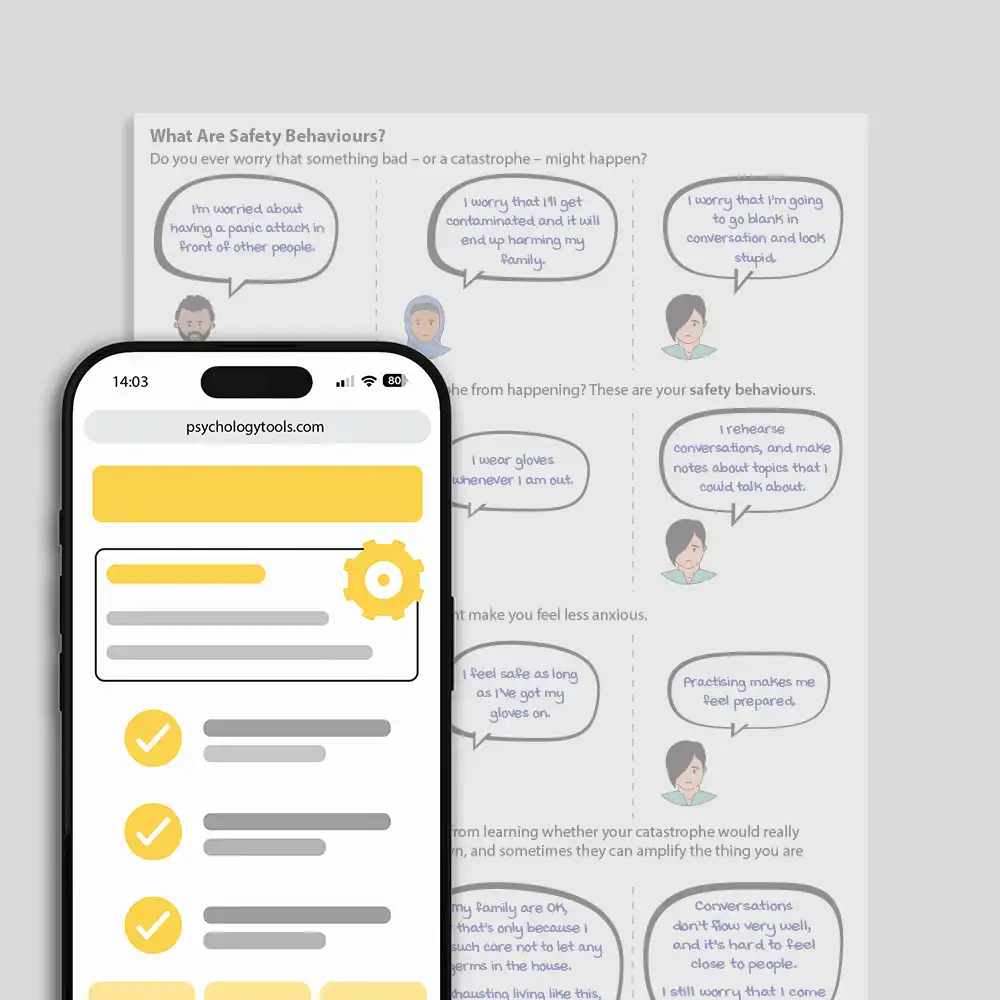
What Are Safety Behaviors?
The What Are Safety Behaviors? tool helps you notice actions you take to prevent something bad from happening. By showing how these habits can soothe you short-term but keep fears alive long-term, it makes their impact clearer. This tool can help you learn new ways to face anxiety.
Overview
Safety-seeking behaviors (‘safety behaviors’) are actions that people take in response to a real – or perceived – threat. When a threat is real, safety-seeking behaviors are adaptive. Stepping out of the way of a speeding car, leaving a burning building, or attending hospital when faced with a medical emergency are all actions which can save your life. However, if a misinterpretation leads an individual to perceive a threat in the absence of real danger, safety-seeking behaviors can prevent the anxious individual from learning about the (true) absence of danger.
The What Are Safety Behaviors? information handout can be used to introduce clients to the concept of safety-seeking behaviors, their short-term advantages, and their long-term effects.
Also available as:
PDF ToolUse this tool with your clients
Support therapeutic work between sessions.
Assign
Send the tool securely to your client.
Client completes
Your client works through it on any device, at their own pace.
Review
Review their responses before the next session.

Part of a complete library of evidence-based tools
Worksheets, guides, audio resources and interactive digital tools for mental health professionals.