What Causes Tinnitus?
Explore how changes in brain processing lead to tinnitus, and how cognitive-behavioral approaches can help manage distress associated with this condition.
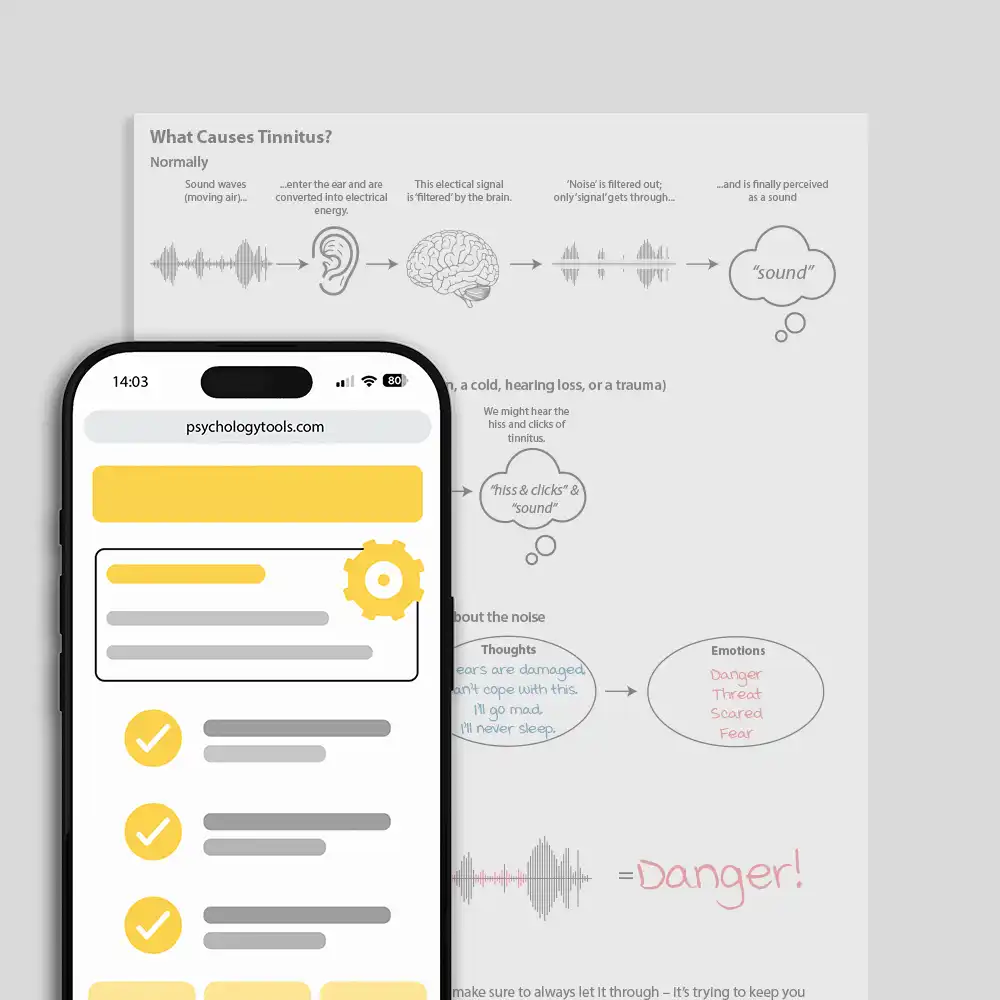
What Causes Tinnitus?
This handout explains what causes tinnitus. It describes how normal hearing works and how this changes when someone has tinnitus. It also discusses how changes in how the brain processes sounds and the thoughts connected to sounds can lead to distress.
Overview
Tinnitus is the perception of sound without an external source, arising when the brain’s normal filtering mechanisms fail to suppress internal auditory signals. This loss of filtering means that sounds which would typically go unnoticed enter conscious awareness. While the perception of tinnitus itself is the result of this altered processing, the associated distress stems from how the sound is interpreted. When tinnitus is appraised as threatening, uncontrollable, or harmful, it draws focused attention, triggers emotional responses such as anxiety or frustration, and becomes increasingly intrusive. This information handout describes these processes using client-friendly terminology.
Also available as:
PDF ToolUse this tool with your clients
Support therapeutic work between sessions.
Assign
Send the tool securely to your client.
Client completes
Your client works through it on any device, at their own pace.
Review
Review their responses before the next session.

Part of a complete library of evidence-based tools
Worksheets, guides, audio resources and interactive digital tools for mental health professionals.