What Is Eye Movement Desensitization And Reprocessing (EMDR) Therapy?
EMDR is an evidence-based psychological therapy that helps clients process traumatic experiences and distressing memories using bilateral stimulation techniques.

What Is Eye Movement Desensitization And Reprocessing (EMDR) Therapy?
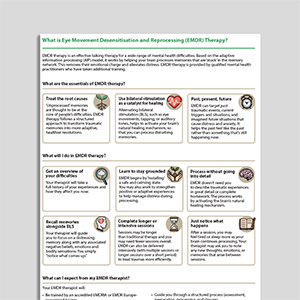
Eye movement desensitization and reprocessing (EMDR) therapy is an effective treatment for traumatic and distressing memories. This tool explains what EMDR is and what it involves.
Overview
Eye movement desensitization and reprocessing (EMDR) is an evidence-based psychological therapy designed to help individuals process traumatic memories and associated difficulties. Developed by Francine Shapiro in 1987, EMDR takes a trauma-focused approach that emphasizes what has happened to a person rather than what is inherently wrong with them.
EMDR therapy is rooted in the adaptive information processing (AIP) model, which proposes that the brain has a natural tendency to process and heal from psychological distress, similar to the body’s ability to heal from physical injuries. EMDR activates this system by connecting clients' existing strengths with unprocessed, distressing memories, ultimately reducing emotional distress and supporting cognitive change.
EMDR is guided by a standardized, eight-phase protocol and incorporates bilateral stimulation techniques such as eye movements, hand tapping, or auditory tones to facilitate memory processing and integration.
Also available as:
PDF ToolUse this tool with your clients
Support therapeutic work between sessions.
Assign
Send the tool securely to your client.
Client completes
Your client works through it on any device, at their own pace.
Review
Review their responses before the next session.

Part of a complete library of evidence-based tools
Worksheets, guides, audio resources and interactive digital tools for mental health professionals.