What Is Memory?
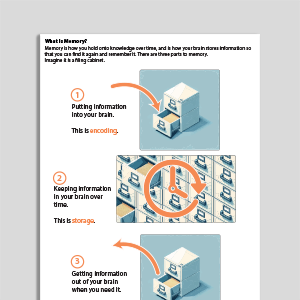
The What is Memory? information handout introduces clients to the three key processes of memory (encoding, storage, and retrieval) and can be used to highlight a specific memory process relevant to their difficulties.

What Is Memory?
This What Is Memory? tool explains how your brain stores and finds information. It can help you learn how memory works and why it sometimes fails.
Overview
Memory difficulties are common and can result from stress, fatigue, aging, neurological disorders, or psychological conditions. For clients experiencing these challenges, psychoeducation about how memory works—specifically the processes of encoding, storage, and retrieval—can reduce distress and foster understanding. This handout introduces these core memory processes in a clear and accessible way. It can help normalize memory lapses, explain why they occur, and support therapeutic engagement by building clients’ insight and motivation. Clinicians can also use the resource to highlight a specific memory process relevant to a client's symptoms.
Also available as:
PDF ToolUse this tool with your clients
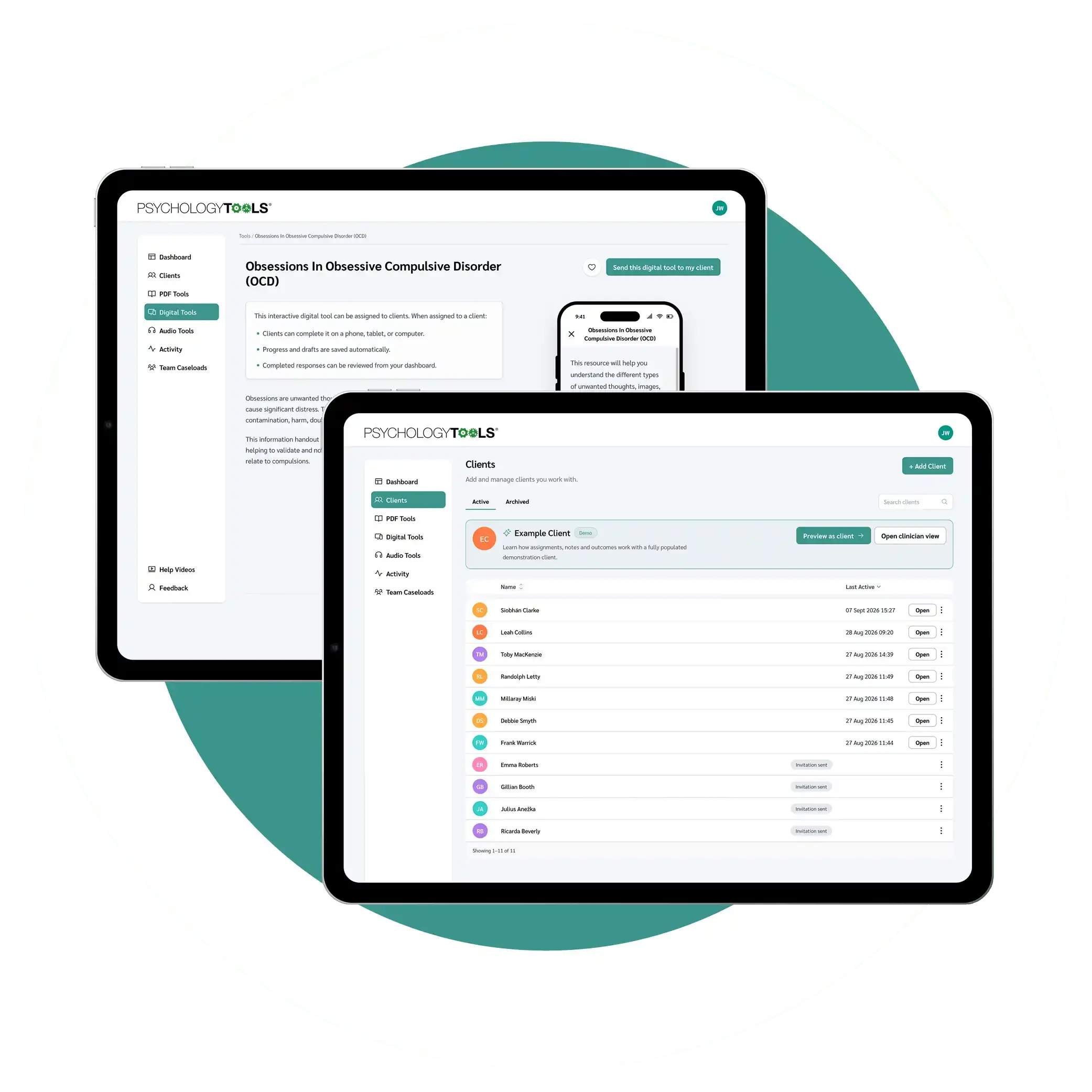
Support therapeutic work between sessions.
Assign
Send the tool securely to your client.
Client completes
Your client works through it on any device, at their own pace.
Review
Review their responses before the next session.
Part of a complete library of evidence-based tools
Worksheets, guides, audio resources and interactive digital tools for mental health professionals.