What Keeps Paranoia Going?
This clear, accessible information handout helps clients understand the cognitive, emotional, behavioral, and physiological processes that can maintain paranoia, supporting collaborative formulation and evidence-based treatment planning.
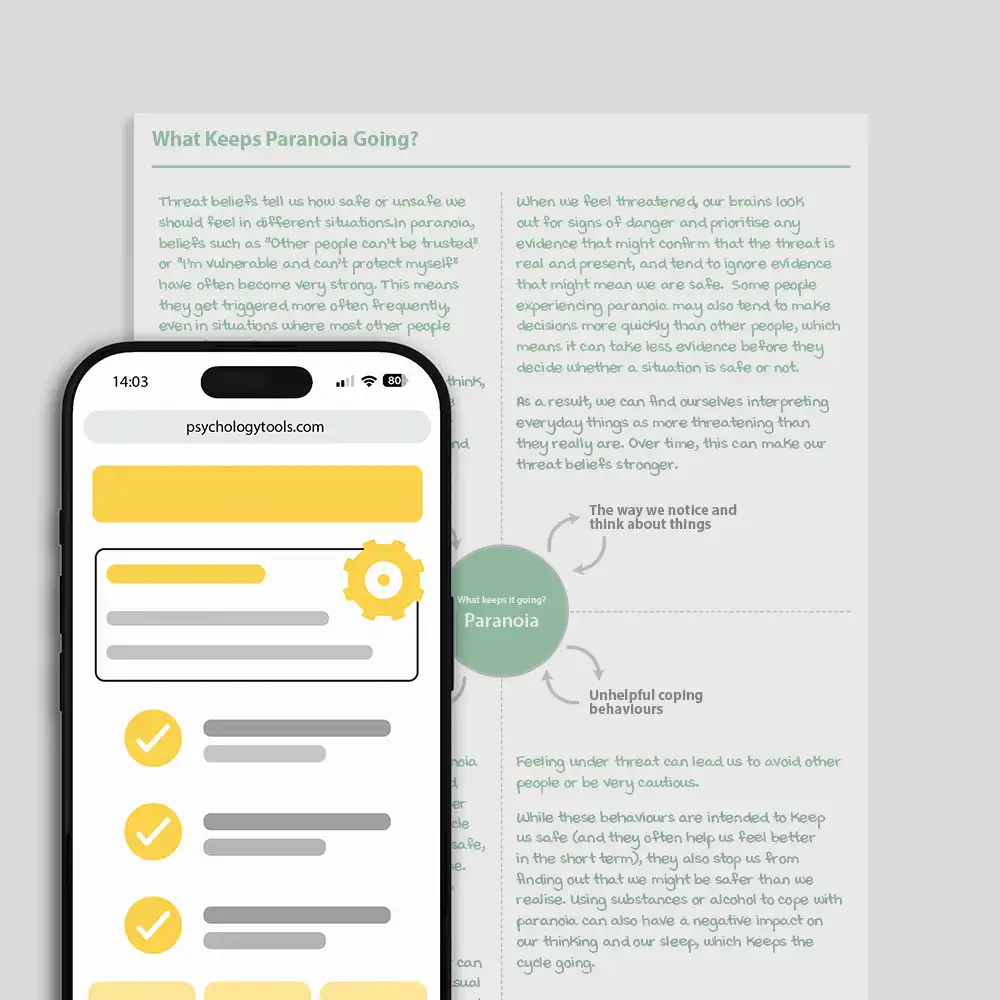
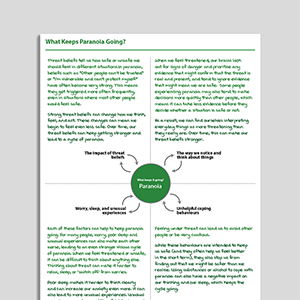
What Keeps Paranoia Going?
Many people struggle with paranoia. This resource describes some of the things that can keep it going.
Overview
Paranoid thoughts are common and can occur in many people from time to time. However, when they persist and begin to affect a person’s wellbeing, relationships, or daily functioning, they may become a significant clinical concern.
What Keeps Paranoia Going? is an illustrated psychoeducational handout that explains four interconnected processes that can maintain paranoid thoughts:
- The impact of threat beliefs.
- The way people notice and interpret information.
- Worry, sleep problems, and unusual experiences.
- Unhelpful coping behaviors.
The handout presents these processes in a “vicious flower” format, with each petal representing a separate maintenance cycle. Clinicians can use it to introduce a cognitive behavioral understanding of paranoia, support collaborative discussion, or develop an individualized formulation of a client’s experiences.
Also available as:
PDF ToolUse this tool with your clients
Support therapeutic work between sessions.
Assign
Send the tool securely to your client.
Client completes
Your client works through it on any device, at their own pace.
Review
Review their responses before the next session.

Part of a complete library of evidence-based tools
Worksheets, guides, audio resources and interactive digital tools for mental health professionals.