Worry Postponement
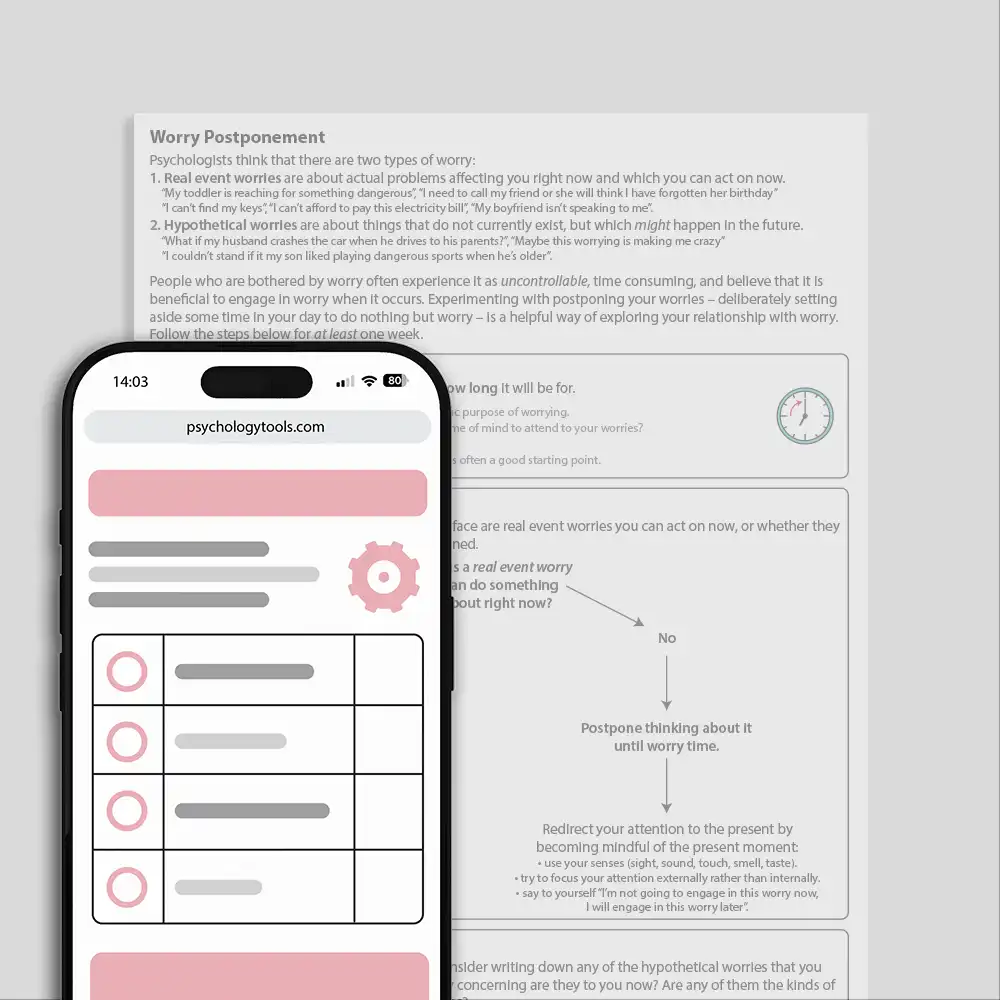
Worry postponement is a practical intervention for clients with generalized anxiety disorder (GAD), designed to manage excessive worry by postponing daily worries and scheduling specific 'worry time'.
Worry Postponement
Do you struggle with worry? Do your worries seem difficult to control or take up a lot of your time? If so, worry postponement could be helpful.
Worry postponement or ‘worry time’ is an effective exercise that involves setting aside protected time to worry. This might sound like a strange idea, but with practice, you may find that you start to relate to your worries differently and actually worry less.
Overview
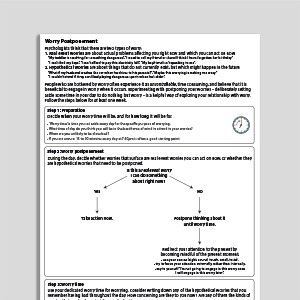
Worry Postponement offers a structured approach to help clients differentiate between real event worries and hypothetical worries. By designating time specifically for worrying clients are provided with an opportunity to test the belief that their worry is uncontrollable.
Originally introduced by Borkovec et al., (1983) as a 'stimulus control' task, worry postponement has been shown to significantly reduce daily worry. Clients often report that worries often lose their urgency or relevance when revisited, and this technique can challenge beliefs about the uncontrollability of worry.
Also available as:
PDF ToolUse this tool with your clients
Support therapeutic work between sessions.
Assign
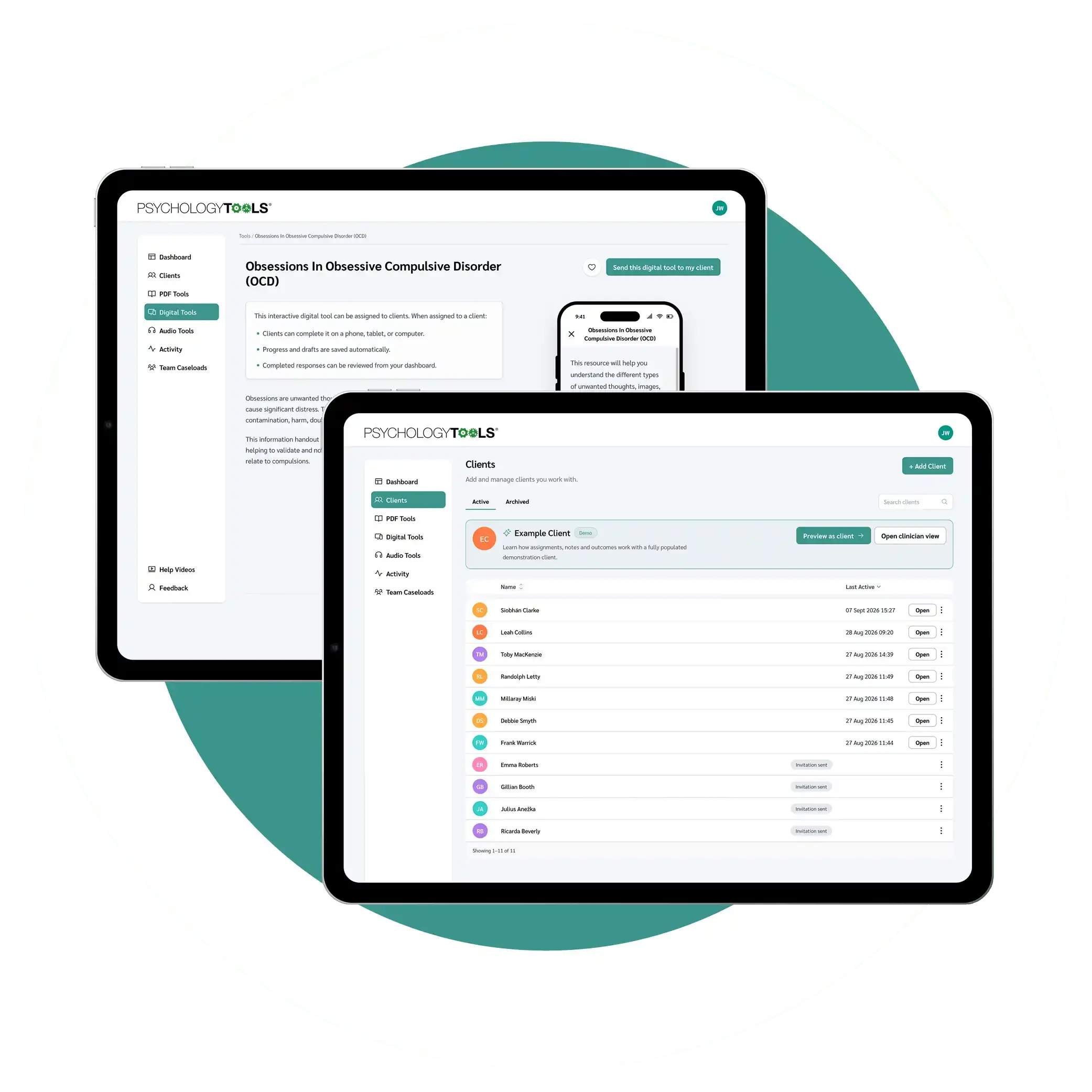
Send the tool securely to your client.
Client completes
Your client works through it on any device, at their own pace.
Review
Review their responses before the next session.
Part of a complete library of evidence-based tools
Worksheets, guides, audio resources and interactive digital tools for mental health professionals.