Intolerance Of Uncertainty
Information Handouts
Intolerance Of Uncertainty
application/pdf
•
159.21 KB
Transdiagnostic Processes
Information Handouts
Transdiagnostic Processes
application/pdf
•
134.24 KB
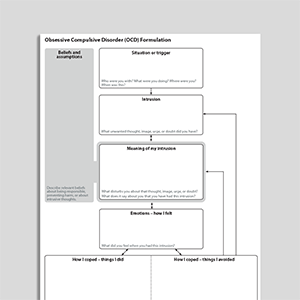
Obsessive Compulsive Disorder (OCD) Formulation
Worksheets
Obsessive Compulsive Disorder (OCD) Formulation
application/pdf
•
131.53 KB
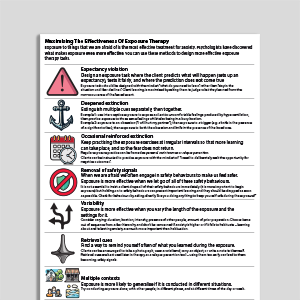
Maximizing The Effectiveness Of Exposure Therapy
Information Handouts
Maximizing The Effectiveness Of Exposure Therapy
application/pdf
•
193.7 KB
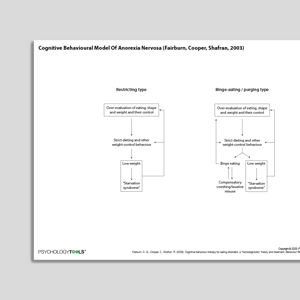
Cognitive Behavioral Model Of Anorexia Nervosa (Fairburn, Cooper, Shafran, 2003)
Information Handouts
Cognitive Behavioral Model Of Anorexia Nervosa (Fairburn, Cooper, Shafran, 2003)
application/pdf
•
465.54 KB
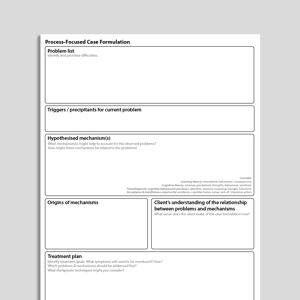
Process Focused Case Formulation
Worksheets
Process Focused Case Formulation
application/pdf
•
222.48 KB
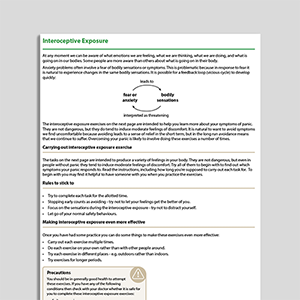
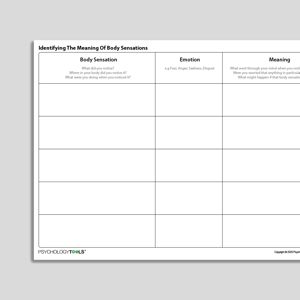
Identifying The Meaning Of Body Sensations
Worksheets
Identifying The Meaning Of Body Sensations
application/pdf
•
301.19 KB
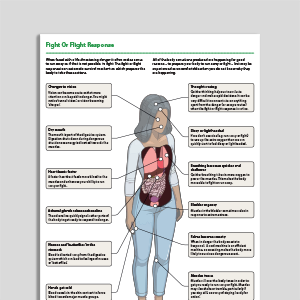
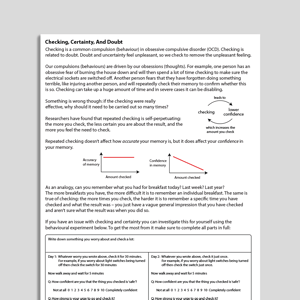
Checking Certainty And Doubt
Information Handouts
Checking Certainty And Doubt
application/pdf
•
137.83 KB
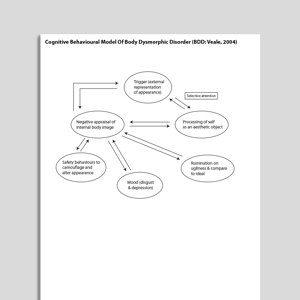
Cognitive Behavioral Model Of Body Dysmorphic Disorder (BDD: Veale, 2004)
Information Handouts
Cognitive Behavioral Model Of Body Dysmorphic Disorder (BDD: Veale, 2004)
application/pdf
•
453.76 KB
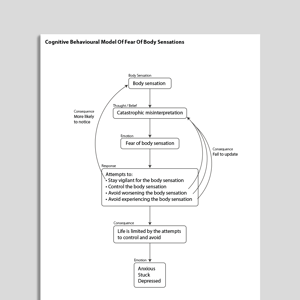
Cognitive Behavioral Model Of Fear Of Body Sensations
Information Handouts
Cognitive Behavioral Model Of Fear Of Body Sensations
application/pdf
•
55.46 KB
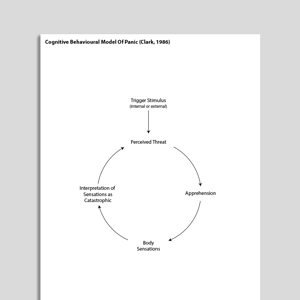
Cognitive Behavioral Model Of Panic (Clark, 1986)
Information Handouts
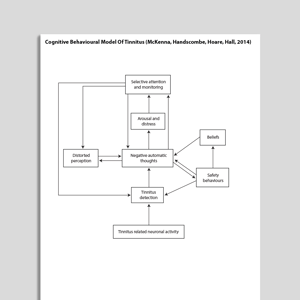
Cognitive Behavioral Model Of Tinnitus (McKenna, Handscombe, Hoare, Hall, 2014)
Information Handouts
Cognitive Behavioral Model Of Tinnitus (McKenna, Handscombe, Hoare, Hall, 2014)
application/pdf
•
73.18 KB
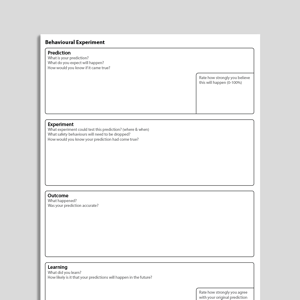
Behavioral Experiment (Portrait Format)
Worksheets
Behavioral Experiment (Portrait Format)
application/pdf
•
274.3 KB

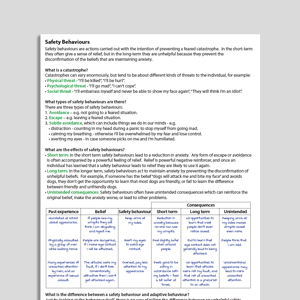
What Are Safety Behaviors?
Blakey et al. (2019) review safety behaviors from an inhibitory learning standpoint and argue that safety behaviors interfere with safety learning in three ways:they could prevent the violation of expectancies by attenuating the discrepancy between what the patient predicts will occur during an exposure task (i.e., catastrophe) and what actually occurs (i.e., no catastrophe);
safety behaviors might obstruct the generalization of safety-based associations by restricting safety learning to specific contexts;
they could impede the development of distress tolerance by obstructing patients from learning that they can persist in challenging tasks despite elevate levels of distress.
| Function | |||
| Preventive | Restorative | ||
| Strategy | Behavioral | Situational avoidanceRelying on safety signalsSubtle avoidanceCompulsive behavior carried out to prevent an increase in anxiety | EscapeUse of safety signalsCompulsive behavior carried out to decrease anxietyReassurance seeking |
| Cognitive | Preparation | Distraction/focusingNeutralizingThought suppression | |
Disorders That May Be Maintained by Safety-Seeking Behaviors
Harvey et al. (2004) propose that safety-seeking behavior is present in:panic disorder with or without agoraphobia
specific phobia
social phobia
post-traumatic stress disorder (PTSD)
obsessive compulsive disorder (OCD)
body dysmorphic disorder
eating disorders
insomnia
psychosis
Helpful Questions for Assessing Safety-Seeking Behaviors
Some helpful questions for assessing safety-seeking behaviors include:How do you respond when you feel threatened?
In situations where you feel anxious but can’t or don’t escape, what do you do to cope?
What are the short-term effects of coping in that way?
What would happen if you stopped using that safety behavior?
Treatment Approaches That Target Safety-Seeking Behaviors
The traditional approach to the treatment of anxiety is to expose the patient to the feared situation or stimulus with encouragement to drop the use of safety-seeking behaviors. Recent research has questioned whether the judicious use of safety behaviors might make exposure tasks more acceptable to patients, and might facilitate approach behaviors. Current evidence is mixed, with the authors of a 2019 trial concluding:“… therapists may not need to be concerned if their patient is unwilling to immediately eliminate their safety behavior(s) as long as the patient explicitly tests their fear-based negative expectancies through direct and sustained confrontation with feared situations/stimuli and also understands they should eliminate their use of safety behaviors as soon as they are willing” (Blakey et al., 2019).
References
Blakey, S. M., Abramowitz, J. S., Buchholz, J. L., Jessup, S. C., Jacoby, R. J., Reuman, L., & Pentel, K. Z. (2019). A randomized controlled trial of the judicious use of safety behaviors during exposure therapy. Behaviour Research and Therapy, 112, 28–35.
Clark, D. M. (1999). Anxiety disorders: Why they persist and how to treat them. Behaviour Research and Therapy, 37(1), S5.
Harvey, A. G., Watkins, E., Mansell, W., & Shafran, R. (2004). Cognitive behavioural processes across psychological disorders: A transdiagnostic approach to research and treatment. New York: Oxford University Press.
Helbig-Lang, S., & Petermann, F. (2010). Tolerate or eliminate? A systematic review on the effects of safety behavior across anxiety disorders. Clinical Psychology: Science and Practice, 17(3), 218–233.
Salkovskis, P. M. (1991). The importance of behaviourin the maintenance of anxiety and panic: A cognitive account. Behavioural and Cognitive Psychotherapy, 19(1), 6–19.
Links to external resources
Psychology Tools makes every effort to check external links and review their content. However, we are not responsible for the quality or content of external links and cannot guarantee that these links will work all of the time.
Please login to view our external resources.