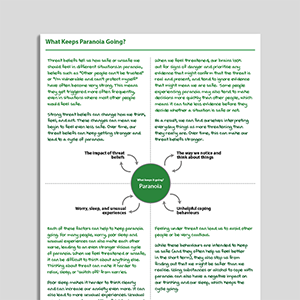
What Keeps Paranoia Going?
Information Handouts
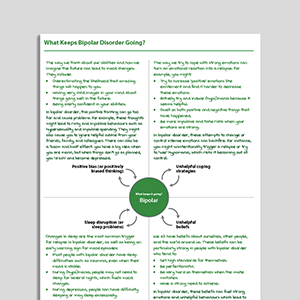
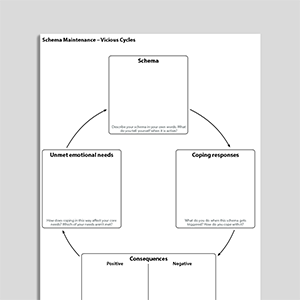
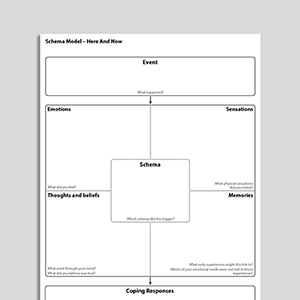
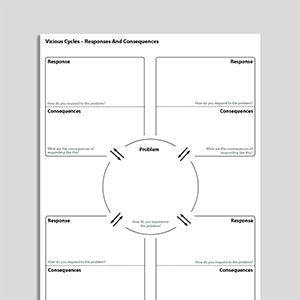
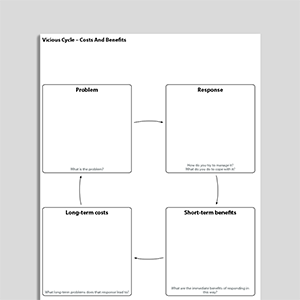
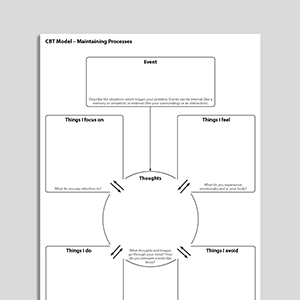
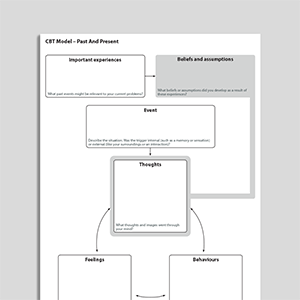
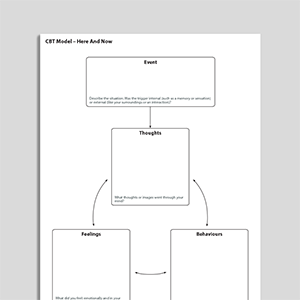
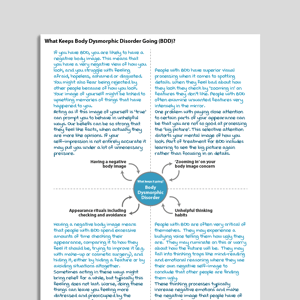
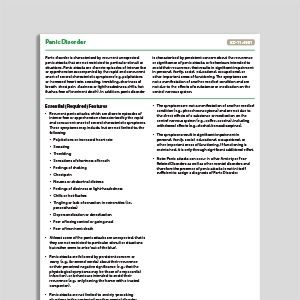
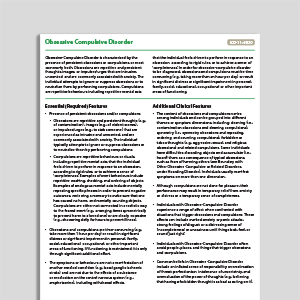
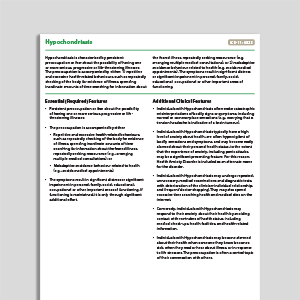
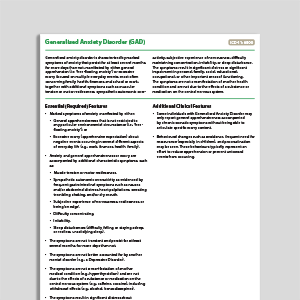
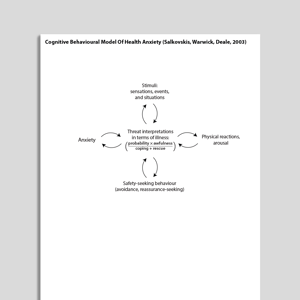
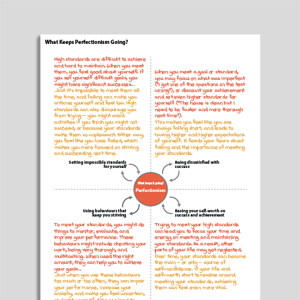
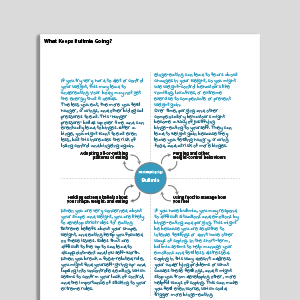
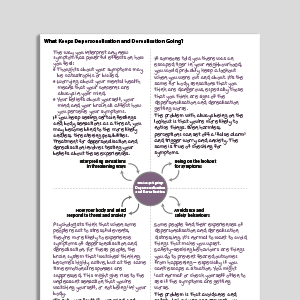
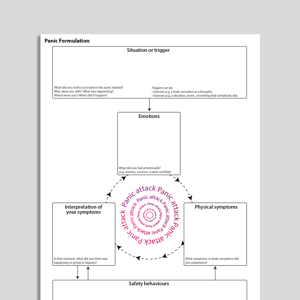
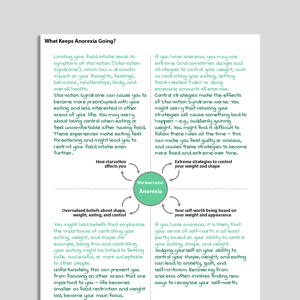
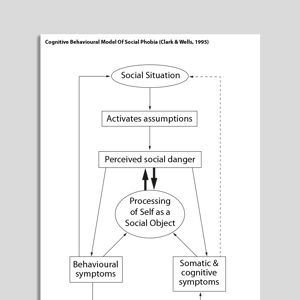
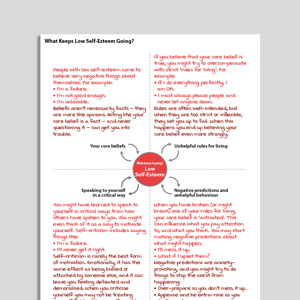
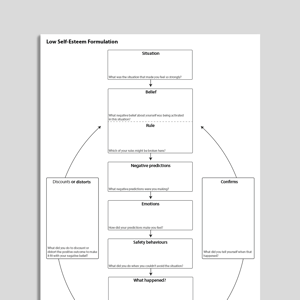
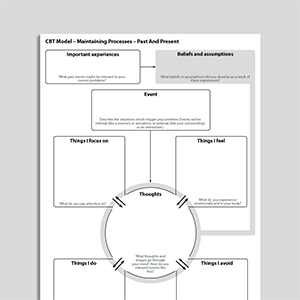
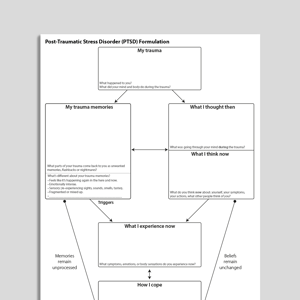
A cross-sectional formulation presents information relevant to a short time period, as though an event were sliced open at a particular moment in time to reveal the triggering event, thoughts (interpretations/appraisals), emotions, body feelings, and behaviors or reactions. One of the most popular formats for a cross-sectional formulation is Padesky and Mooney’s ‘hot cross bun’ (1990).
A longitudinal formulation presents information relevant to the origin and maintenance of a problem. Weerasekera’s “Multiperspective model” popularized the use of the “5 Ps” approach (presenting, predisposing, precipitating, perpetuating, and protective) to case formulation (Weerasekera, 1993). Judith Beck’s cognitive conceptualization (1995) links longitudinal factors (including relevant childhood data, core beliefs, conditional assumptions, coping strategies) to cross-sectional breakdowns (situation, automatic thought and appraisal, emotion, behavior).
Micro-formulations have been described as a helpful way of understanding the origin and effects of troubling imagery (Hackmann, Bennett-Levy, & Holmes, 2011). In this approach problematic images are explored along with their origin, associated appraisals, current impact, maintenance factors, and cognitive consequences.
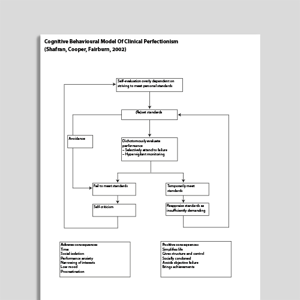
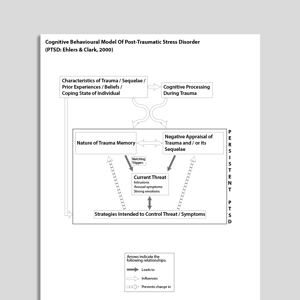
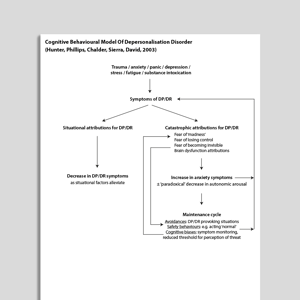
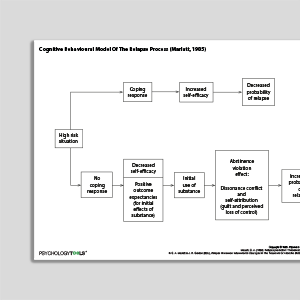
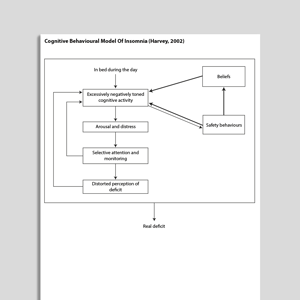
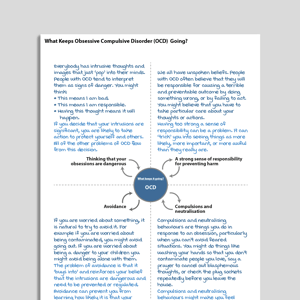
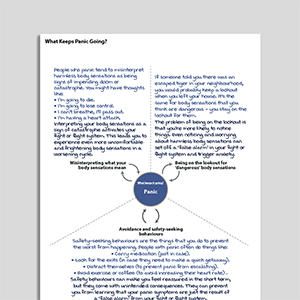
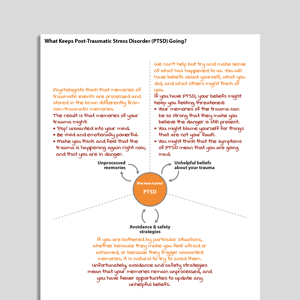
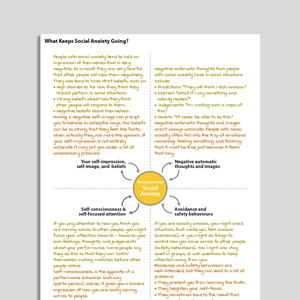
Disorder-specific models describe the critical presenting, predisposing, precipitating, and perpetuating factors relevant to a condition. Disorder-specific cognitive behavioral conceptualizations have been published for most conditions including low self-esteem, panic, obsessive-compulsive disorder, psychosis, post-traumatic stress disorder.
Beck, J. S. (1995). Cognitive behavior therapy: Basics and beyond. New York: Guilford Press.
Butler, G. (1998). Clinical formulation. In A. S. Bellack and M. Hersen (eds) Comprehensive clinical psychology. New York: Pergamon Press
Hackmann, A., Bennett-Levy, J., & Holmes, E. A. (2011). Oxford guide to imagery in cognitive therapy. New York: Oxford University Press.
Padesky, C. A., & Mooney, K. A. (1990). Presenting the cognitive model to clients. International Cognitive Therapy Newsletter, 6, 13–14.
Persons, J. B. (1989). Cognitive therapy in practice: A case formulation approach. New York: WW Norton.
Persons, J. (2008). The case formulation approach to cognitive-behavior therapy (guides to individualized evidence-based treatment).
Weerasekera, P. (1993). Formulation: A multiperspective model. Canadian Journal of Psychiatry, 38(5), 351–358.
Psychology Tools makes every effort to check external links and review their content. However, we are not responsible for the quality or content of external links and cannot guarantee that these links will work all of the time.
Please login to view our external resources.
Working...